Atlas · Plate XIX · Community Health
Community Health and Research
Community oral health shifts the focus from one patient to whole populations: assessing needs, setting policy and making sure care reaches people through programs such as water fluoridation and school sealants. It also covers the research skills to judge whether a study's results can be trusted and applied to your patients.
On the NBDHE this content arrives as testlets, one community scenario followed by several items, inside the discipline-based half of the exam. Expect to read a short program description or data set and pick the right level of prevention, study design, statistical test or interpretation. Community health and research make up about 12% of the current exam.
Blueprint Community Health and Research Principles · Community health; research principles · 44 facts

In this plate, we cover
01 · 8 facts
Public health core functions
Public health runs on three core functions: assessment, policy development and assurance. Programs follow a cycle of needs assessment, SMART objectives, planning, implementation and evaluation, where formative evaluation checks the process and summative evaluation measures results. Prevention is primary (fluoride, sealants), secondary (screening, early restorations) or tertiary (dentures, implants).
- Public health core functions: assessment, policy development and assurance; they support the 10 essential public health services.S60
- Dental public health is one of the ADA-recognized dental specialties; it focuses on communities rather than individuals.T9
- The epidemiologic triangle: host, agent, environment.T9
- Healthy People 2030 sets national oral health objectives (e.g., reduce untreated caries, increase sealants, increase fluoridated water access).S60
.jpg)
02 · 6 facts
Access and financing
Medicaid must cover children's dental care through EPSDT, but adult coverage is optional by state, and CHIP covers children just above Medicaid income limits. Traditional Medicare does not pay for routine dental care. Federally qualified health centers offer sliding-fee care, and barriers include cost, transportation, low health literacy, fear and too few providers.
- Medicaid must cover dental care for children through EPSDT; adult dental coverage is optional by state.T9
- CHIP covers children in families above Medicaid income limits.T9
- Traditional Medicare does not cover routine dental care (some Medicare Advantage plans do).T9
- Federally qualified health centers (FQHCs) offer sliding-fee dental care to underserved populations.T9
03 · 5 facts
Epidemiology
Epidemiology describes how disease moves through a population, framed by the triangle of host, agent and environment. Prevalence counts all existing cases at one time, while incidence counts new cases over a period. In the US about 42% of adults 30 and older have periodontitis, and about 1 in 4 adults has untreated decay.
- About 42% of US adults 30 and older have periodontitis; about 8% have severe periodontitis (NHANES 2009-2014).S58
- About 1 in 4 US adults has untreated tooth decay.S58
- Prevalence = all existing cases at one time / population; incidence = new cases over a period / population at risk.T9
- Morbidity is illness rate; mortality is death rate.T9
04 · 9 facts
Research design
Study designs rank from systematic reviews and randomized controlled trials at the top to case reports and expert opinion at the bottom. Cohort studies follow exposure forward toward an outcome, and case-control studies start from the outcome and look back. Random assignment, blinding and control groups protect internal validity, and an IRB reviews human-subjects research.
- Experimental studies manipulate an independent variable with random assignment; quasi-experimental studies lack random assignment.T9
- Observational designs: cross-sectional (one time point), case-control (retrospective), cohort (prospective or retrospective).T9
- Double-blind: neither subjects nor examiners know who gets the treatment, controlling bias.T9
- A control group gets a placebo or standard care for comparison.T9
05 · 11 facts
Biostatistics
Biostatistics items test whether you can read results. Know mean, median and mode, how skew pulls them apart, and why p under 0.05 is the usual cutoff for significance. Match the test to the data: chi-square for categories, a t-test for two means, ANOVA for three or more. Sensitivity is the true-positive rate and specificity the true-negative rate.
- Measures of central tendency: mean (average, affected by outliers), median (middle value), mode (most frequent).T9
- Measures of dispersion: range, variance and standard deviation.T9
- In a negatively skewed distribution (tail to the left), mean is lower than median, which is lower than mode.T9
- A null hypothesis says there is no difference; p under 0.05 is the usual cutoff for statistical significance.T9
06 · 5 facts
Community programs
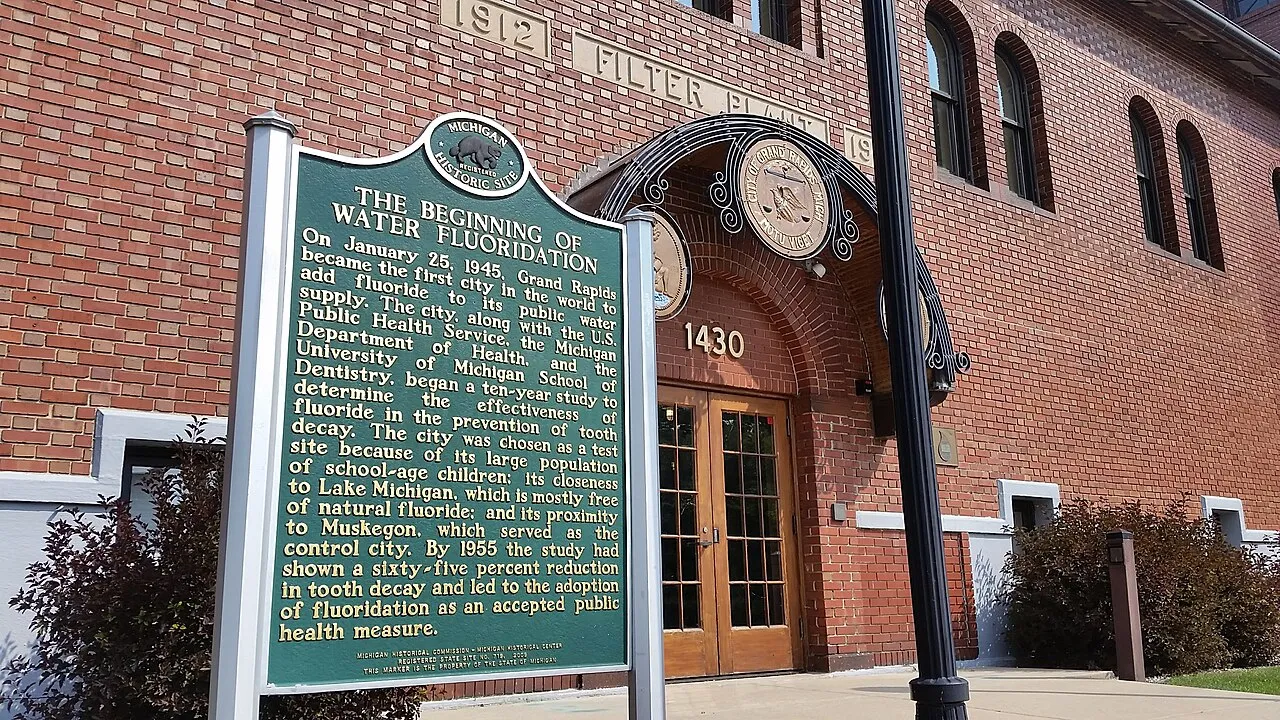
Community water fluoridation is the most cost-effective way to bring fluoride to a whole community. School programs add sealants, weekly 0.2% sodium fluoride rinses, varnish, screenings and education. Good programs also plan for literacy and culture: use plain language and teach-back, and rely on trained interpreters rather than family members.
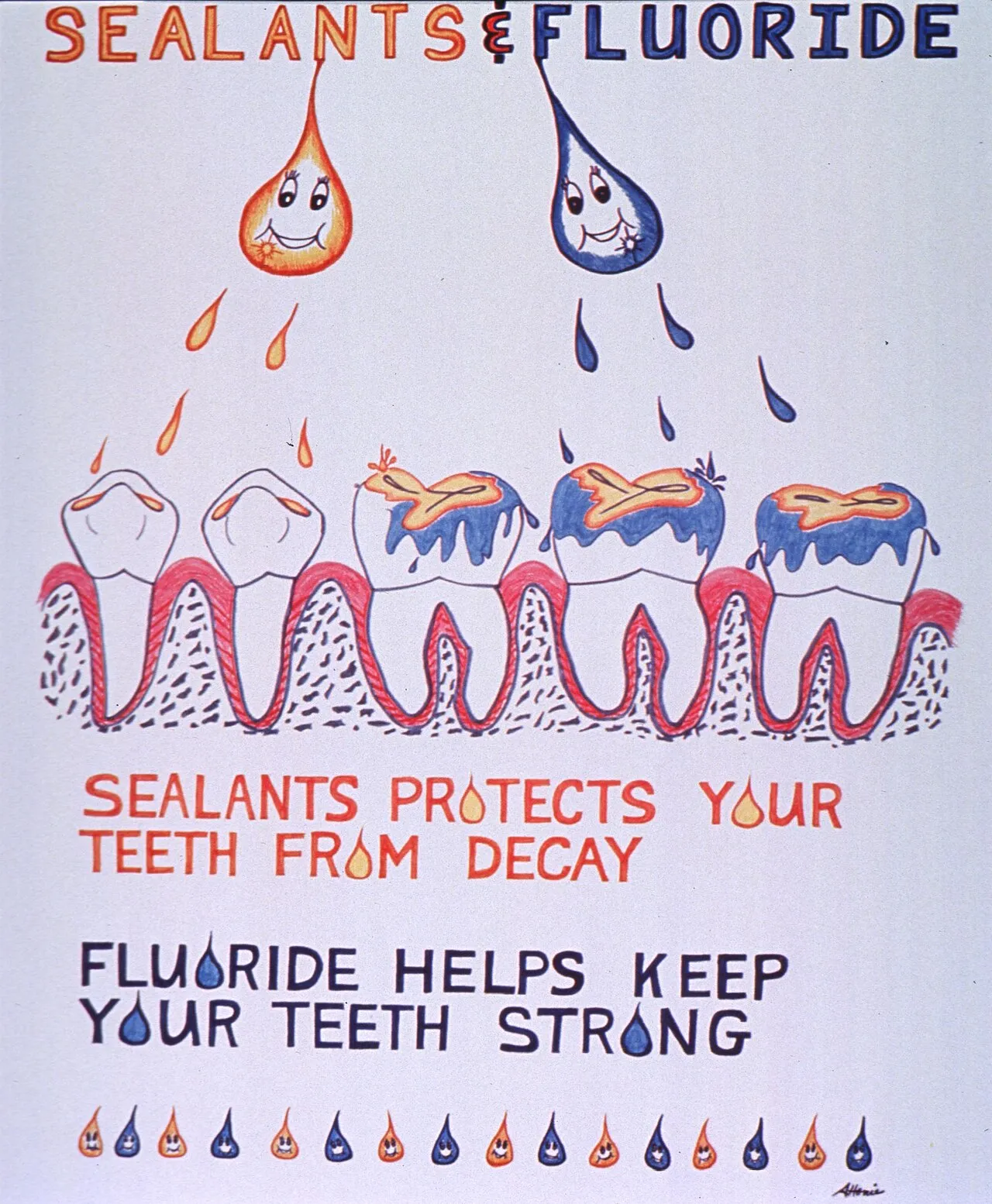
- School-based programs: sealants, weekly 0.2% NaF rinses, fluoride varnish, screenings and oral health education.S33S60
- Community water fluoridation is the most cost-effective way to deliver fluoride to a whole community.S32
- Oral health literacy: low literacy is linked to worse oral health; use plain language and teach-back.T9
- Cultural competence includes using trained interpreters (not family members) for patients with limited English.T9