Atlas · Plate XV · Clinical Services
Caries and Preventive Agents
Dental caries is a biofilm disease fed by diet. When plaque acid drops the pH below about 5.5, enamel loses mineral, and a tooth stays sound only while remineralization keeps pace. Preventive agents tip that balance back: fluoride in water, toothpaste, varnish and gels, pit-and-fissure sealants, silver diamine fluoride and xylitol each act at a different point in the process.
On the NBDHE this section is heavy on numbers: product strengths in ppm, supplement doses by age and water level, the probably toxic dose and the steps of sealant placement. Chairside, the same knowledge drives caries risk assessment, which sets each patient's recall interval and the products you recommend.
Blueprint Provision of Clinical Dental Hygiene Services · Using preventive agents · 68 facts

In this plate, we cover
01 · 8 facts
The caries process
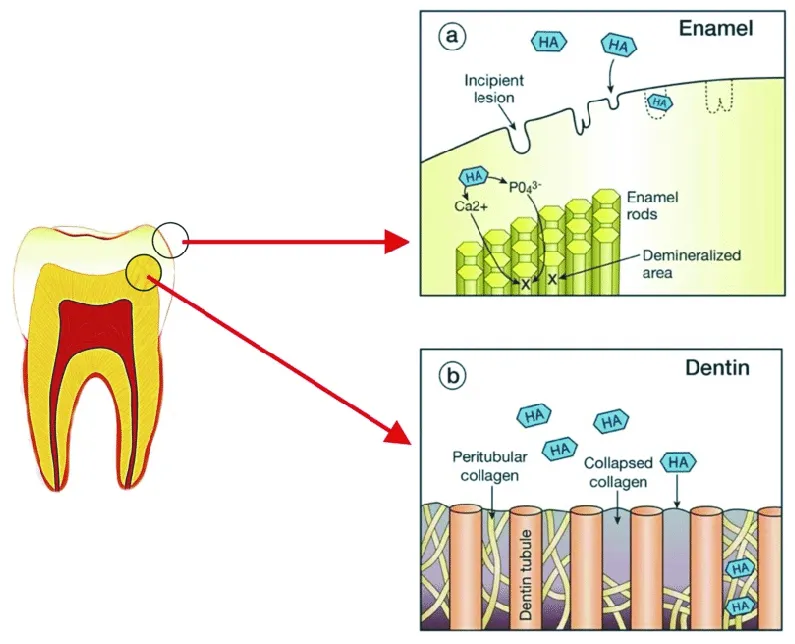
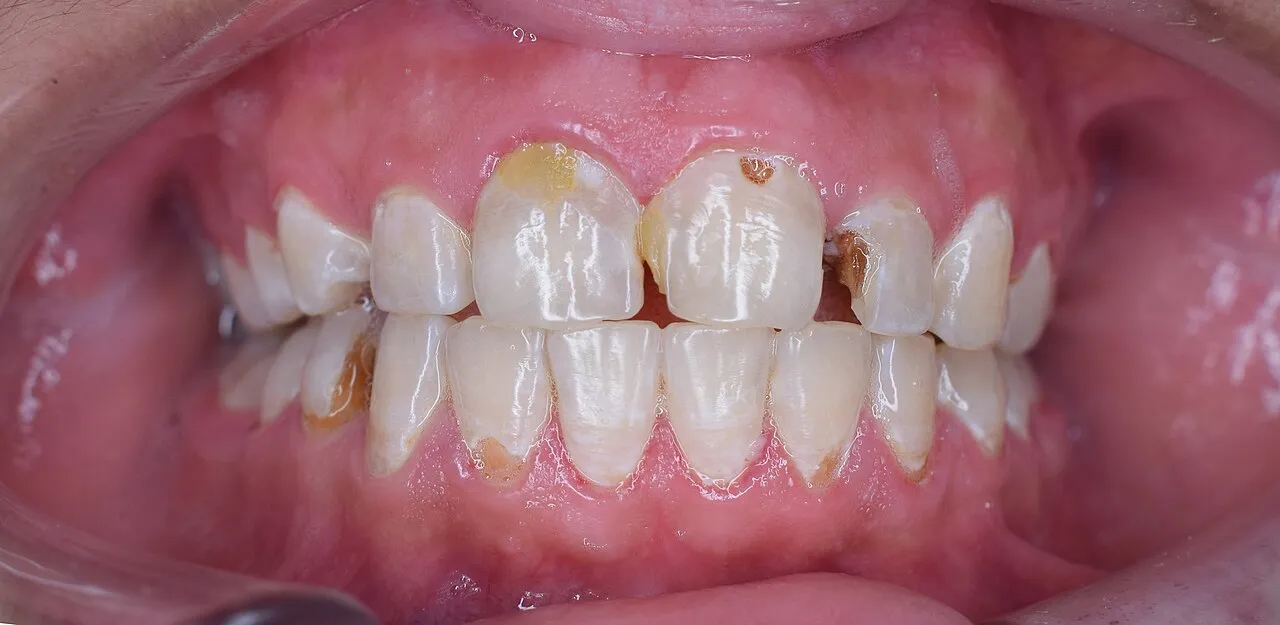
Caries develops when acid from plaque bacteria pulls mineral out of the tooth faster than saliva can put it back; enamel starts to dissolve below about pH 5.5. The first visible sign is a noncavitated white spot lesion that can still remineralize. S. mutans is tied to starting lesions, lactobacilli to spread into dentin and Actinomyces to root caries.
- Caries is a diet-driven biofilm disease: acid demineralizes the tooth when pH falls below about 5.5 (enamel).S37
- Demineralization and remineralization happen many times a day; caries progresses when the balance tips toward loss.S37
- The earliest visible enamel lesion is the white spot lesion (noncavitated), which can remineralize.S37
- Streptococcus mutans is linked to caries initiation; Lactobacilli to progression into dentin; Actinomyces to root caries.S37
02 · 7 facts
Caries risk assessment
Caries risk assessment, using CAMBRA or the ADA forms for ages 0-6 and over 6, weighs disease indicators and risk factors against protective factors to rate a patient low, moderate, high or extreme risk. Extreme risk means high risk plus severe dry mouth. High-risk patients usually return every 3-4 months for fluoride varnish.
- CAMBRA balances disease indicators and risk factors against protective factors to assign low, moderate, high or extreme risk.S31
- Extreme risk = high risk plus severe hyposalivation (e.g., radiation, Sjögren, many medications).S31
- ADA caries risk forms are separate for ages 0-6 and over 6.S31
- Disease indicators include visible cavities or radiographic dentin lesions, new white spots, and restorations placed in the past 3 years.S31

03 · 4 facts
How fluoride works
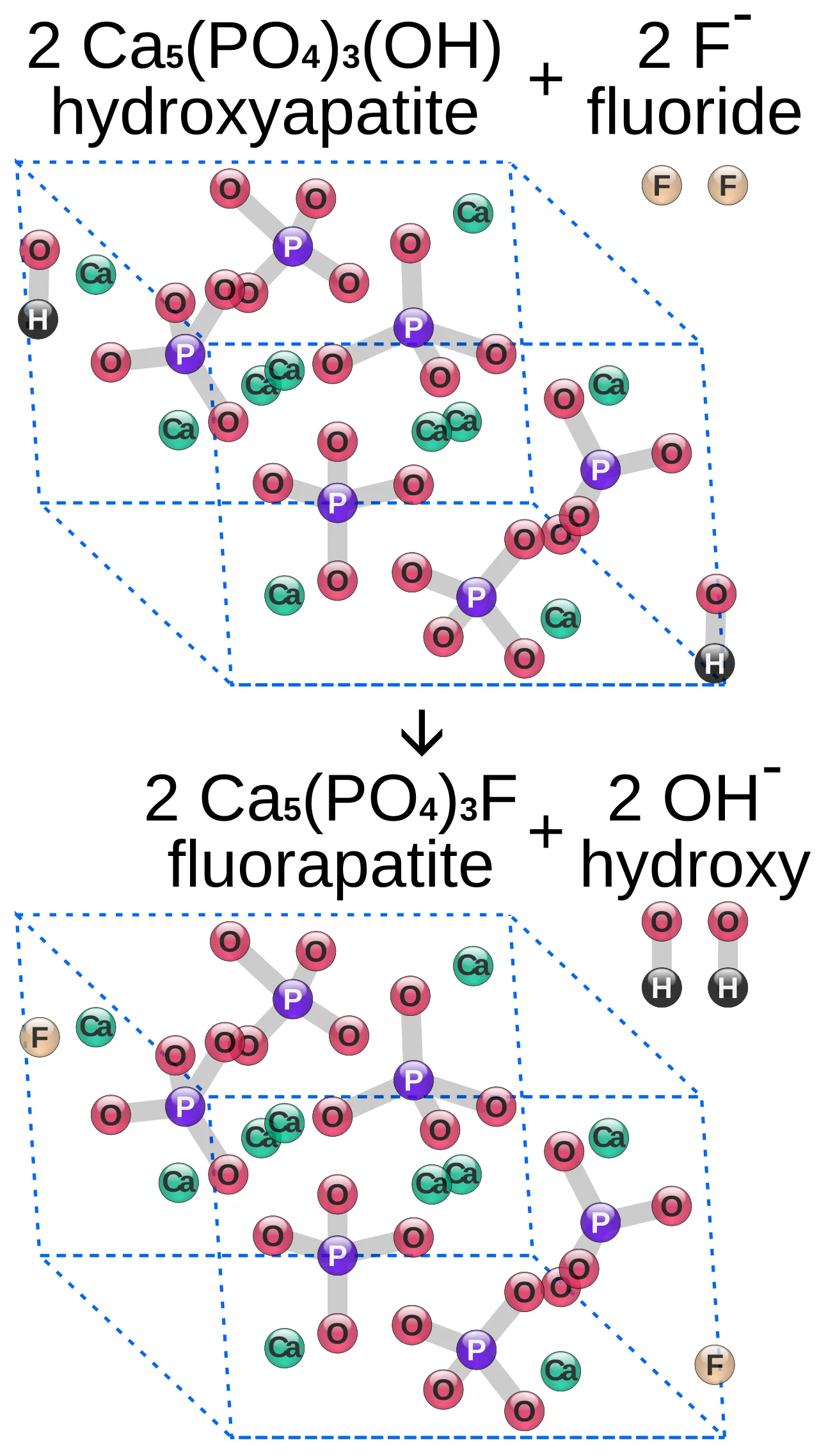
Fluoride works mainly at the tooth surface after eruption. It slows demineralization, speeds remineralization and builds fluorapatite, which resists acid down to about pH 4.5 instead of 5.5. It also blocks bacterial enzymes such as enolase, so plaque makes less acid. Small, frequent amounts in saliva and plaque give the most protection.
- Fluoride's main effect is topical and after eruption: it slows demineralization, speeds remineralization and makes fluorapatite-rich enamel.S33
- Fluoride also inhibits bacterial enzymes (enolase), reducing acid production.S33
- Fluorapatite starts dissolving at about pH 4.5, compared with about 5.5 for hydroxyapatite.S37
- Low, frequent fluoride levels in saliva and plaque give the most benefit.S33

04 · 6 facts
Water fluoridation
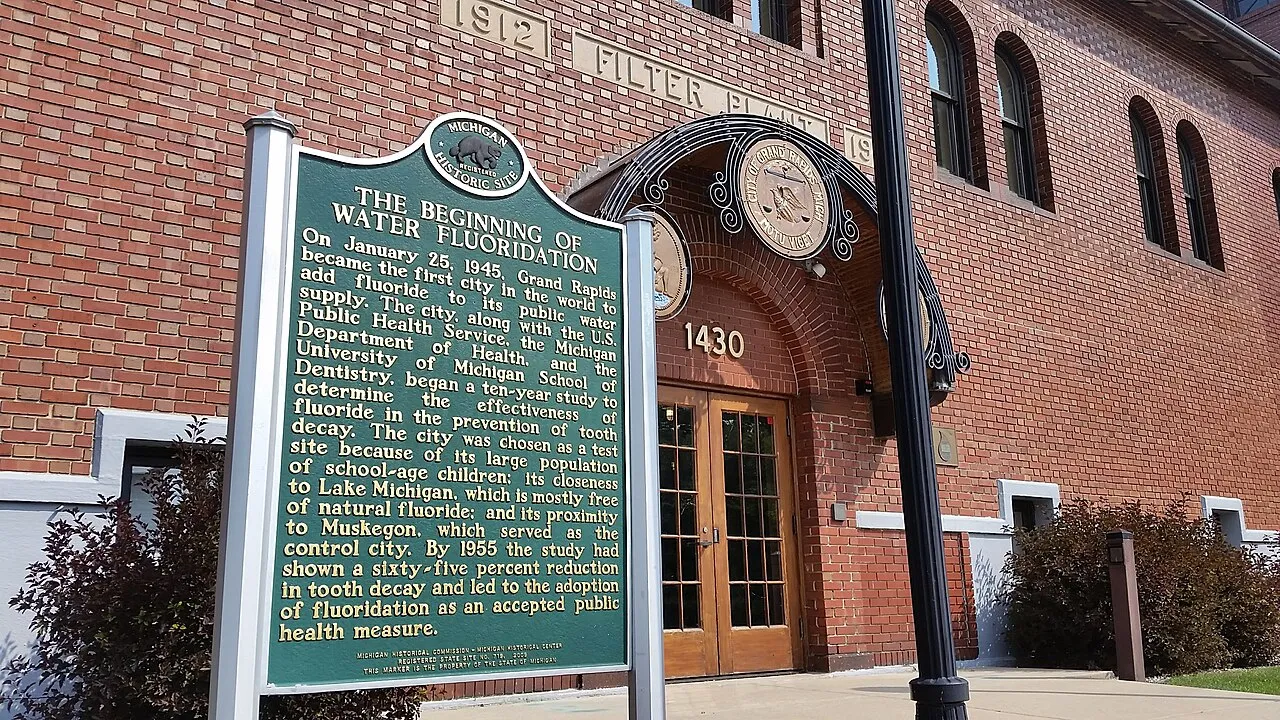
Community water fluoridation began in Grand Rapids, Michigan, in 1945 and cuts caries by roughly 25% in children and adults. The US Public Health Service level has been 0.7 mg/L since 2015, and the EPA caps fluoride at 4.0 mg/L. Utah and Florida banned it statewide in 2025, but exam items still follow the established science.
- The US Public Health Service recommended level has been 0.7 mg/L since 2015 (it was 0.7-1.2 mg/L before).S32
- The EPA's maximum contaminant level is 4.0 mg/L (to prevent skeletal fluorosis); the secondary standard is 2.0 mg/L (to prevent moderate dental fluorosis).S33
- Community water fluoridation reduces caries by roughly 25% in children and adults.S32
- Grand Rapids, Michigan began the first community water fluoridation in 1945.S32

05 · 12 facts
Topical fluorides
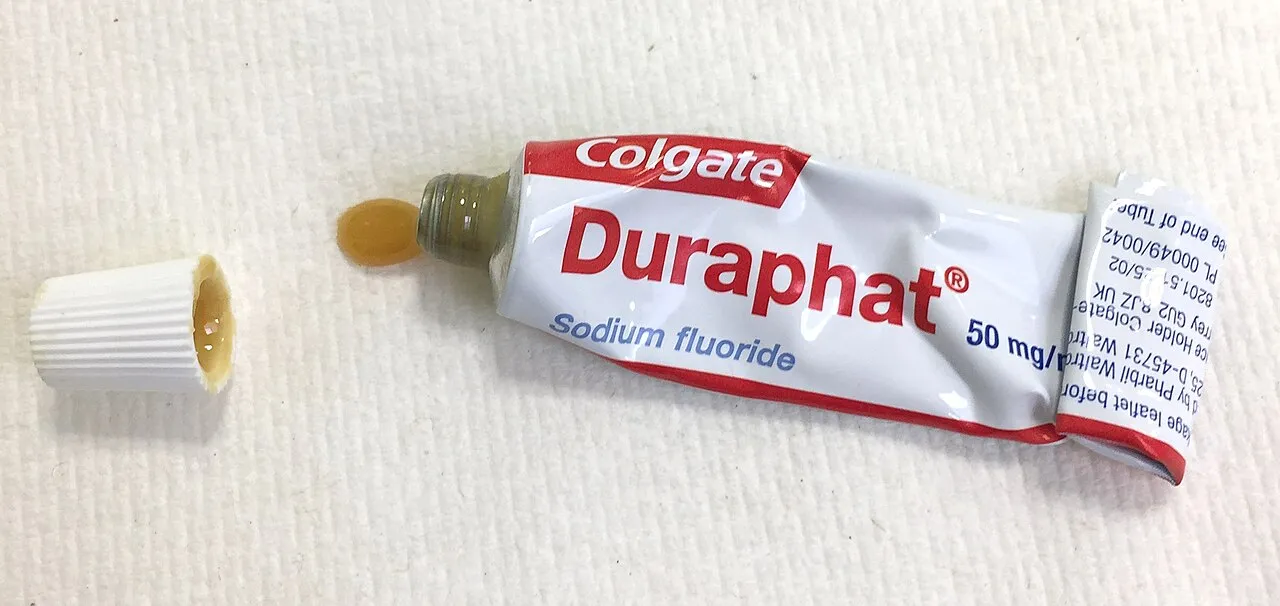
Know the strengths: 5% sodium fluoride varnish holds 22,600 ppm, 1.23% APF gel 12,300 ppm, 2% neutral sodium fluoride about 9,000 ppm and prescription 1.1% paste 5,000 ppm. Varnish is safest for young children and is repeated every 3-6 months for elevated risk. APF is acidic, so keep it off porcelain, composite, glass ionomer and titanium.
- 5% sodium fluoride varnish = 22,600 ppm F; about 0.25 mL for a primary dentition, 0.4 mL mixed, 0.5 mL permanent.S3
- Varnish sets on contact with saliva, can be placed on moist teeth, and is safest for young children because little is swallowed.S3
- Varnish frequency for elevated risk: at least every 3-6 months.S3
- 1.23% APF gel or foam = 12,300 ppm, pH about 3.5; applied 4 minutes in trays; avoid on porcelain, composite, glass ionomer and titanium.S3

06 · 7 facts
Fluoride supplements
Fluoride supplements are only for children at high caries risk whose drinking water has less than 0.6 ppm fluoride, and the dose depends on both age and the water level. No child under 6 months gets them. Test the home water first, especially a well, and dispense no more than 120 mg of fluoride at one time.
- Supplements are only for children at high caries risk whose drinking water has under 0.6 ppm fluoride.S3
- Under 0.3 ppm: 6 months-3 years 0.25 mg/day; 3-6 years 0.50 mg/day; 6-16 years 1.0 mg/day.S3
- 0.3-0.6 ppm: none under 3 years; 0.25 mg/day at 3-6 years; 0.50 mg/day at 6-16 years.S3
- Over 0.6 ppm, or under 6 months of age: no supplements.S3
07 · 8 facts
Fluoride toxicity
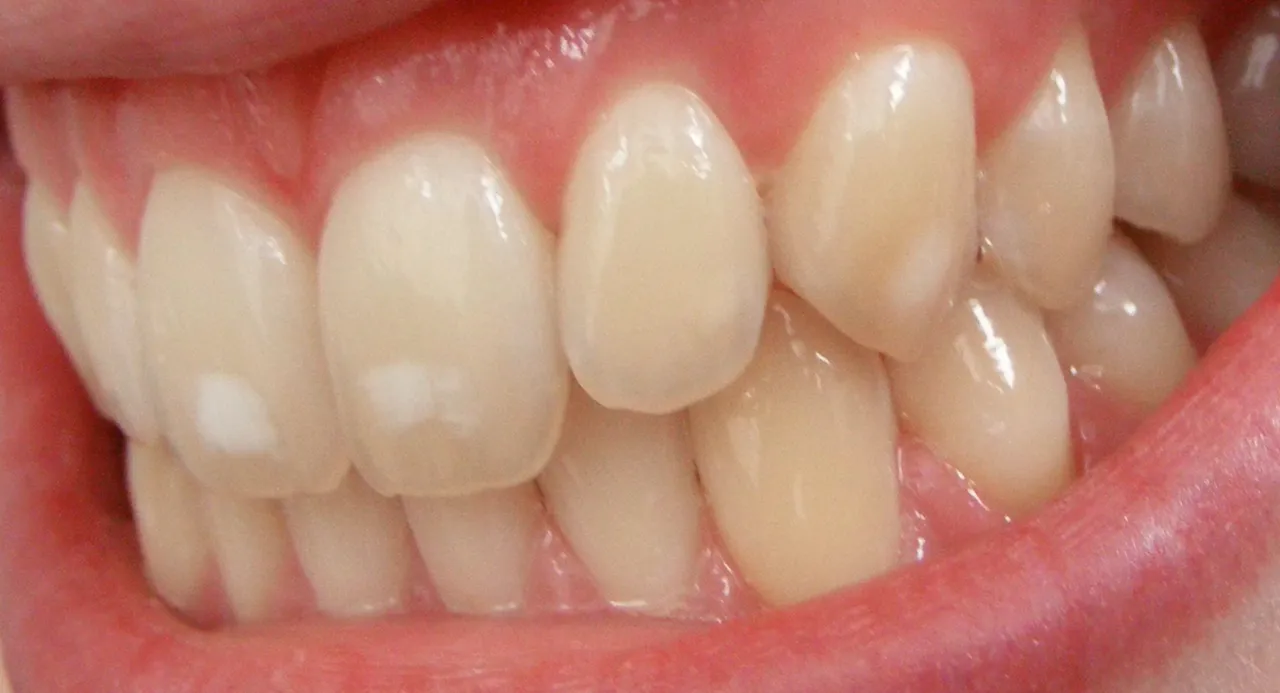
The probably toxic dose is 5 mg of fluoride per kg of body weight, so a 20 kg child reaches it at 100 mg. Below that, give milk or calcium and watch; at or above it, give calcium and send the patient to the hospital. Chronic excess while enamel forms, roughly birth to age 8, causes dental fluorosis.
- Probably toxic dose (PTD): 5 mg F/kg body weight; this triggers emergency treatment and hospital evaluation.S35
- Certainly lethal dose (CLD) for adults: about 32-64 mg F/kg (roughly 5-10 g NaF).S35
- Early signs of acute toxicity: nausea, vomiting, abdominal pain, excess salivation; then hypocalcemia, arrhythmia, seizures.S35
- Under 5 mg/kg: give milk or calcium to bind fluoride and observe. 5 mg/kg or more: give calcium and go to the hospital. Over 15 mg/kg: hospitalize immediately.S35
.png)
08 · 9 facts
Pit and fissure sealants
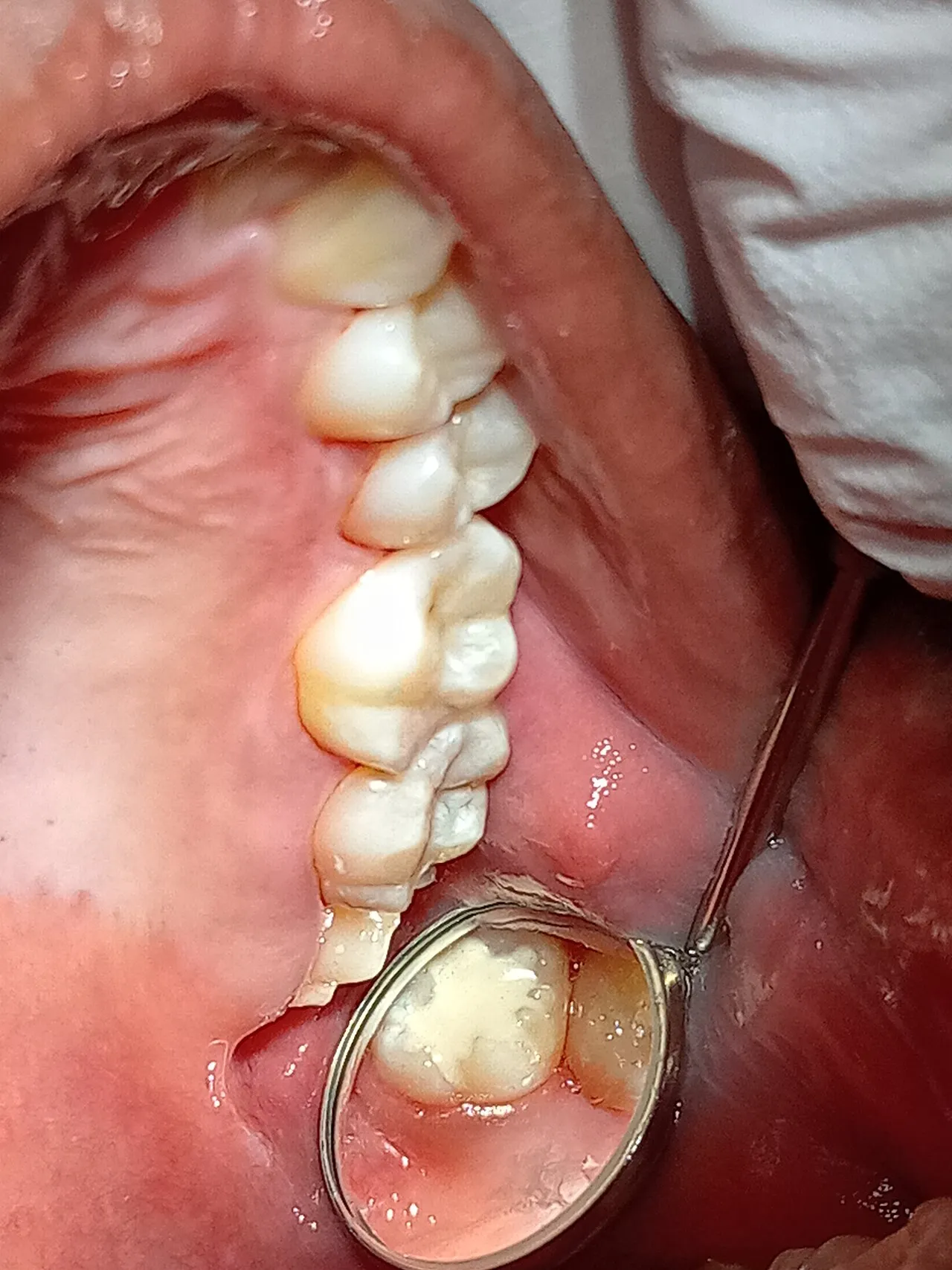
The 2016 ADA/AAPD guideline supports sealing sound and noncavitated pits and fissures on primary and permanent molars in children and adolescents, and sealants beat varnish alone for occlusal caries. The steps: clean, isolate, etch with 35-37% phosphoric acid, rinse and dry to a frosty surface, apply, cure and check. Moisture contamination is the main cause of failure.
- ADA/AAPD 2016 guideline: place sealants on sound and noncavitated pit-and-fissure surfaces of primary and permanent molars in children and adolescents.S30
- Sealants are more effective than fluoride varnish alone for preventing occlusal caries.S30
- Sealing over a noncavitated lesion arrests it; sealants reduce bacteria under them.S36
- Resin-based sealants are retained longer; glass ionomer sealants release fluoride and tolerate moisture better (useful for partly erupted molars).S36

09 · 7 facts
SDF, xylitol and other agents
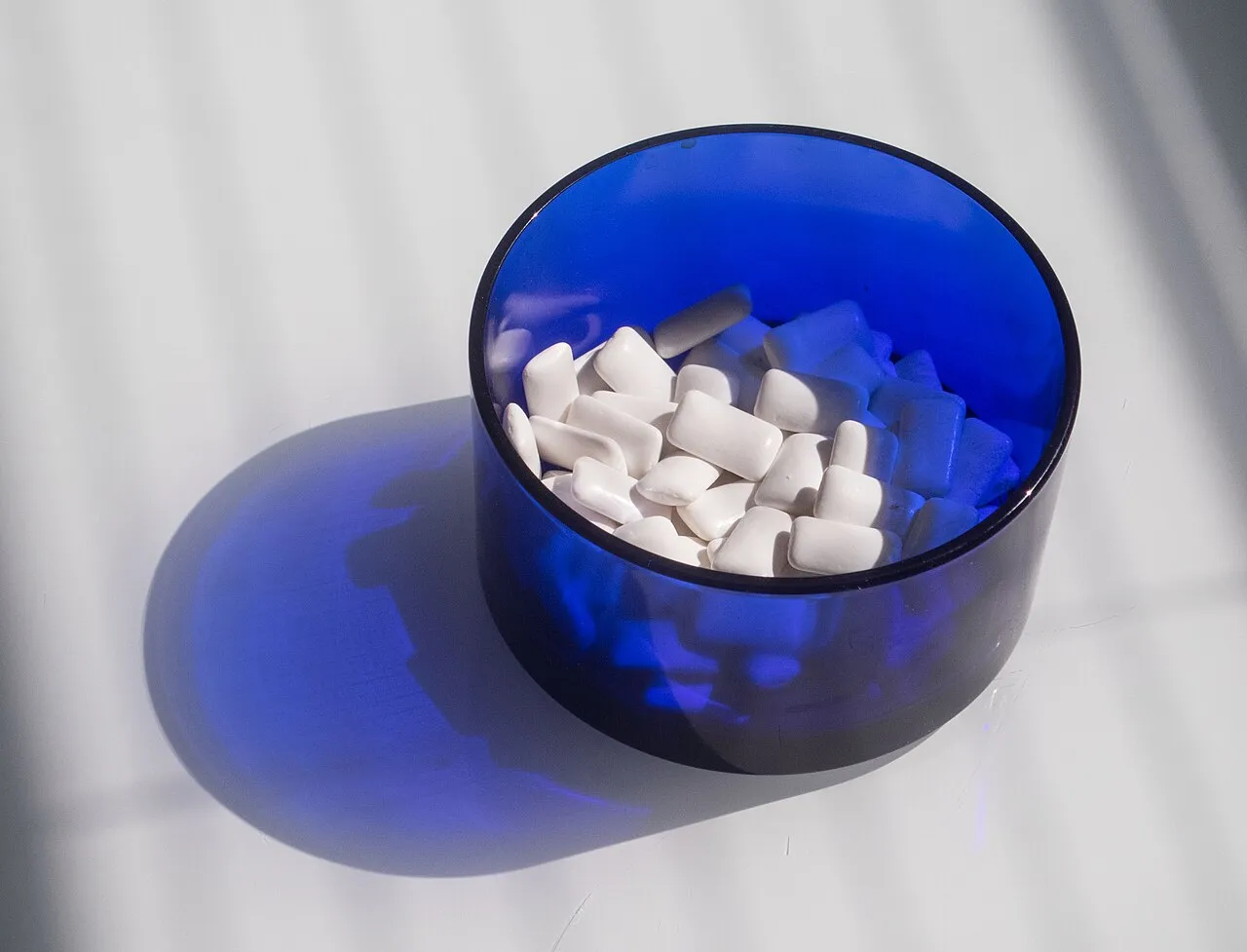
38% silver diamine fluoride (about 44,800 ppm) arrests cavitated lesions but stains them black; avoid it with silver allergy, ulcerative gingivitis or pulp involvement. Xylitol cannot be fermented by S. mutans and is used at 6-10 g a day. CPP-ACP supports remineralization but is ruled out by milk protein allergy, and chlorhexidine lowers mutans counts.
- Silver diamine fluoride 38%: about 44,800 ppm F; arrests cavitated lesions; stains the lesion black; usually reapplied every 6-12 months.S37
- SDF contraindications: silver allergy, ulcerative gingivitis or stomatitis, and pulpal involvement.S37
- Xylitol: 5-carbon sugar alcohol that S. mutans cannot ferment; 6-10 g/day in 3-5 doses; large amounts cause diarrhea; toxic to dogs.S48
- CPP-ACP (casein phosphopeptide-amorphous calcium phosphate) supports remineralization; avoid with milk protein allergy.S37

Watch