Atlas · Plate VIII · Scientific Basis
Pharmacology and Local Anesthesia
Pharmacology for dental hygienists means knowing how drugs move through and act on the body, which medications on a health history change care, and how to give local anesthesia safely. It spans antibiotic premedication under the AHA 2021 guideline, the oral side effects of common drugs, local anesthetic agents and their maximum doses, vasoconstrictor limits and nitrous oxide sedation.
The NBDHE now names local anesthesia as its own subarea, and calculation items are high yield: converting pounds to kilograms, finding the milligrams in a cartridge and staying under the absolute cap. Expect questions on drugs that enlarge the gingiva, MRONJ, why clindamycin was dropped from prophylaxis, and the anatomy of the inferior alveolar and PSA blocks.
Blueprint Scientific Basis for Dental Hygiene Practice · Pharmacology: general and local anesthesia · 119 facts
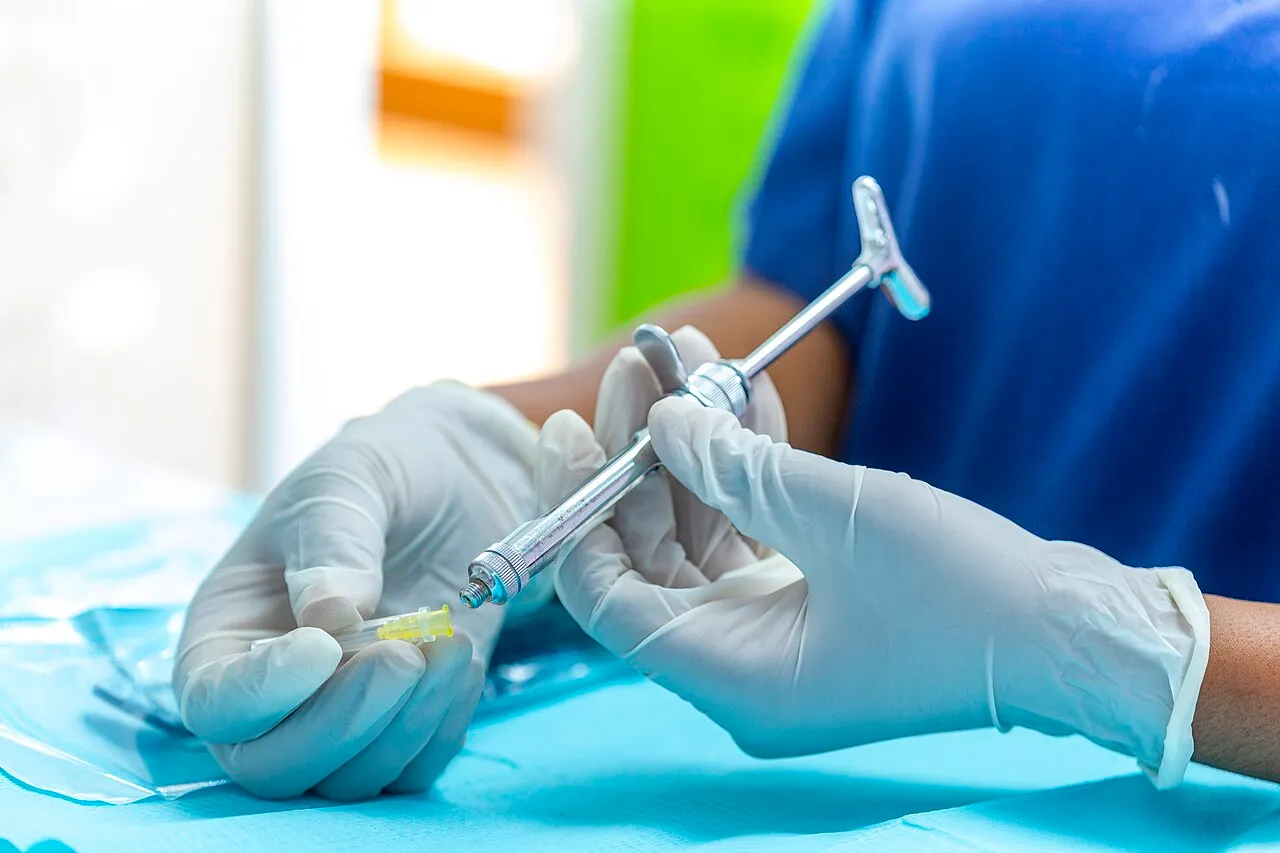

In this plate, we cover
- 01 Drug principles 8 facts
- 02 Prescriptions and controlled substances 5 facts
- 03 Analgesics 7 facts
- 04 Antibiotics 8 facts
- 05 Antibiotic premedication 9 facts
- 06 Cardiovascular drugs 8 facts
- 07 CNS and other drugs 10 facts
- 08 Local anesthetic agents 14 facts
- 09 Local anesthetic doses 11 facts
- 10 Vasoconstrictors 9 facts
- 11 Injection techniques 20 facts
- 12 Nitrous oxide sedation 10 facts
01 · 8 facts
Drug principles
Pharmacokinetics is what the body does to a drug: absorption, distribution, metabolism (mainly in the liver) and excretion (mainly by the kidneys). Pharmacodynamics is what the drug does to the body. Half-life sets how long a drug lingers, potency differs from efficacy, and a narrow therapeutic index (warfarin, digoxin, lithium) needs close monitoring. Antagonists such as naloxone and flumazenil block receptors.
- Pharmacokinetics is what the body does to a drug (absorption, distribution, metabolism, excretion); pharmacodynamics is what the drug does to the body.S51
- Half-life is the time for plasma level to fall by 50%; about 4-5 half-lives clear most of a drug.S51
- The liver is the main site of drug metabolism (cytochrome P450); the kidneys are the main route of excretion.S51
- First-pass effect: oral drugs pass through the liver before reaching circulation, lowering bioavailability.S51
02 · 5 facts
Prescriptions and controlled substances
The DEA sorts controlled drugs into schedules: Schedule I has no accepted medical use, Schedule II (oxycodone, hydrocodone, fentanyl) has high abuse potential, codeine combinations sit in Schedule III, and benzodiazepines and tramadol in Schedule IV. A prescription has a superscription, inscription, subscription and signature. Hygienists in most states cannot prescribe but must read abbreviations such as bid, tid, prn and po.
- DEA Schedule I: no accepted medical use (e.g., heroin). Schedule II: high abuse potential (oxycodone, hydrocodone, fentanyl).S51
- Schedule III includes codeine combinations (acetaminophen-codeine); Schedule IV includes benzodiazepines and tramadol.S51
- Prescription parts: superscription (Rx), inscription (drug and strength), subscription (amount to dispense), signature/transcription (directions, "Sig").S51
- Common abbreviations: bid = twice daily, tid = three times, qid = four times, prn = as needed, po = by mouth, q = every, hs = at bedtime.S51
03 · 7 facts
Analgesics
NSAIDs such as ibuprofen block COX enzymes, and aspirin does so permanently in platelets, so its antiplatelet effect lasts 7-10 days. Acetaminophen relieves pain and fever but not inflammation, with a usual adult limit of 4 g a day. Under the ADA 2023 guideline, ibuprofen plus acetaminophen outperforms opioids for most acute dental pain. Naloxone reverses opioid effects such as respiratory depression.
- NSAIDs (ibuprofen, naproxen) inhibit COX enzymes; ibuprofen OTC max is 1,200 mg/day, prescription max 3,200 mg/day.S51
- Aspirin irreversibly blocks platelet COX, so its antiplatelet effect lasts the life of the platelet (about 7-10 days).S51
- Aspirin is avoided in children with viral illness (Reye syndrome).S51
- Acetaminophen is analgesic and antipyretic but not anti-inflammatory; usual adult max is 4 g/day (lower with liver disease or alcohol use).S51
04 · 8 facts
Antibiotics
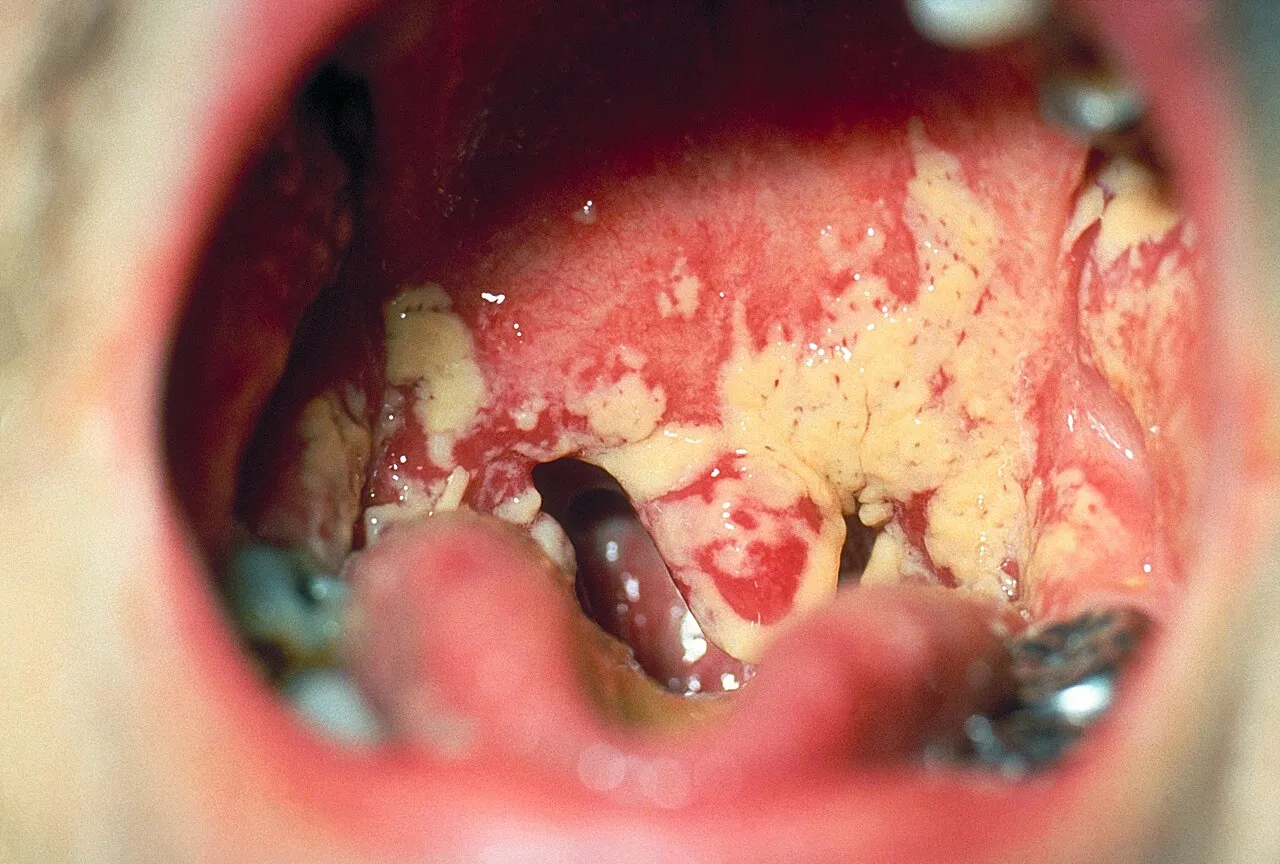
Penicillins such as amoxicillin kill bacteria by blocking cell wall synthesis, while macrolides block protein synthesis and some inhibit CYP3A4. Tetracyclines bind calcium and stain forming teeth, so they are avoided in pregnancy and in children under 8. Metronidazole targets obligate anaerobes and reacts with alcohol. Clindamycin carries a high C. difficile risk, and Candida overgrowth is a common oral side effect of antibiotics.
- Penicillins are bactericidal and block cell wall synthesis; amoxicillin has a broader spectrum than penicillin VK.S51
- Amoxicillin-clavulanate adds a beta-lactamase inhibitor.S51
- Macrolides (azithromycin, clarithromycin, erythromycin) block protein synthesis; clarithromycin and erythromycin inhibit CYP3A4 (drug interactions).S51
- Tetracyclines bind calcium and stain forming teeth; avoid in pregnancy and in children under 8.S51

05 · 9 facts
Antibiotic premedication
Under AHA 2021, endocarditis prophylaxis is reserved for the highest-risk cardiac patients, such as those with a prosthetic valve, previous endocarditis, certain congenital heart disease or a heart transplant with valve disease, before procedures that manipulate gingiva or perforate mucosa. The adult dose is amoxicillin 2 g taken 30-60 minutes before. Clindamycin is no longer recommended, and prosthetic joints generally do not need prophylaxis.
- AHA 2021: IE prophylaxis only for highest-risk cardiac patients undergoing procedures that manipulate gingiva, the periapical region or perforate mucosa.S5S4
- Highest risk: prosthetic valves (including transcatheter and homografts), prosthetic valve-repair material, previous IE, certain congenital heart disease, cardiac transplant with valvulopathy.S5S4
- Congenital conditions: unrepaired cyanotic CHD (including palliative shunts/conduits); repair with prosthetic material in the first 6 months; repaired defects with residual shunts/leaks at or near prosthetic material.S5S4
- Not indicated for: mitral valve prolapse, rheumatic heart disease without a valve prosthesis, stents, pacemakers, bicuspid aortic valve, prior CABG.S5
06 · 8 facts
Cardiovascular drugs
Drug name endings help: -olol for beta-blockers, -pril for ACE inhibitors (dry cough), -sartan for ARBs and -statin for cholesterol drugs. Nonselective beta-blockers can spike blood pressure with epinephrine. Calcium channel blockers can enlarge the gingiva, and diuretics dry the mouth and cause orthostatic hypotension. Warfarin is monitored by INR, and antiplatelet drugs are not stopped for routine care without the physician.
- Beta-blockers end in "-olol"; nonselective ones (propranolol, nadolol) can cause a dangerous BP spike with epinephrine (alpha effect unopposed).S14S51
- ACE inhibitors end in "-pril" and can cause a dry cough and angioedema; ARBs end in "-sartan".S51
- Calcium channel blockers (nifedipine, amlodipine, verapamil, diltiazem) can cause gingival enlargement.S51
- Diuretics (hydrochlorothiazide, furosemide) cause xerostomia and orthostatic hypotension.S51
07 · 10 facts
CNS and other drugs
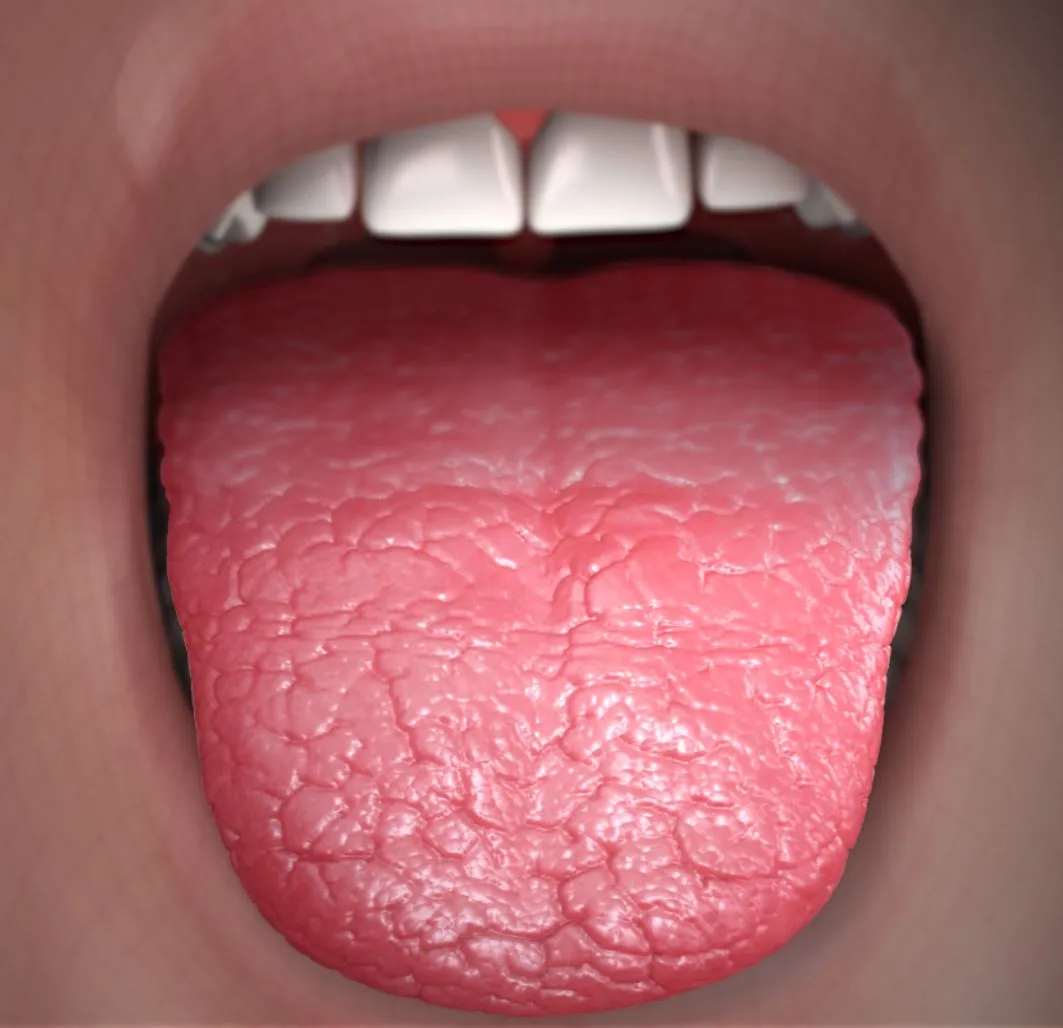
Benzodiazepines relieve anxiety and sedate, and flumazenil reverses them. Antidepressants dry the mouth, and tricyclics call for a limited vasoconstrictor dose. Phenytoin enlarges the gingiva, inhaled corticosteroids raise candidiasis risk, and cocaine or methamphetamine use within about 24 hours rules out epinephrine. Bisphosphonates and denosumab are linked to MRONJ, with much higher risk at IV cancer doses than oral osteoporosis doses.
- Benzodiazepines (diazepam, midazolam, triazolam) are used for anxiety and sedation; flumazenil reverses them.S51
- SSRIs (fluoxetine, sertraline) and tricyclics cause xerostomia; tricyclics plus epinephrine can raise BP, so limit vasoconstrictor.S14S51
- MAO inhibitors historically warned with vasoconstrictors; the interaction with dental epinephrine is considered minimal but still screened.S14
- Phenytoin causes gingival enlargement and is used for seizures.S51

08 · 14 facts
Local anesthetic agents
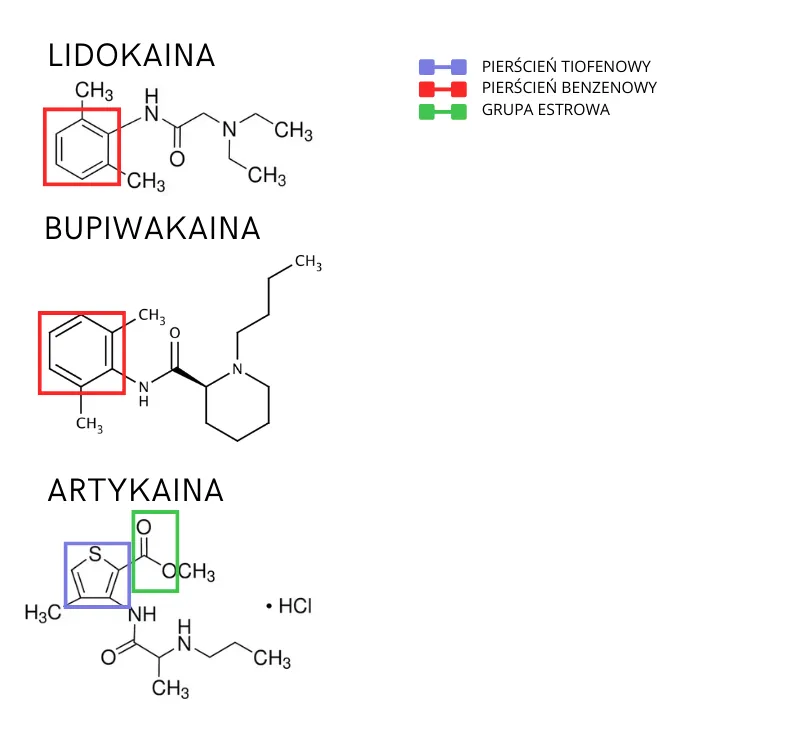
Every injectable dental anesthetic in the US is an amide, metabolized in the liver, although articaine is mostly broken down in plasma; esters such as benzocaine are used mainly as topicals. Lidocaine 2% with epinephrine is the reference agent. Mepivacaine 3% works without a vasoconstrictor, prilocaine can cause methemoglobinemia, articaine diffuses well and bupivacaine gives long-lasting anesthesia for long procedures.
- All injectable dental anesthetics in the US are amides; esters are used mainly as topicals (benzocaine, tetracaine).S14
- Amides are metabolized in the liver; esters by plasma pseudocholinesterase. Articaine is mostly broken down in plasma because of its ester side chain.S14
- Lidocaine 2% with 1:100,000 epinephrine is the reference agent; lidocaine has topical anesthetic properties too.S14
- Lidocaine 2% with epi: pulpal anesthesia about 60 min, soft tissue about 3-5 h.S14T1

09 · 11 facts
Local anesthetic doses
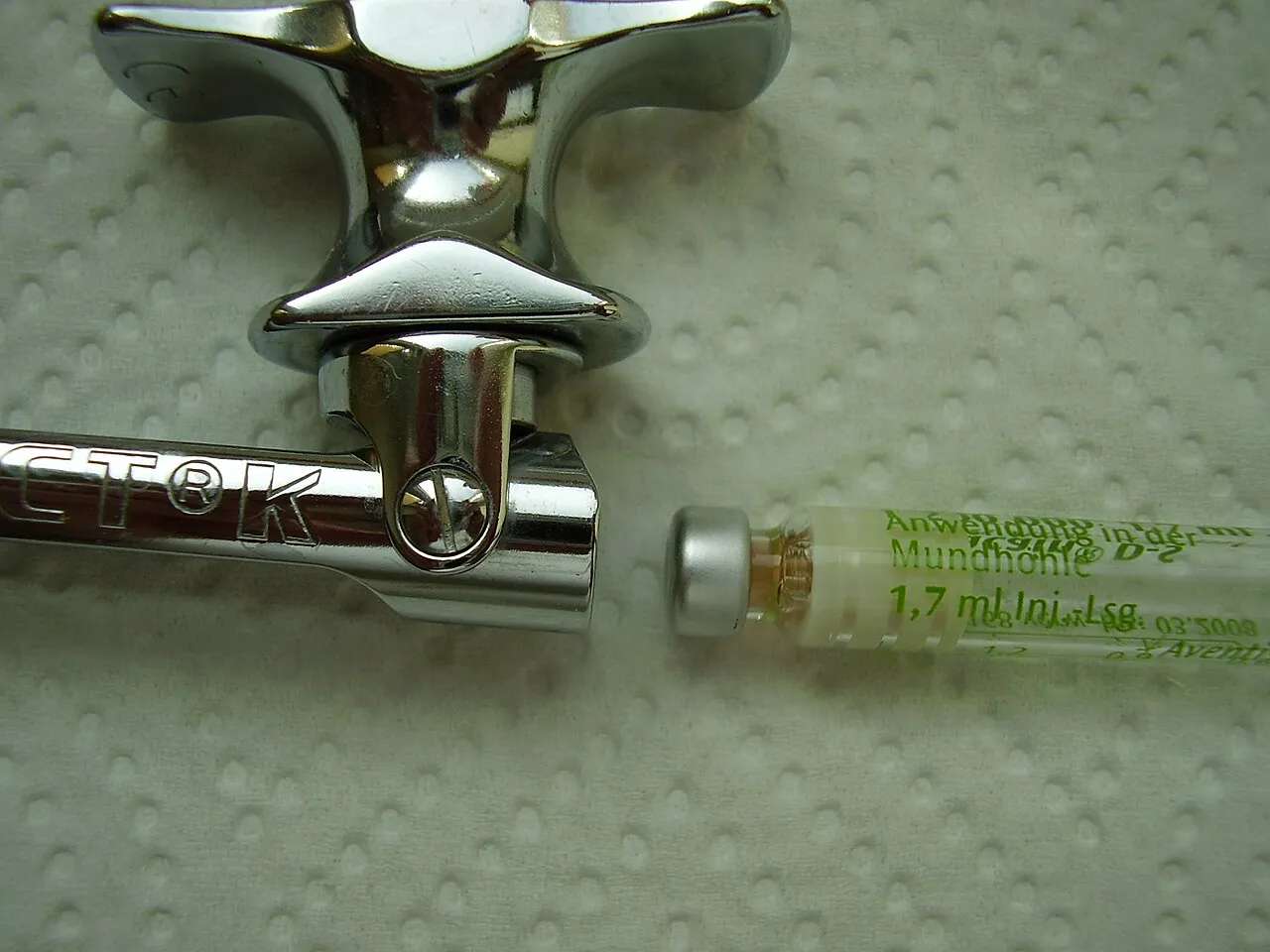
Milligrams per cartridge equal the percentage times 10 times the volume, so a 1.8 mL cartridge of 2% holds 36 mg. Multiply the mg/kg maximum by the weight in kilograms, check the absolute cap, then divide by the mg per cartridge. Lidocaine with epinephrine allows 7.0 mg/kg up to 500 mg. Early overdose signs include talkativeness, slurred speech, tremor and circumoral numbness.
- mg per cartridge = % x 10 x volume in mL. A 1.8 mL cartridge of 2% = 36 mg; 3% = 54 mg; 4% = 72 mg; 0.5% = 9 mg.S14
- Lidocaine with epinephrine: 7.0 mg/kg, absolute max 500 mg (US label/Malamed). AAPD for children: 4.4 mg/kg, max 300 mg.S14S18T1
- Mepivacaine: 6.6 mg/kg, absolute max 400 mg (Malamed); AAPD children 4.4 mg/kg, max 300 mg.S14S18T1
- Articaine: 7.0 mg/kg; the US label gives no separate absolute max, but many references cap it at 500 mg.sources varyS14S18T1

10 · 9 facts
Vasoconstrictors
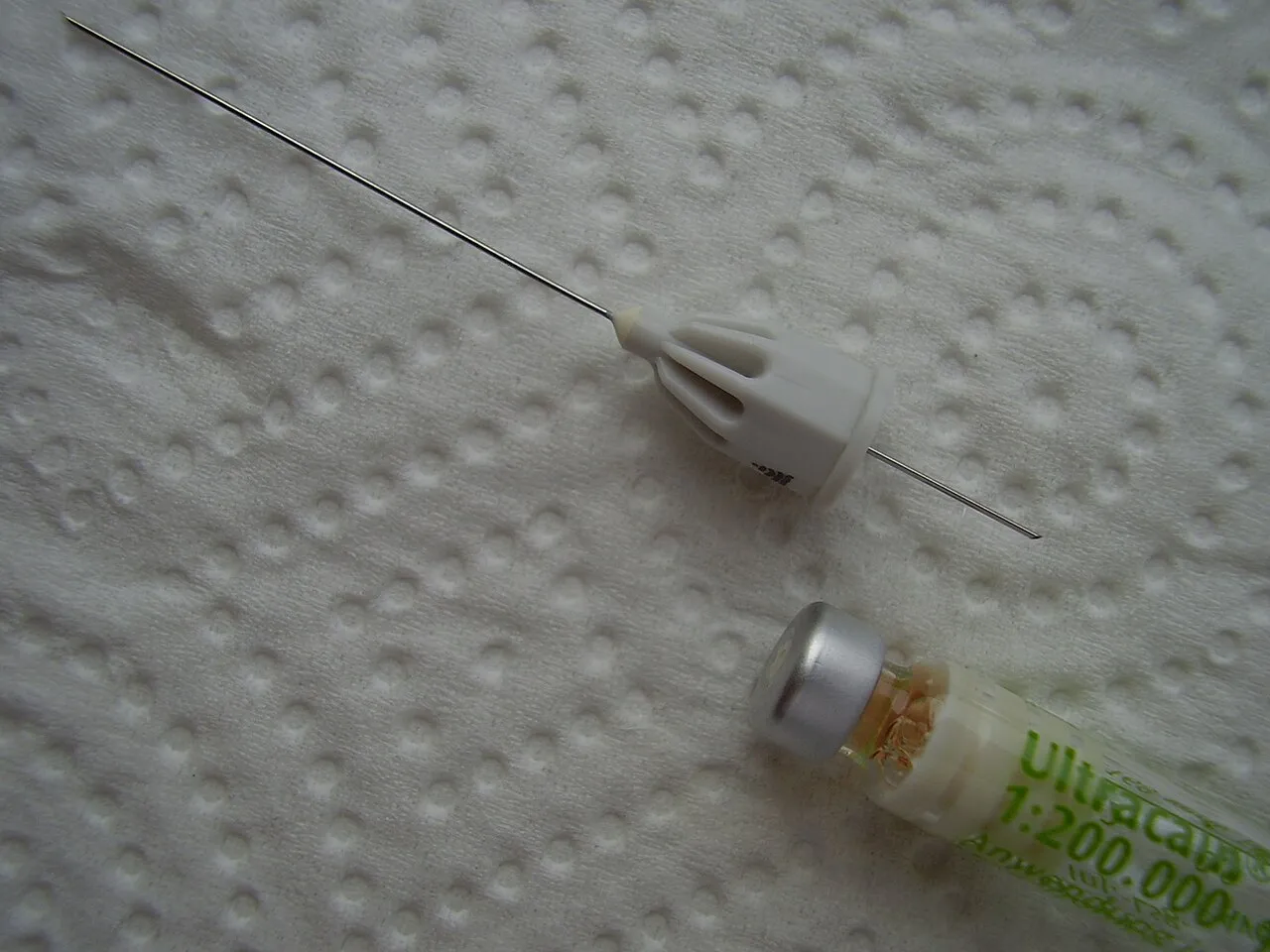
Vasoconstrictors slow absorption, lengthen anesthesia, lower toxicity and reduce bleeding. A 1.8 mL cartridge of 1:100,000 epinephrine holds 0.018 mg. A healthy adult may receive up to 0.2 mg per appointment and a cardiovascular-compromised patient 0.04 mg, about two cartridges. Elective use is avoided within 6 months of a heart attack or stroke, with blood pressure over 200/115, or with sulfite allergy.
- Vasoconstrictors slow absorption, lengthen duration, lower toxicity and reduce bleeding.S14
- 1:100,000 epinephrine = 0.01 mg/mL = 0.018 mg per 1.8 mL cartridge.S14
- 1:200,000 = 0.005 mg/mL (0.009 mg/cartridge); 1:50,000 = 0.02 mg/mL (0.036 mg/cartridge).S14
- Healthy adult epinephrine max: 0.2 mg per appointment (about 11 cartridges of 1:100,000).S14T1

11 · 20 facts
Injection techniques
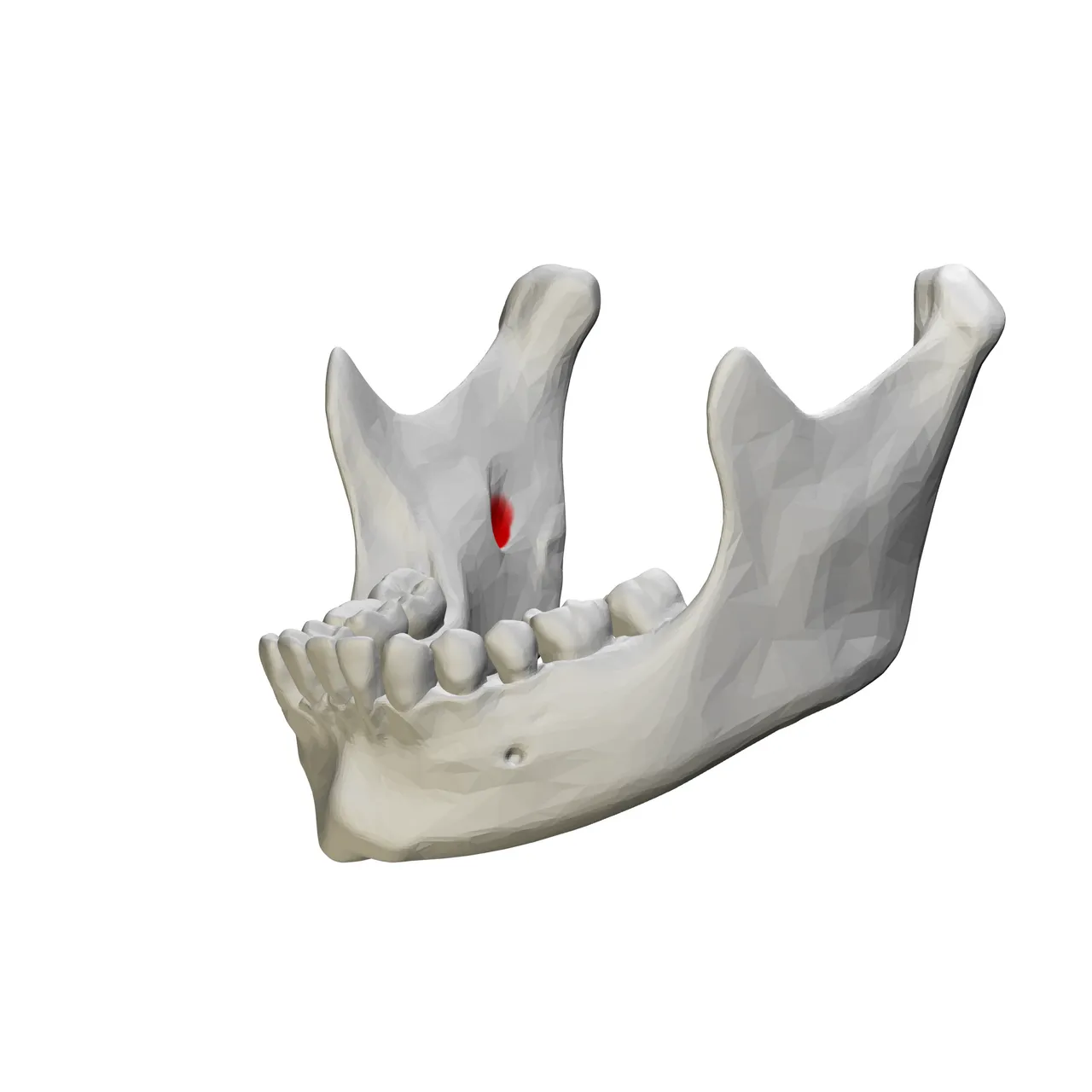
The inferior alveolar block deposits near the mandibular foramen in the pterygomandibular space and has the highest rate of positive aspiration; a long buccal injection adds the buccal gingiva of the molars. The PSA block carries the highest hematoma risk. Use 25- or 27-gauge needles for blocks, never insert to the hub, aspirate before every deposit and inject about 1 mL per minute.
- Needle gauge: higher number = smaller diameter. 25 and 27 gauge are used for blocks; 30 gauge is not recommended for blocks (deflects, poorer aspiration).S16T1
- Long needle about 32-35 mm; short needle about 20 mm. Never insert a needle to the hub (breakage risk).T1
- Inject slowly: about 1 mL per minute (a full 1.8 mL cartridge over about 60 seconds or more).T1
- Aspirate before every deposit and in two planes; positive aspiration is most common with the IA block (about 10-15%).S15T1
![Polygon data were generated by Database Center for Life Science(DBCLS) [2]](https://commons.wikimedia.org/wiki/File:Mandibular_foramen_-_close_up_-_anterolateral_view.png)
12 · 10 facts
Nitrous oxide sedation
Nitrous oxide gives anxiolysis and mild analgesia while the patient stays conscious with protective reflexes. Its low blood solubility brings onset and recovery within minutes. Machines always deliver at least 30% oxygen; titrate in small steps, then give 100% oxygen for 3-5 minutes at the end to prevent diffusion hypoxia. Scavenging protects staff, and nausea or sweating signals oversedation.
- Nitrous oxide (N2O) is a weak anesthetic that gives anxiolysis and mild analgesia; the patient stays conscious with protective reflexes.S62S63
- Blood/gas partition coefficient is about 0.47, so onset and recovery are fast (about 3-5 min).S63
- Minimum alveolar concentration (MAC) is about 104%, so N2O cannot cause general anesthesia alone at normal pressure.S63
- Machines are fail-safe: they deliver at least 30% oxygen (no more than 70% N2O).S62
Watch