Start here · Tools · 111 entries
Tools and instruments
Instruments are the language of the operatory. When the dentist or hygienist asks for "the 11/12" or "a 151," you need to know which one to pick up, what it looks like next to its look-alikes, and how to handle it safely afterward. This guide walks through the instruments a US general practice uses most, group by group.
Each entry tells you what the instrument is, how to spot it, when it comes out, and how it is cleaned and sterilized. Names and tray orders vary between offices, so check your office's tray lists and ask when a name is new to you. Safety notes follow CDC and OSHA guidance; always follow your office's protocol and your state's rules.
Exam instruments
The basic setup on almost every tray: mirror, explorers, probes and cotton pliers.
-
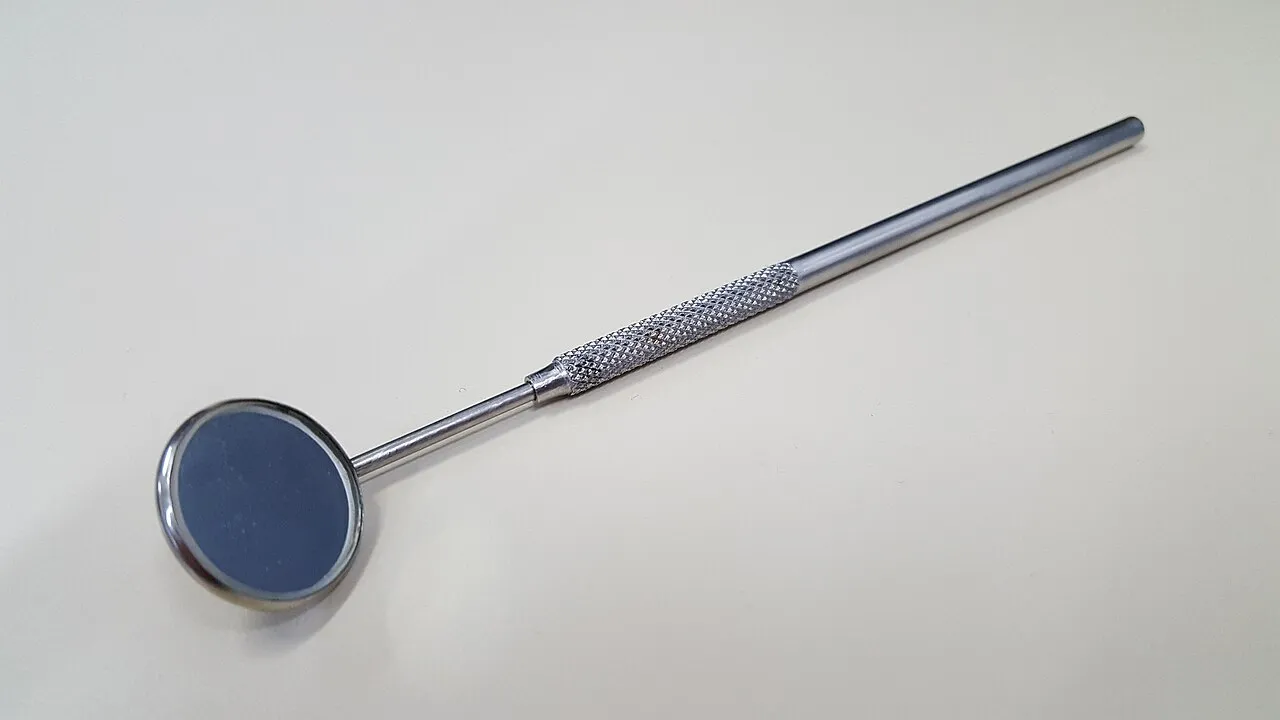 Mouth mirror
A small round mirror on a handle that lets you see, light and hold back tissue.
Mouth mirror
A small round mirror on a handle that lets you see, light and hold back tissue.
-
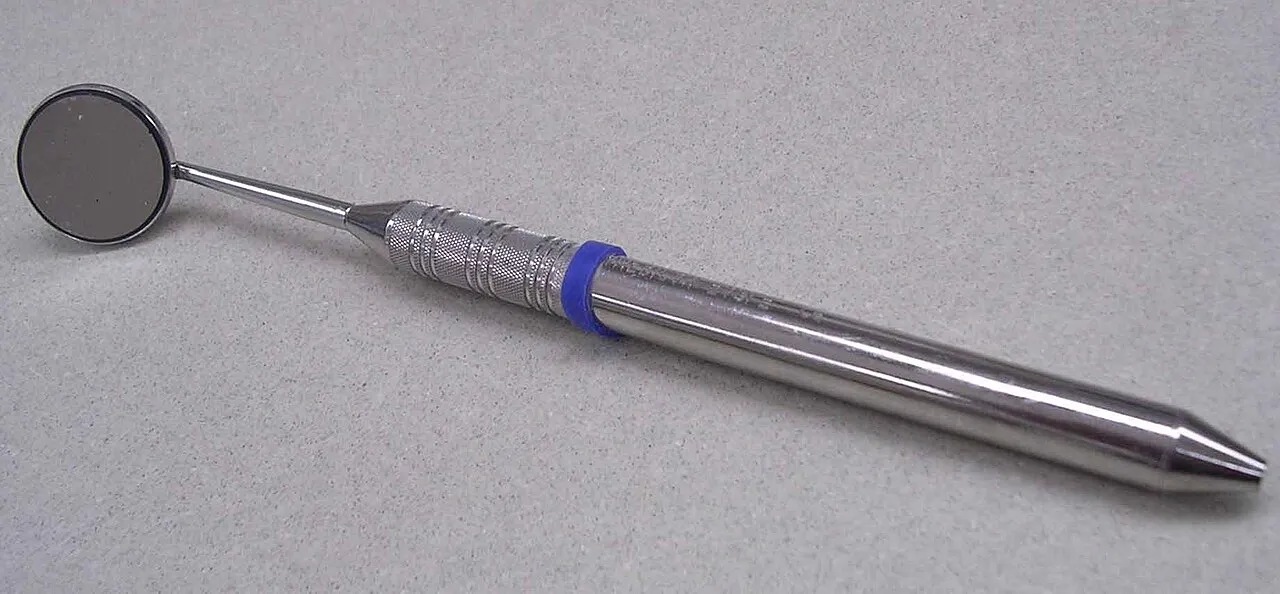 Front-surface mirror (vs. plane mirror)
A mirror whose shiny coating is on the front, so it shows one sharp image with no ghost.
Front-surface mirror (vs. plane mirror)
A mirror whose shiny coating is on the front, so it shows one sharp image with no ghost.
-
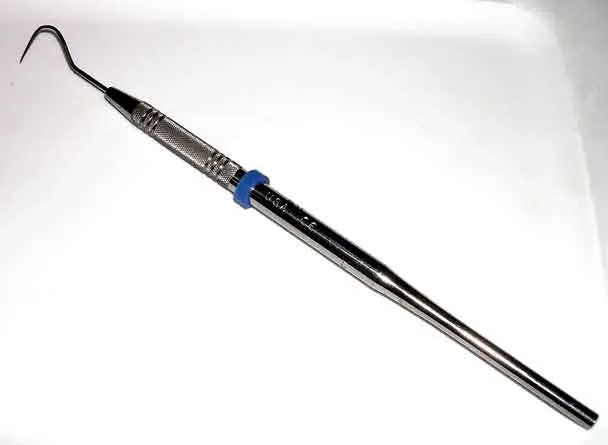 Shepherd's hook explorer (#23)
A thin, sharp, curved wire tip used to feel tooth surfaces, margins and decay.
Shepherd's hook explorer (#23)
A thin, sharp, curved wire tip used to feel tooth surfaces, margins and decay.
-
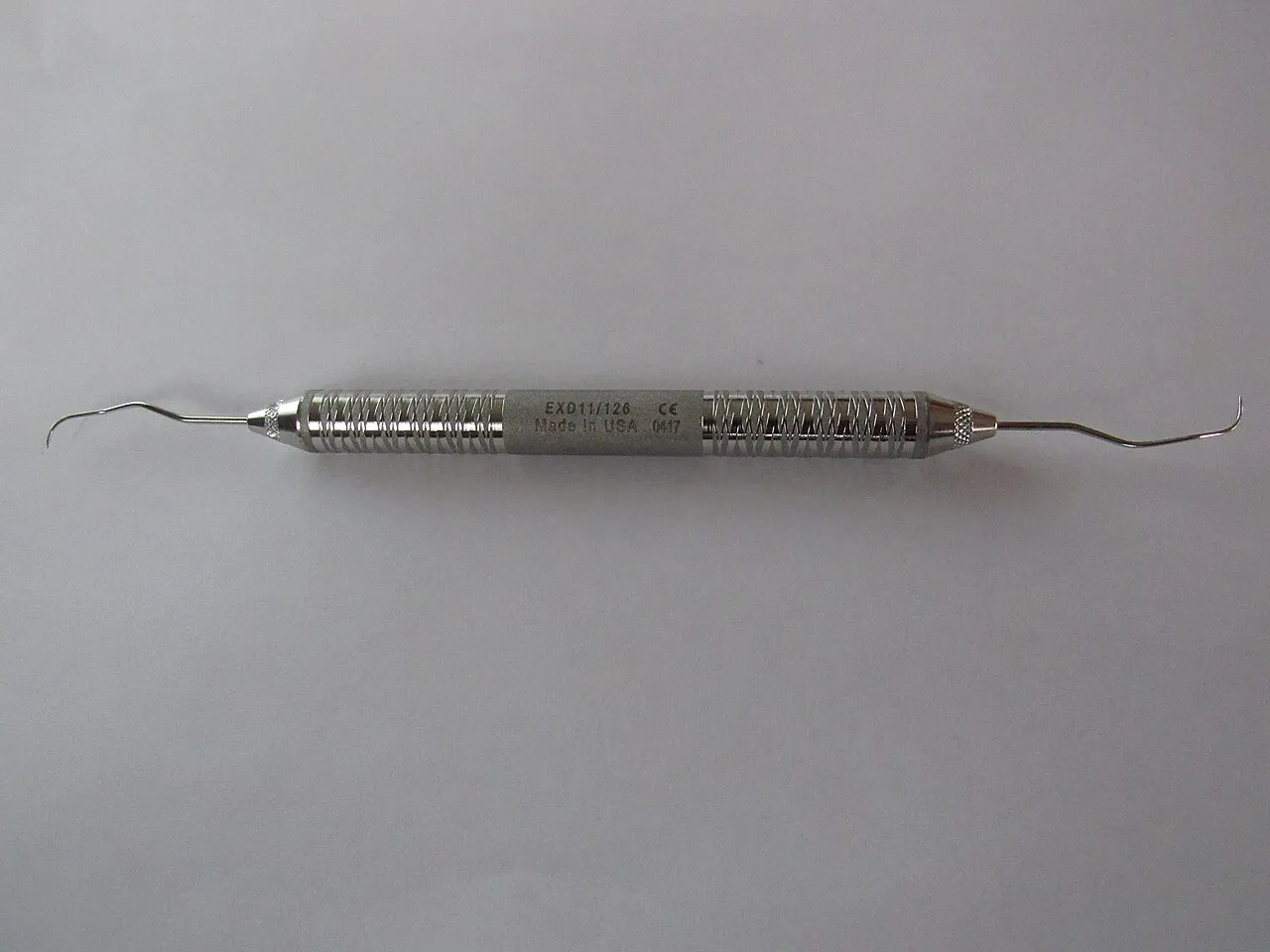 ODU 11/12 explorer
A double-ended explorer with bent shanks that reaches below the gumline on every tooth.
ODU 11/12 explorer
A double-ended explorer with bent shanks that reaches below the gumline on every tooth.
-
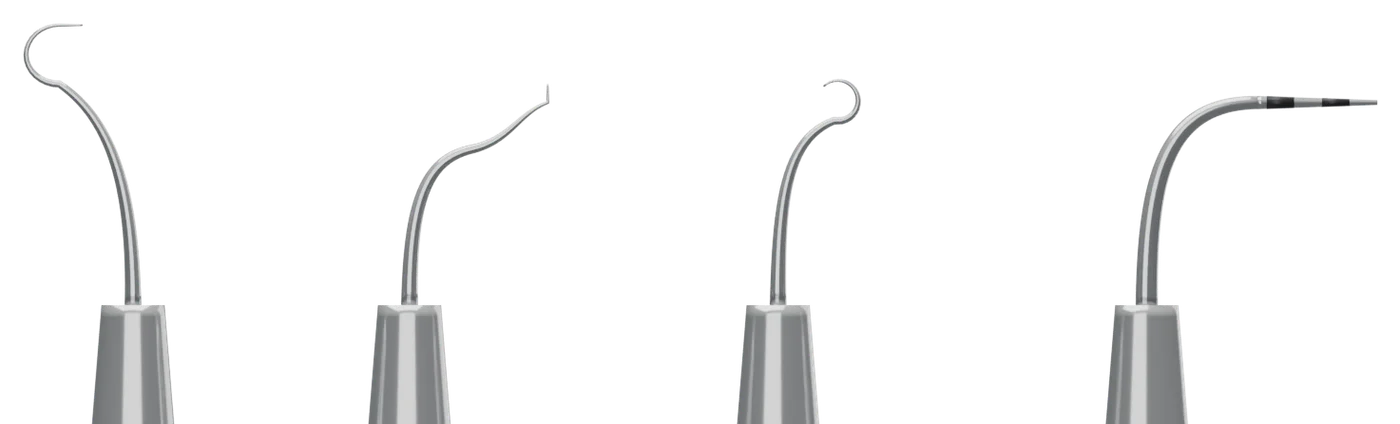 Pigtail and cowhorn explorers (#2, #3A) and Orban explorer
Small curved explorers for shallow pockets and between teeth; the Orban suits front teeth.
Pigtail and cowhorn explorers (#2, #3A) and Orban explorer
Small curved explorers for shallow pockets and between teeth; the Orban suits front teeth.
-
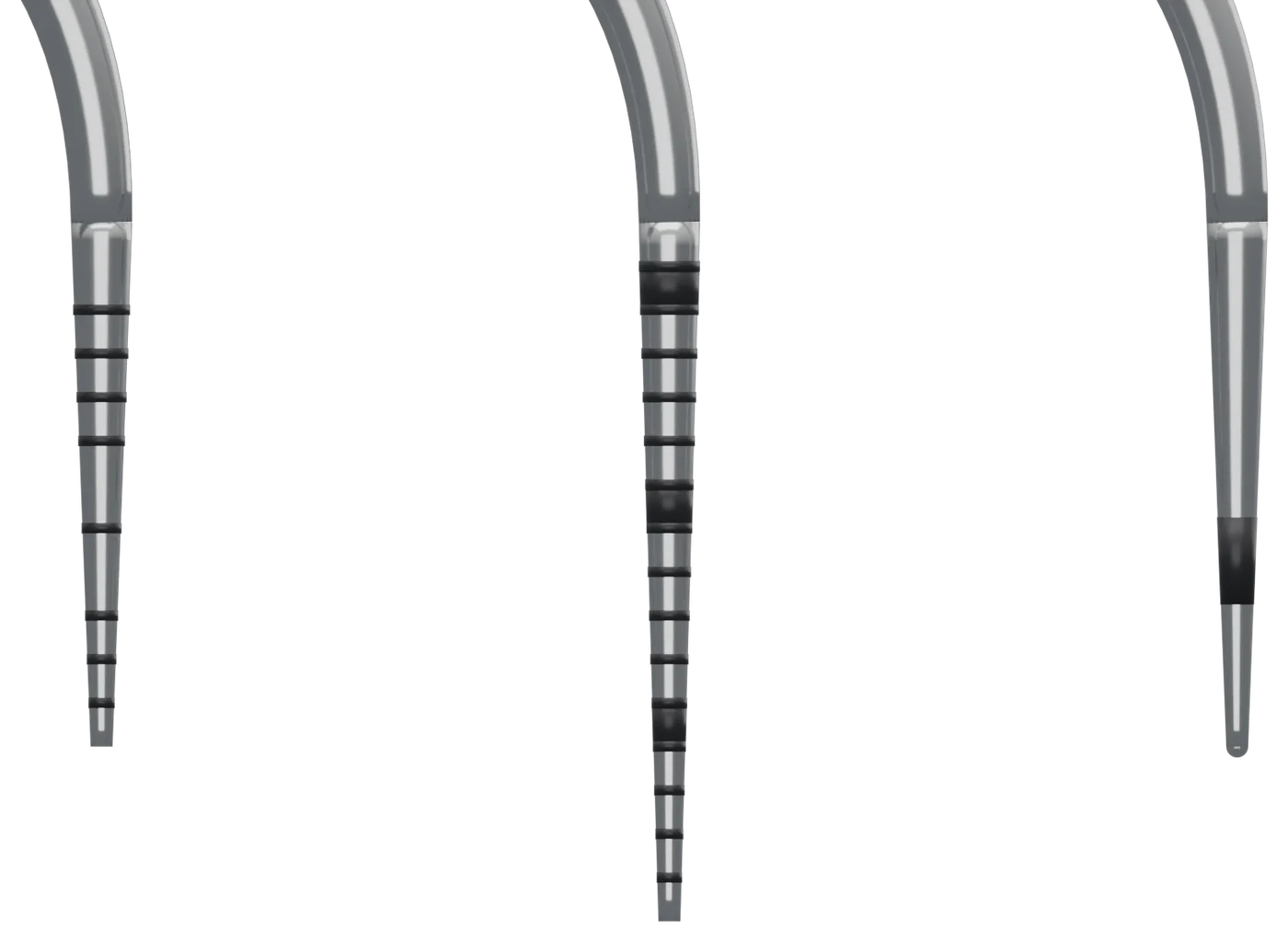 Williams periodontal probe
A blunt, millimeter-marked rod used to measure gum pocket depth.
Williams periodontal probe
A blunt, millimeter-marked rod used to measure gum pocket depth.
-
UNC-15 probe
A 15 mm periodontal probe marked at every millimeter, with bold bands at 5, 10, 15.
-
Marquis color-coded probe
A probe with alternating dark and light bands every 3 mm (3-6-9-12).
-
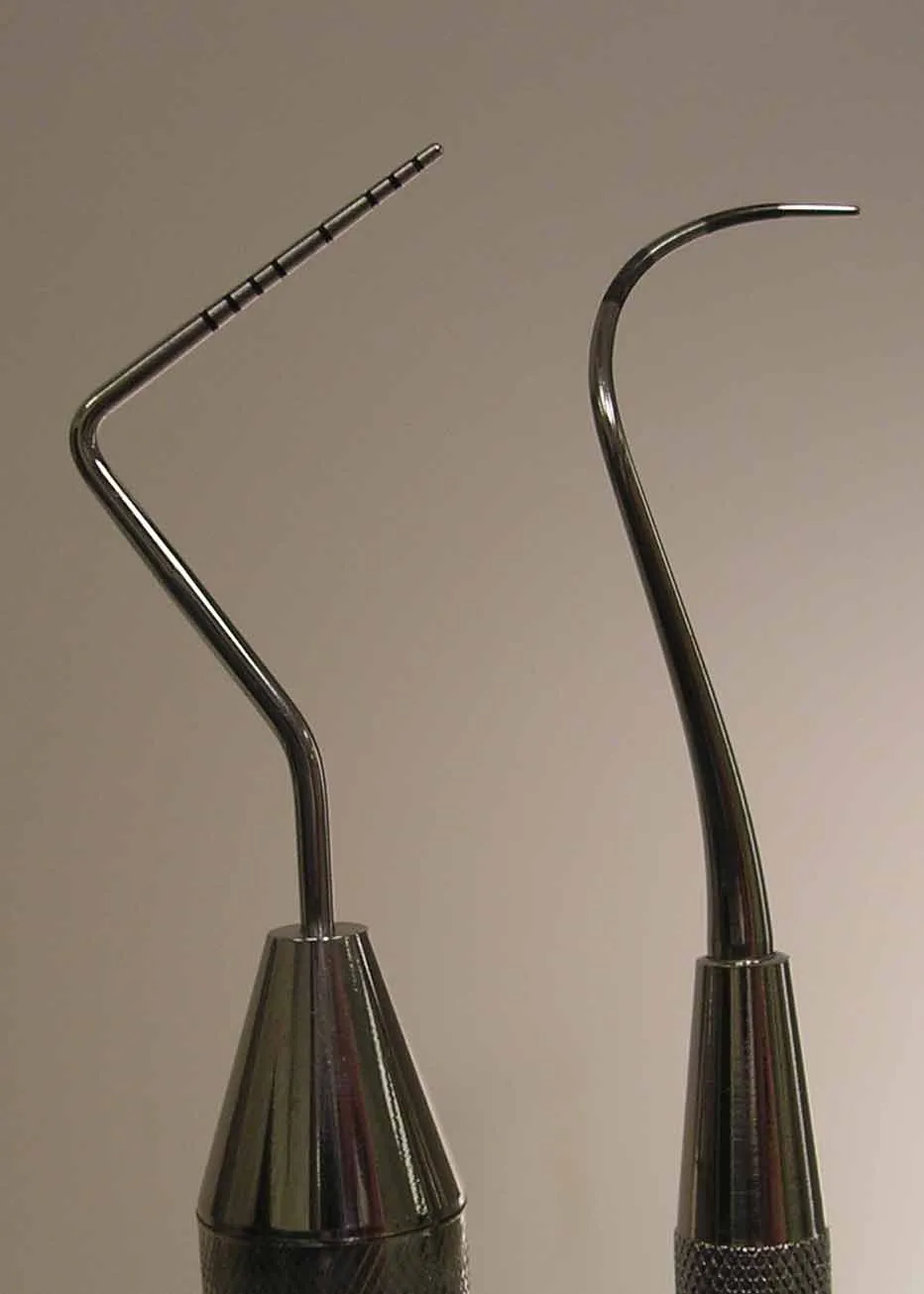 Nabers furcation probe
A curved probe that hooks into the furcation, where a molar's roots split.
Nabers furcation probe
A curved probe that hooks into the furcation, where a molar's roots split.
-
WHO / PSR probe (ball-tip probe)
A screening probe with a tiny ball tip and a dark band from 3.5 to 5.5 mm.
-
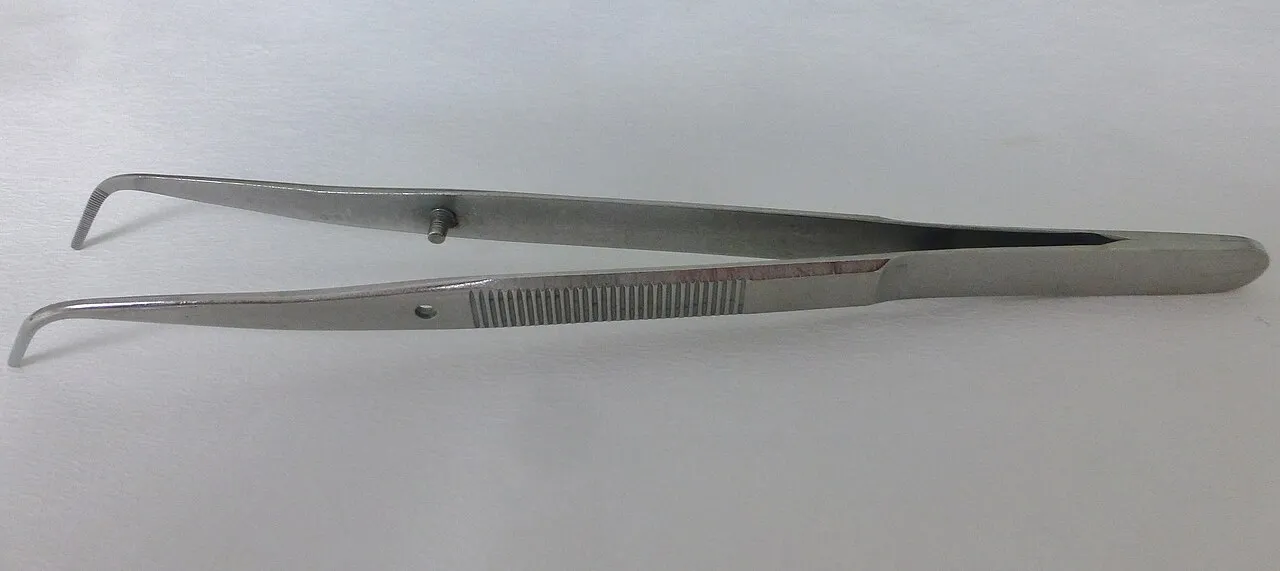 Cotton pliers (dressing forceps)
Long angled tweezers for carrying small items into and out of the mouth.
Cotton pliers (dressing forceps)
Long angled tweezers for carrying small items into and out of the mouth.
Hygiene and scaling
Instruments that remove tartar and stain, plus ultrasonic tips, polishing tools and sharpening.
-
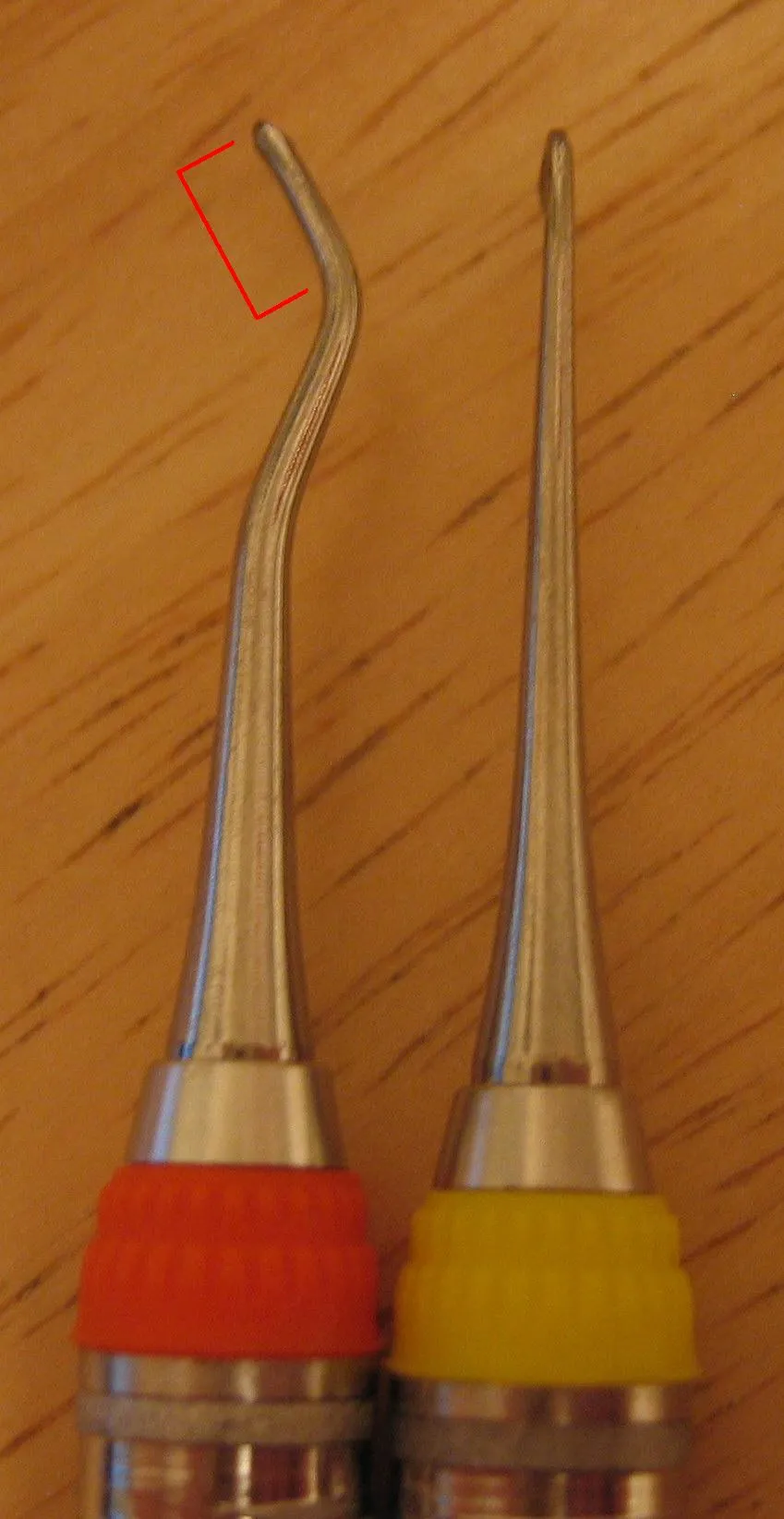 Anterior sickle scaler
A pointed, triangular blade for chipping heavy tartar off front teeth above the gumline.
Anterior sickle scaler
A pointed, triangular blade for chipping heavy tartar off front teeth above the gumline.
-
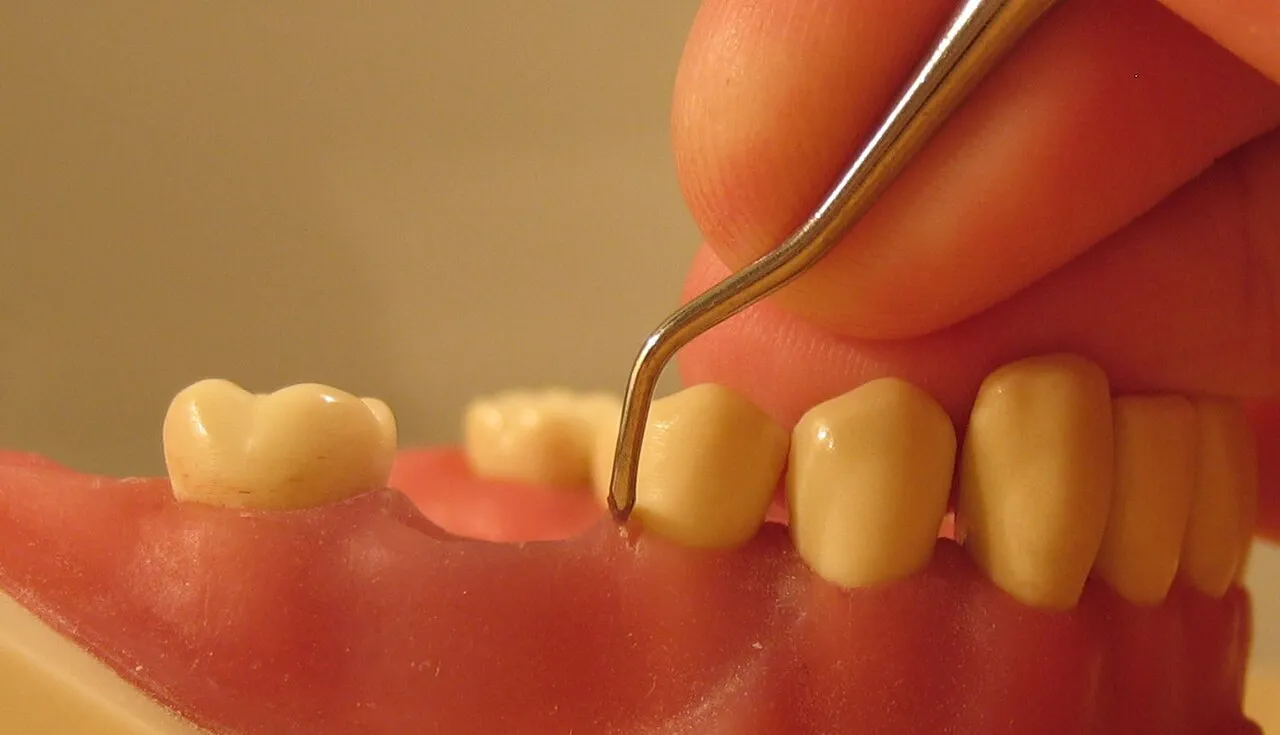 Posterior sickle scaler (e.g., H6/H7, 204S)
A sickle with a bent shank that reaches between back teeth to remove tartar.
Posterior sickle scaler (e.g., H6/H7, 204S)
A sickle with a bent shank that reaches between back teeth to remove tartar.
-
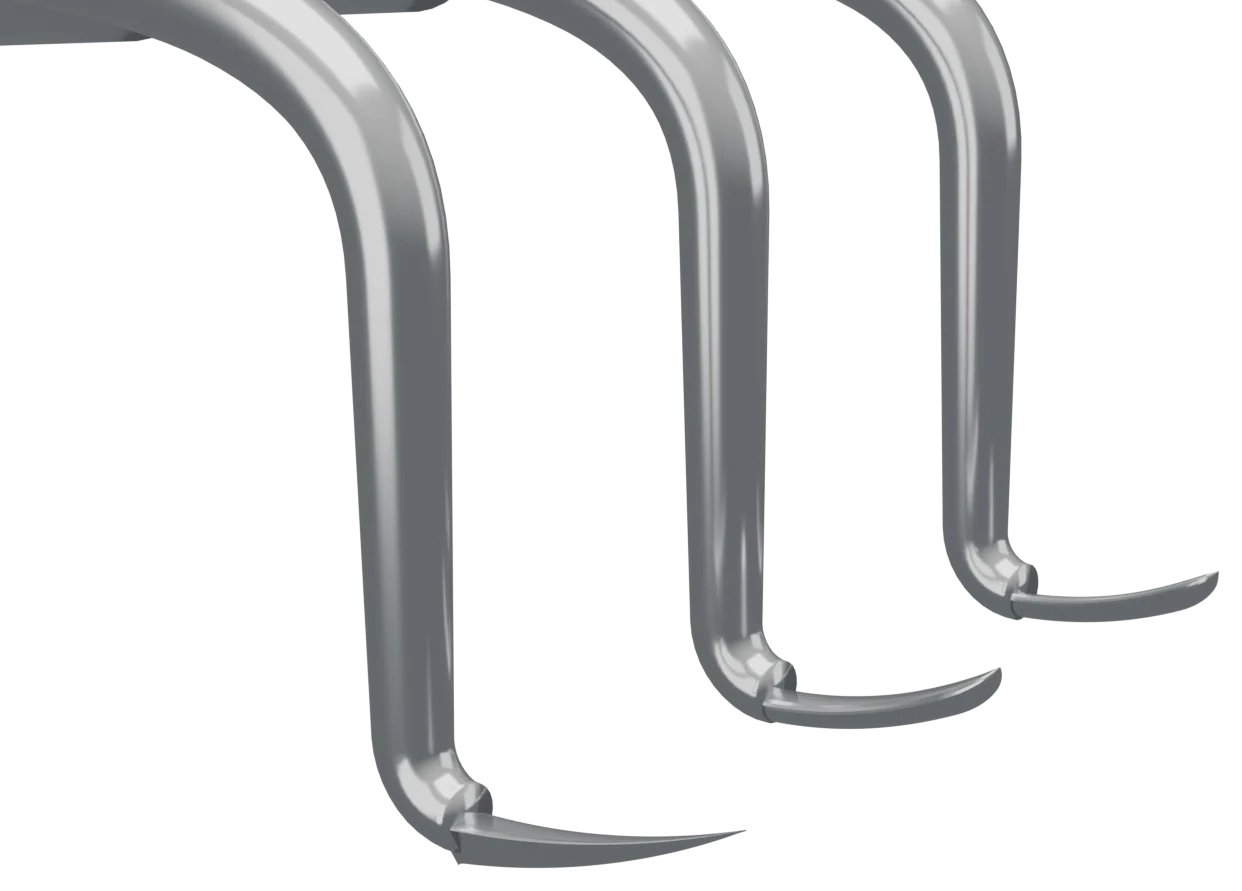 Universal curette: Columbia 13/14
A curette with two cutting edges that can scale every surface of every tooth.
Universal curette: Columbia 13/14
A curette with two cutting edges that can scale every surface of every tooth.
-
Universal curette: Barnhart 5/6
A universal curette with a longer, sturdier blade, handy on molars.
-
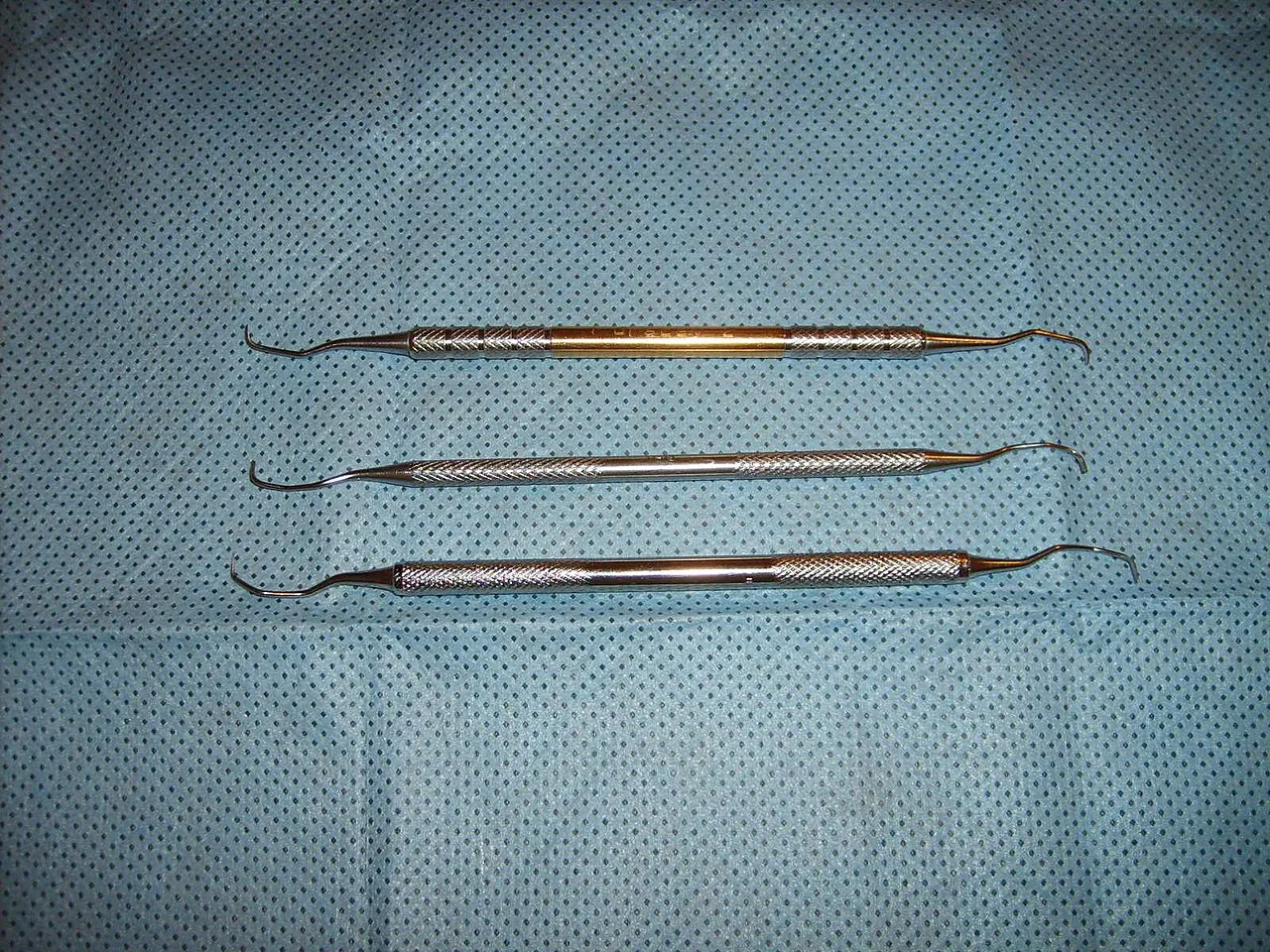 Gracey curettes (area-specific curettes)
Curettes built for one area each, with one tilted cutting edge per end.
Gracey curettes (area-specific curettes)
Curettes built for one area each, with one tilted cutting edge per end.
-
Gracey 1/2 and 3/4
Gracey pairs for front teeth.
-
Gracey 5/6
A Gracey for front teeth and premolars.
-
Gracey 7/8 and 9/10
Graceys for the cheek and tongue sides of back teeth.
-
Gracey 11/12
The Gracey for the mesial (front-facing) surfaces of back teeth.
-
Gracey 13/14
The Gracey for the distal (back-facing) surfaces of back teeth.
-
Gracey 15/16
A modified 11/12 for mesial surfaces of back teeth, with a shank like a 13/14.
-
Gracey 17/18
A modified 13/14 for distal surfaces of back teeth, easier to reach the far molars.
-
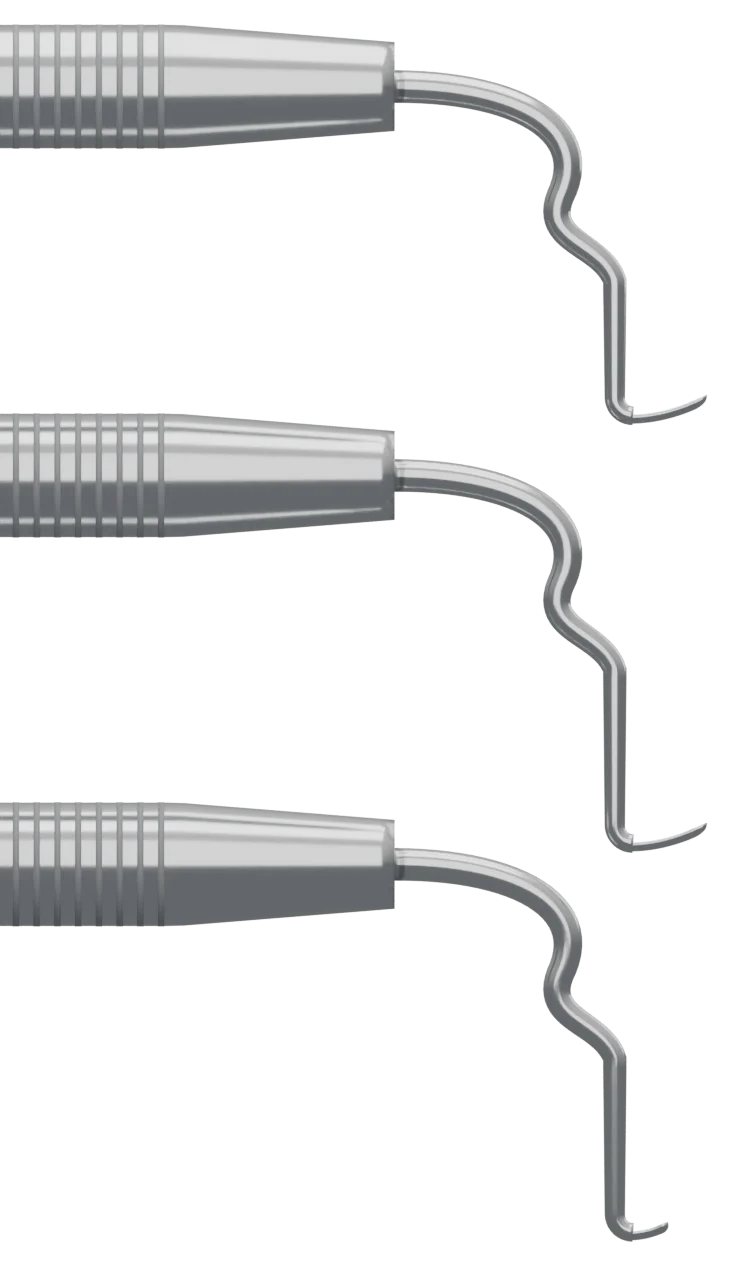 After Five (extended-shank) Gracey
A Gracey with a lower shank 3 mm longer, for pockets deeper than 5 mm.
After Five (extended-shank) Gracey
A Gracey with a lower shank 3 mm longer, for pockets deeper than 5 mm.
-
Mini Five (mini-bladed) Gracey
An extended-shank Gracey with a blade half as long, for narrow pockets and furcations.
-
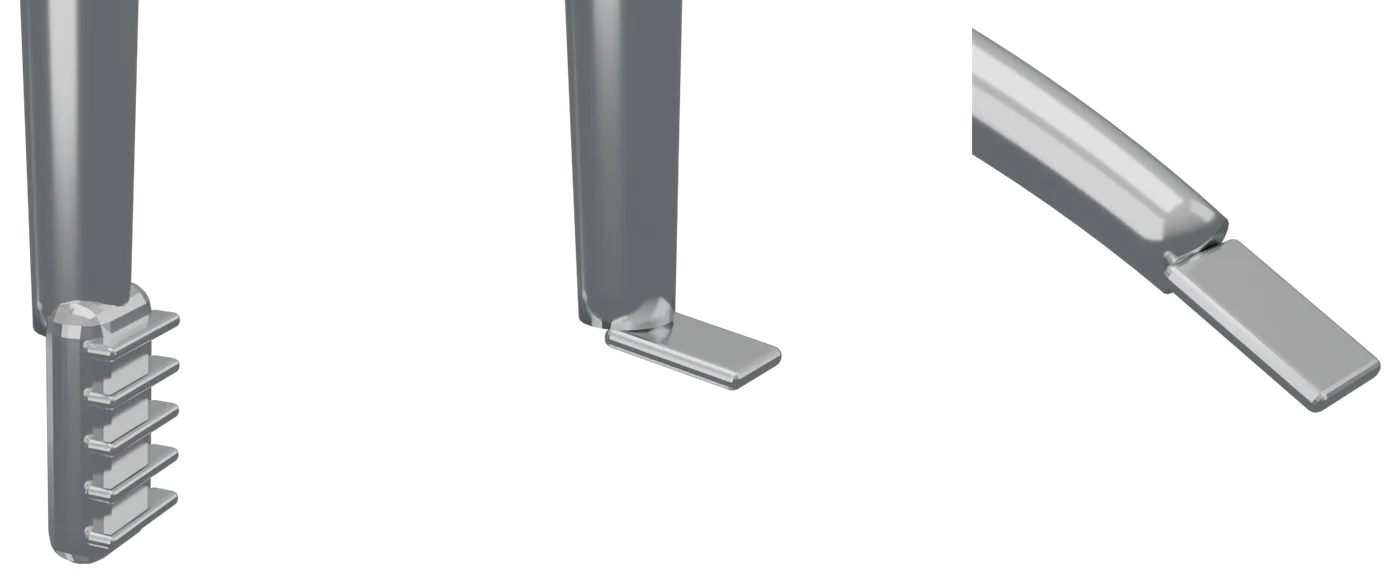 Periodontal file
A small pad of several tiny blades that crushes heavy tartar.
Periodontal file
A small pad of several tiny blades that crushes heavy tartar.
-
Periodontal hoe
A single straight blade turned at about 100 degrees, pulled to remove heavy tartar rings.
-
Periodontal chisel
A straight, beveled blade pushed between lower front teeth to break off heavy tartar.
-
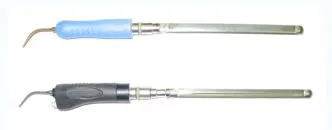 Magnetostrictive ultrasonic insert
A metal-stack insert that vibrates in an oval path; all sides of its tip work.
Magnetostrictive ultrasonic insert
A metal-stack insert that vibrates in an oval path; all sides of its tip work.
-
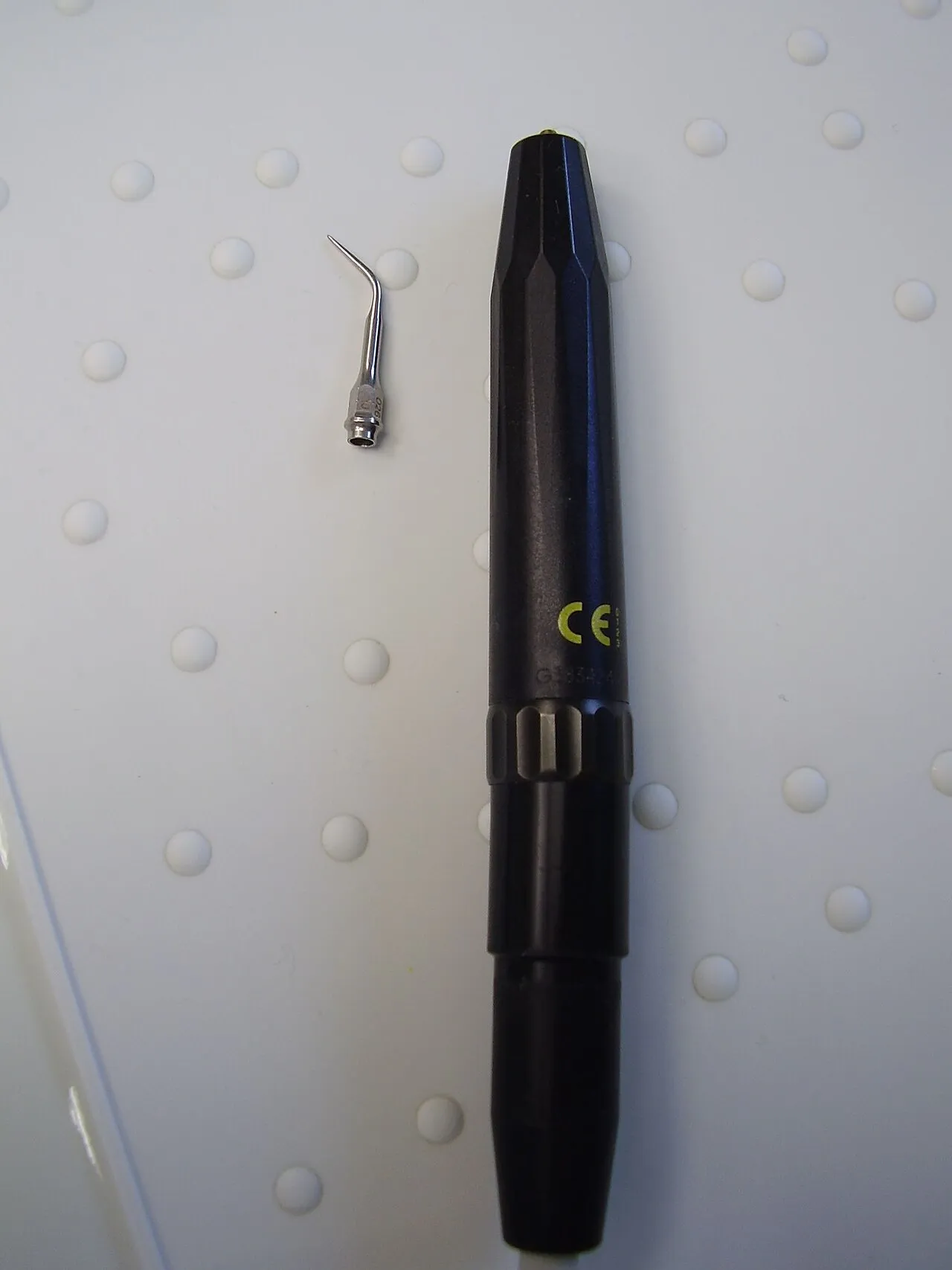 Piezoelectric scaler tip
A small screw-on tip that moves straight back and forth; its sides do the work.
Piezoelectric scaler tip
A small screw-on tip that moves straight back and forth; its sides do the work.
-
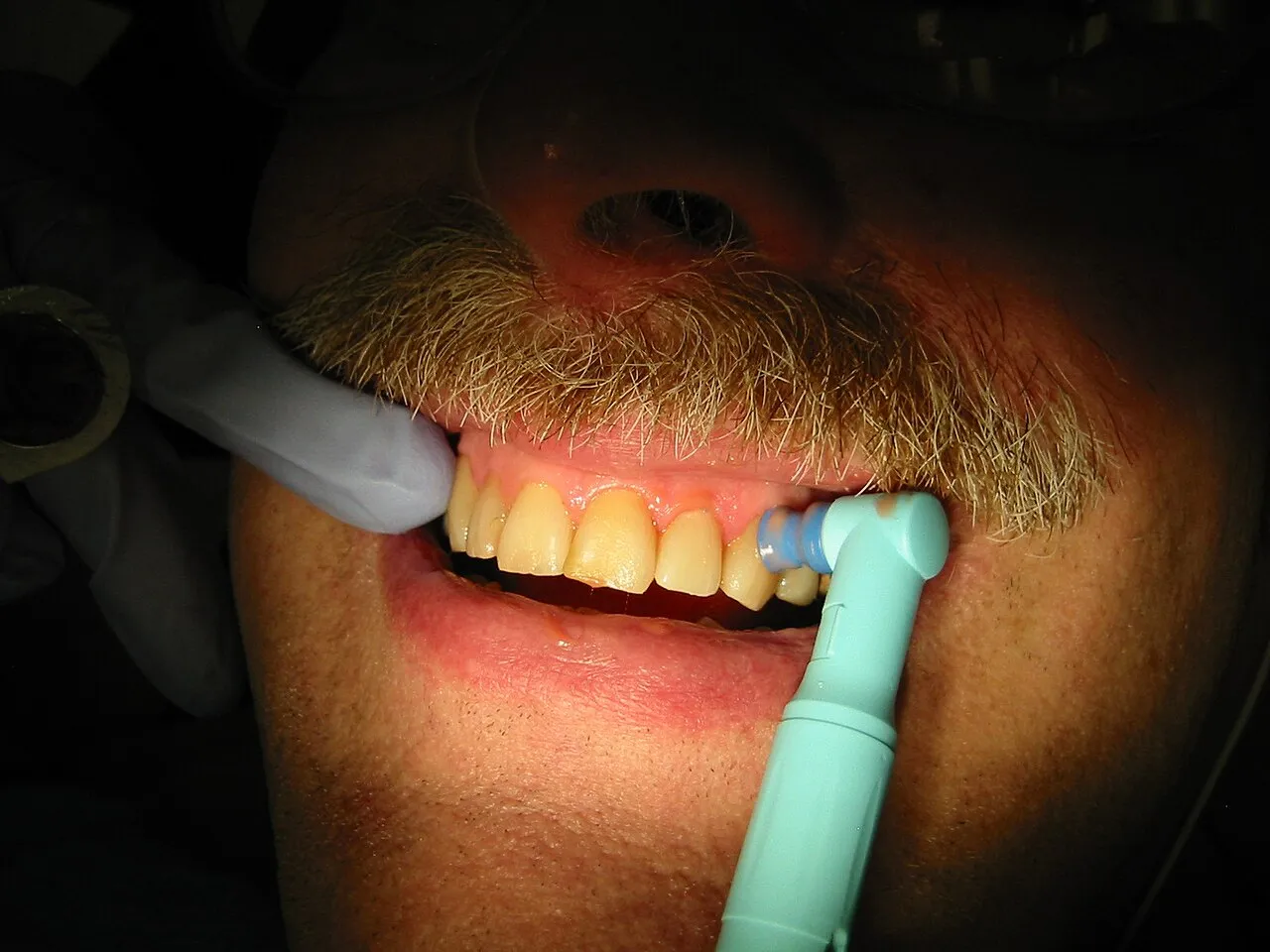 Prophy angle
The angled head on a slow-speed handpiece that spins a polishing cup or brush.
Prophy angle
The angled head on a slow-speed handpiece that spins a polishing cup or brush.
-
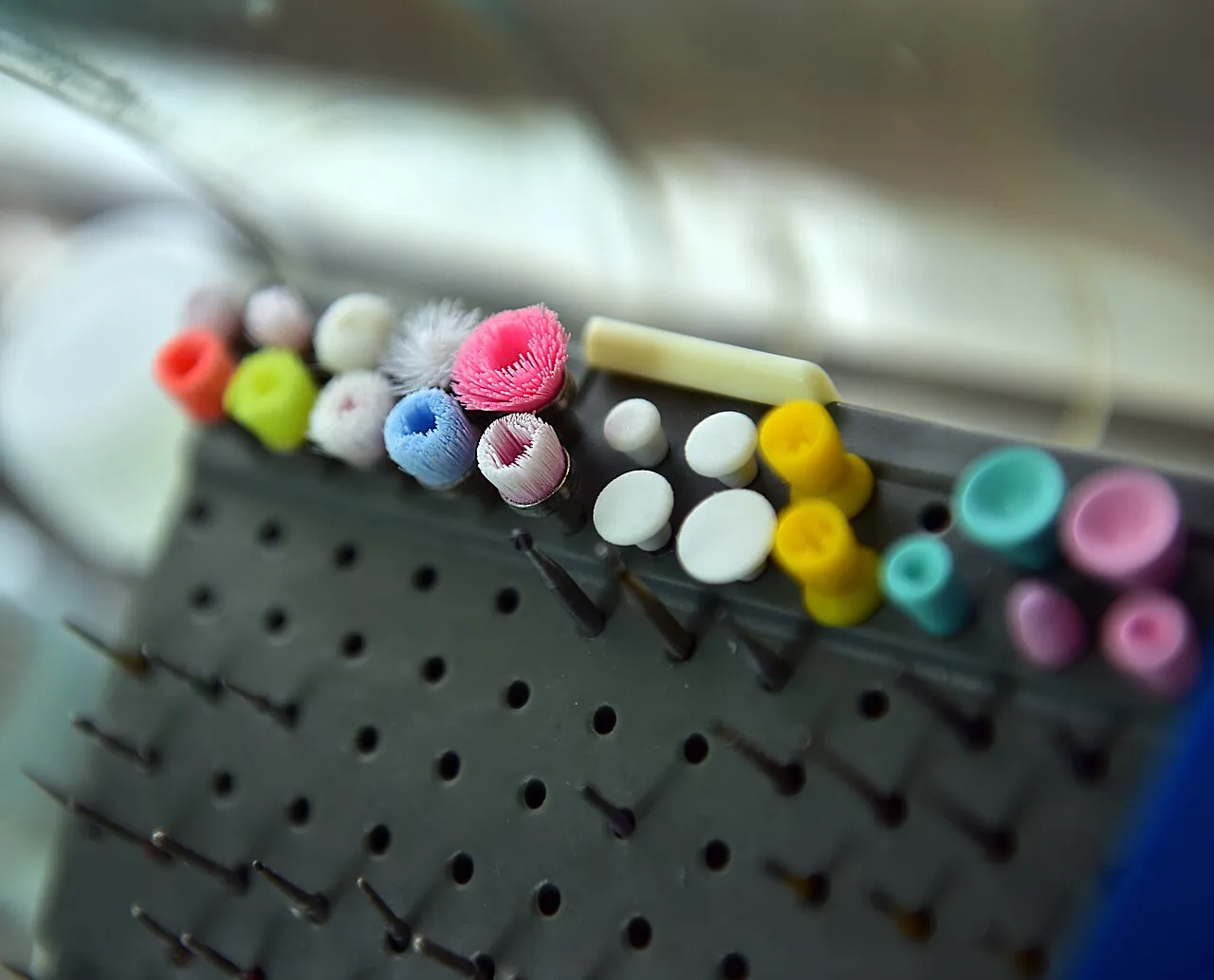 Prophy cups and brushes
Soft rubber cups and tiny bristle brushes that hold paste for polishing.
Prophy cups and brushes
Soft rubber cups and tiny bristle brushes that hold paste for polishing.
-
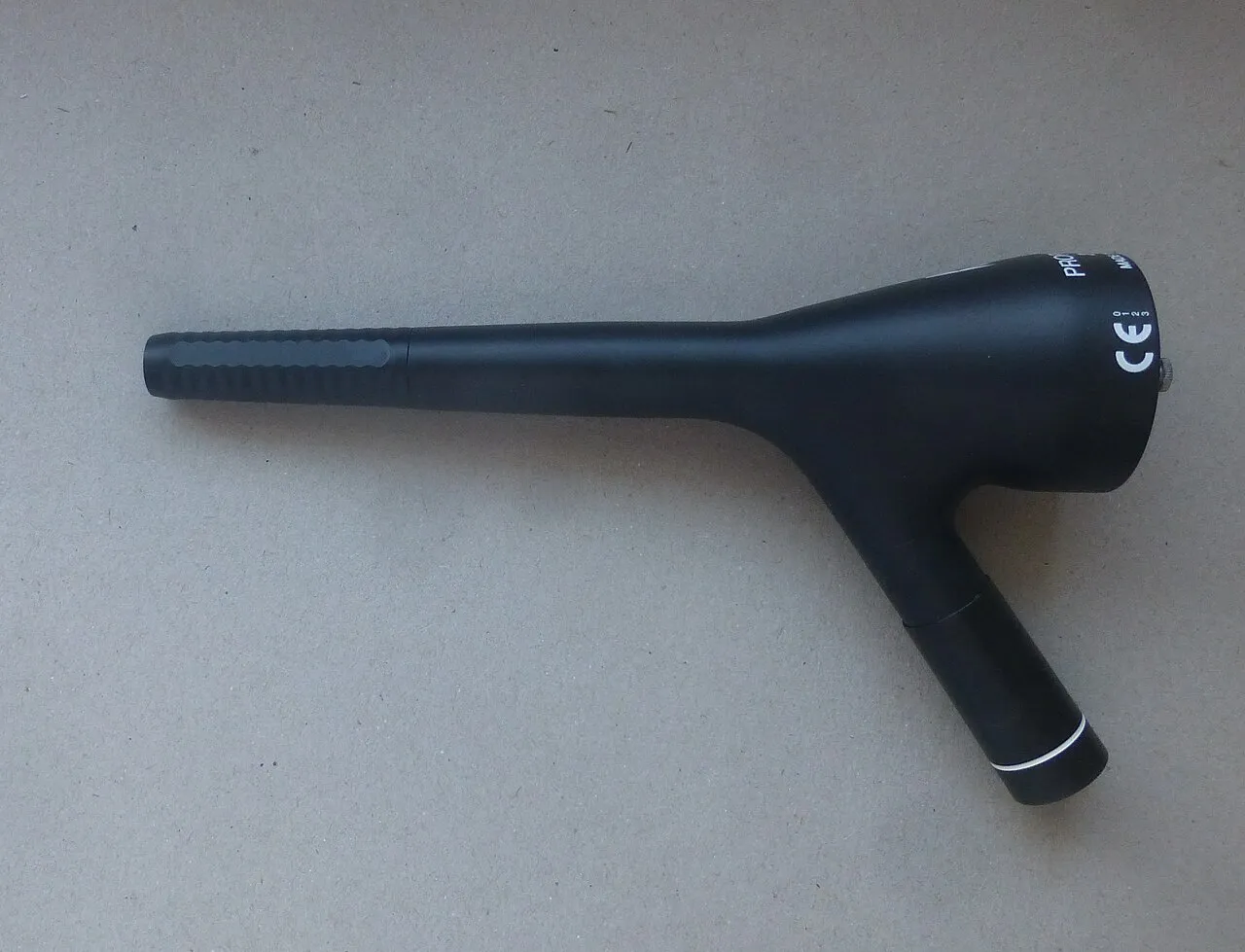 Air polisher handpiece
A handpiece that sprays air, water and fine powder to remove stain and biofilm.
Air polisher handpiece
A handpiece that sprays air, water and fine powder to remove stain and biofilm.
-
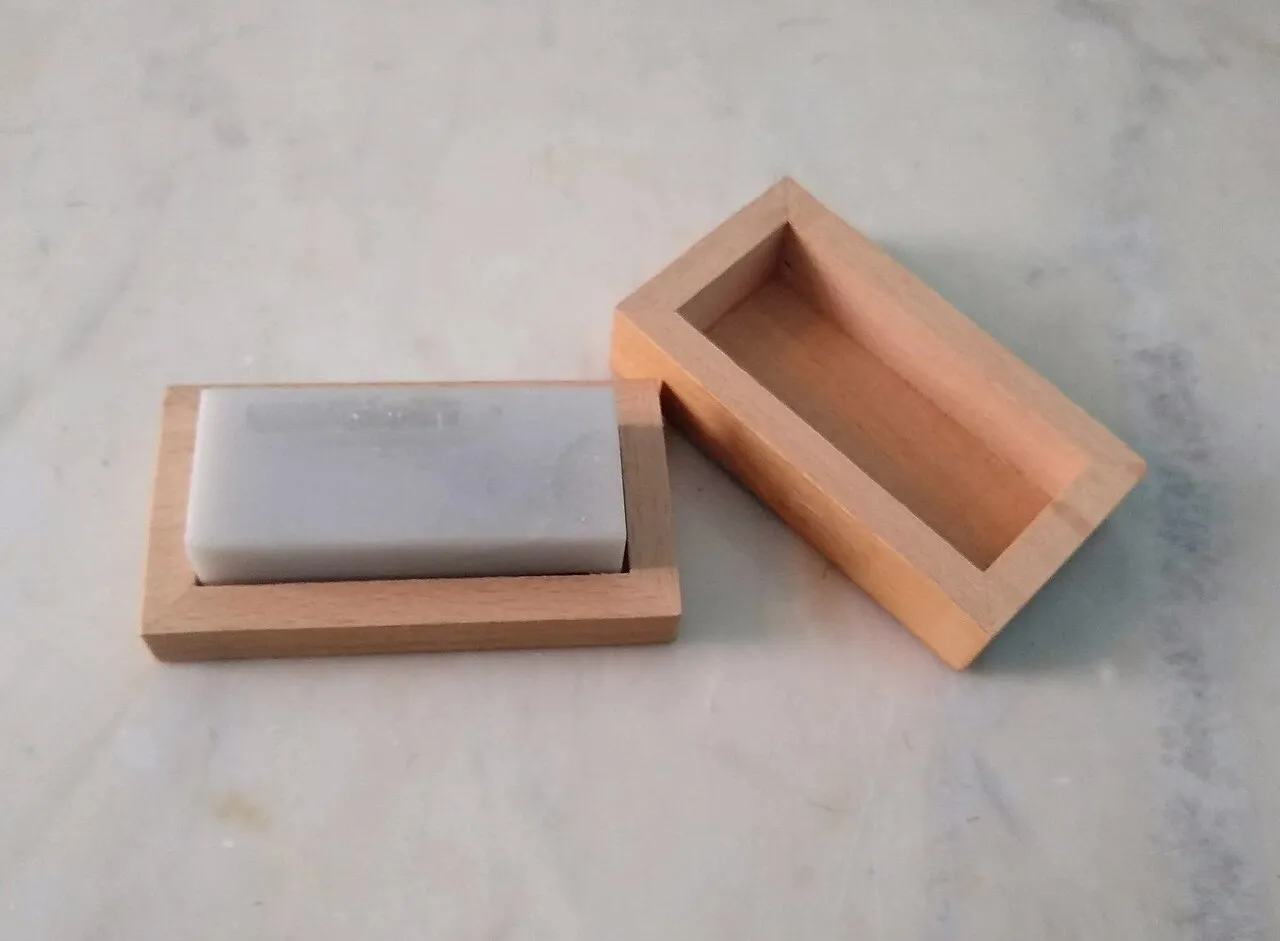 Sharpening stone
A fine stone used to restore a sharp edge on scalers and curettes.
Sharpening stone
A fine stone used to restore a sharp edge on scalers and curettes.
-
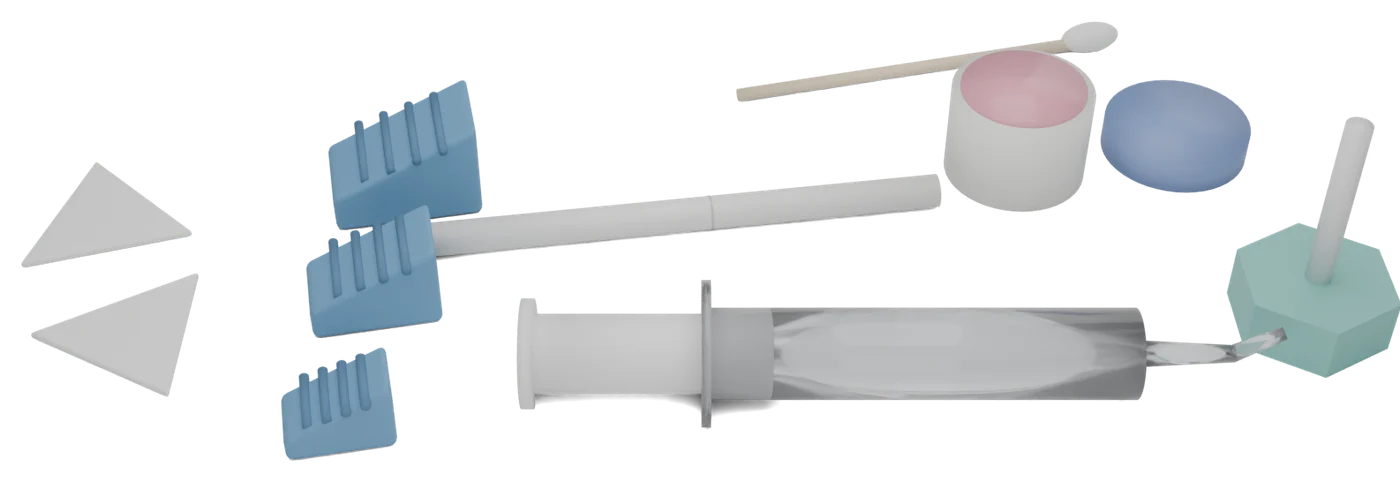 Sharpening test stick
A plastic rod used to check whether a blade is still sharp.
Sharpening test stick
A plastic rod used to check whether a blade is still sharp.
- Implant-safe scalers and curettes Titanium, plastic or resin instruments that clean implants without scratching them.
Handpieces and burs
The high-speed and slow-speed handpieces, their attachments and the burs that go in them.
-
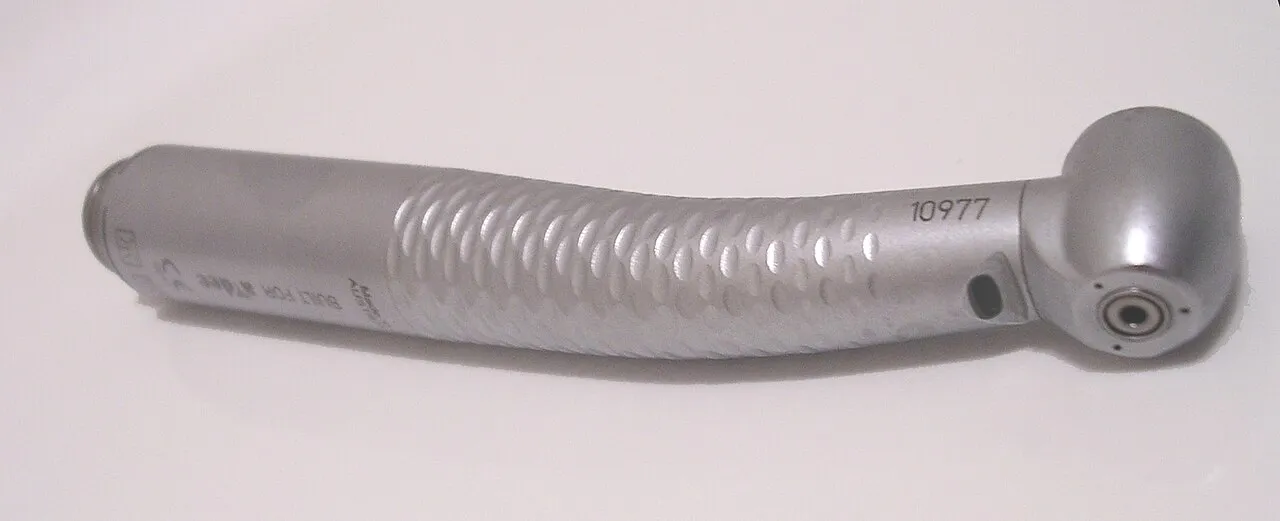 High-speed handpiece
The air-powered handpiece that spins a bur very fast to cut tooth and remove old fillings.
High-speed handpiece
The air-powered handpiece that spins a bur very fast to cut tooth and remove old fillings.
-
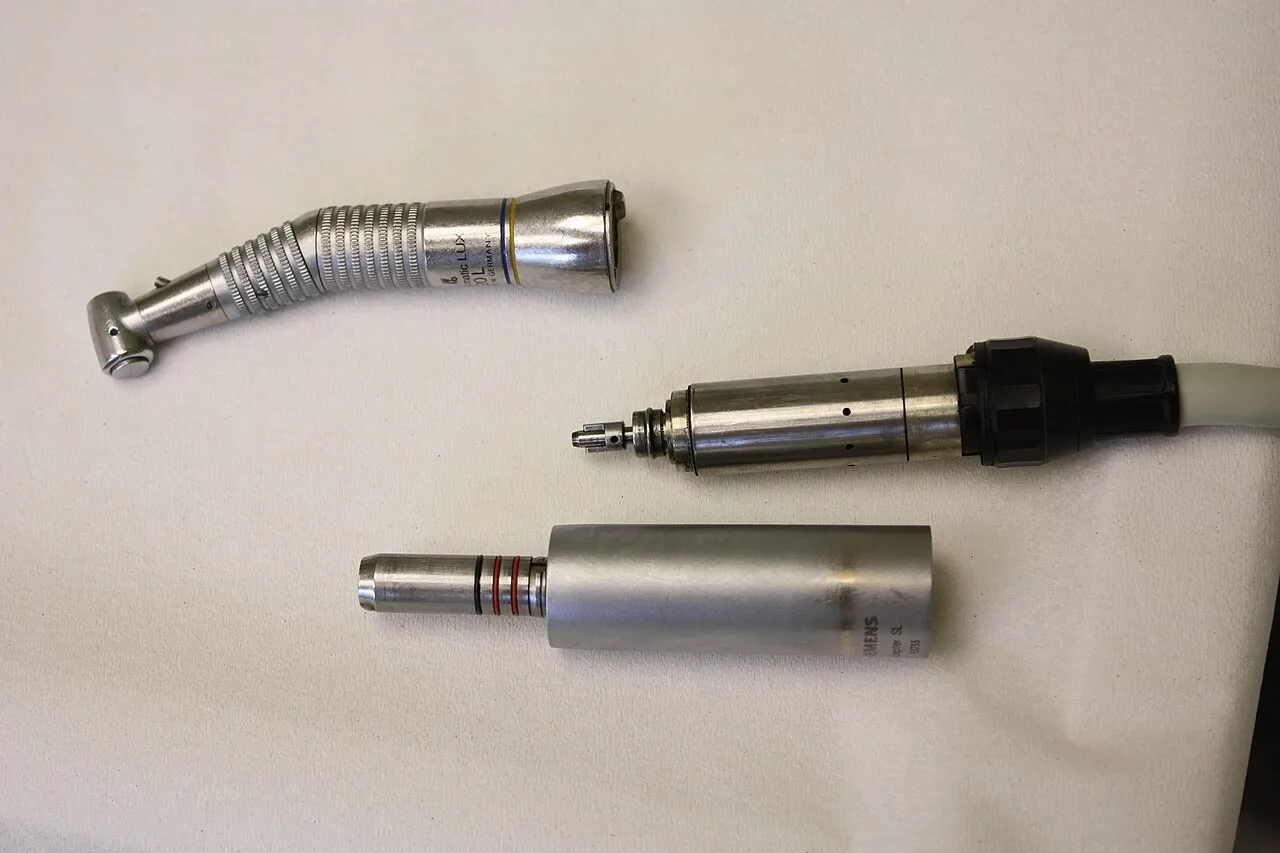 Low-speed (slow-speed) handpiece and motor
A motor that runs at lower speed and drives contra-angle, straight or prophy attachments.
Low-speed (slow-speed) handpiece and motor
A motor that runs at lower speed and drives contra-angle, straight or prophy attachments.
-
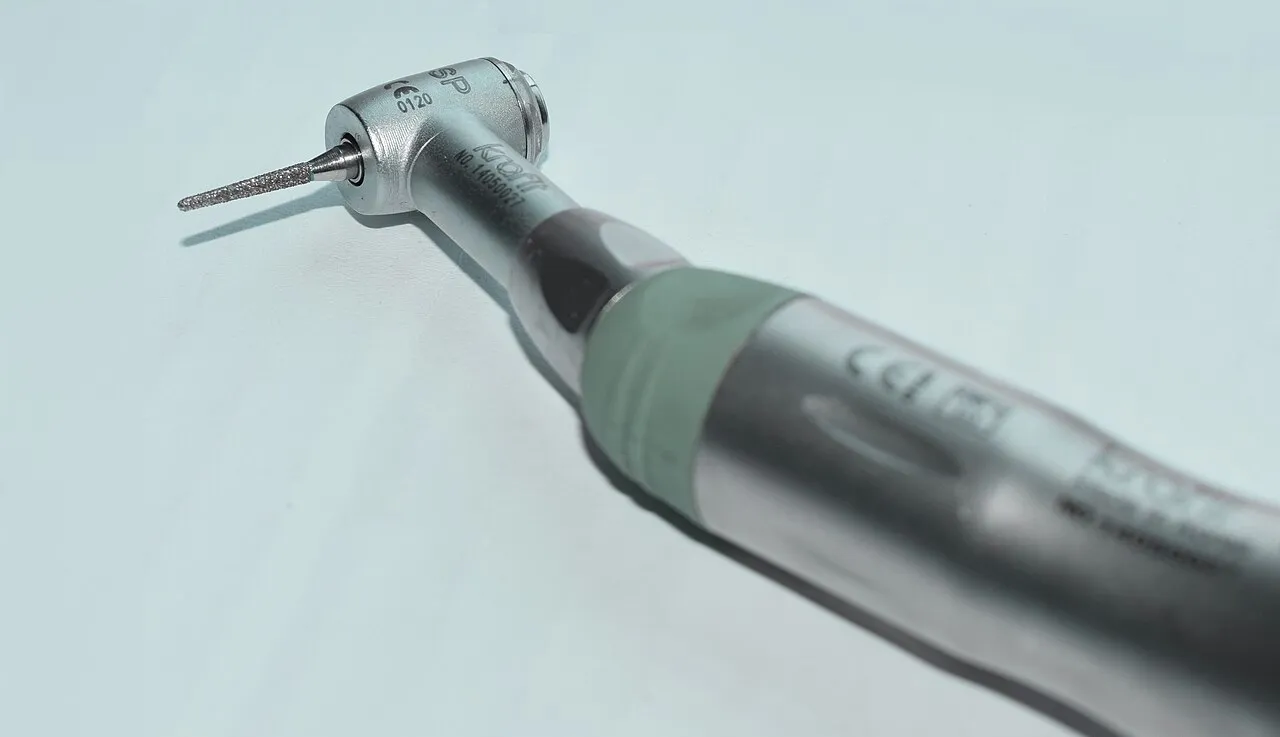 Contra-angle attachment
A bent attachment for the slow-speed motor that holds latch-type burs at an angle.
Contra-angle attachment
A bent attachment for the slow-speed motor that holds latch-type burs at an angle.
-
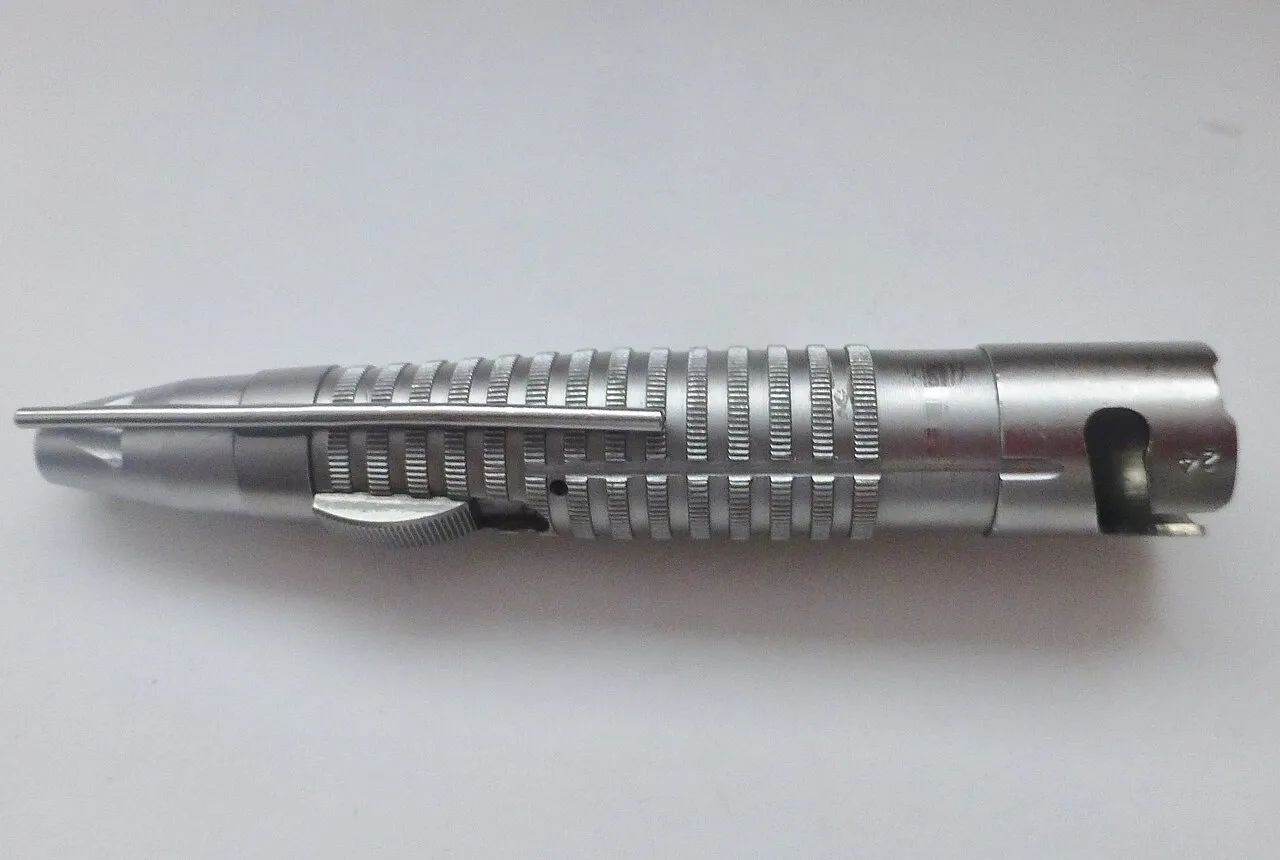 Straight handpiece (nose cone)
A straight attachment for the slow-speed motor that holds long-shank burs.
Straight handpiece (nose cone)
A straight attachment for the slow-speed motor that holds long-shank burs.
- Lab handpiece (lab micromotor) A bench-top motor and handpiece used in the office lab for acrylic and models.
-
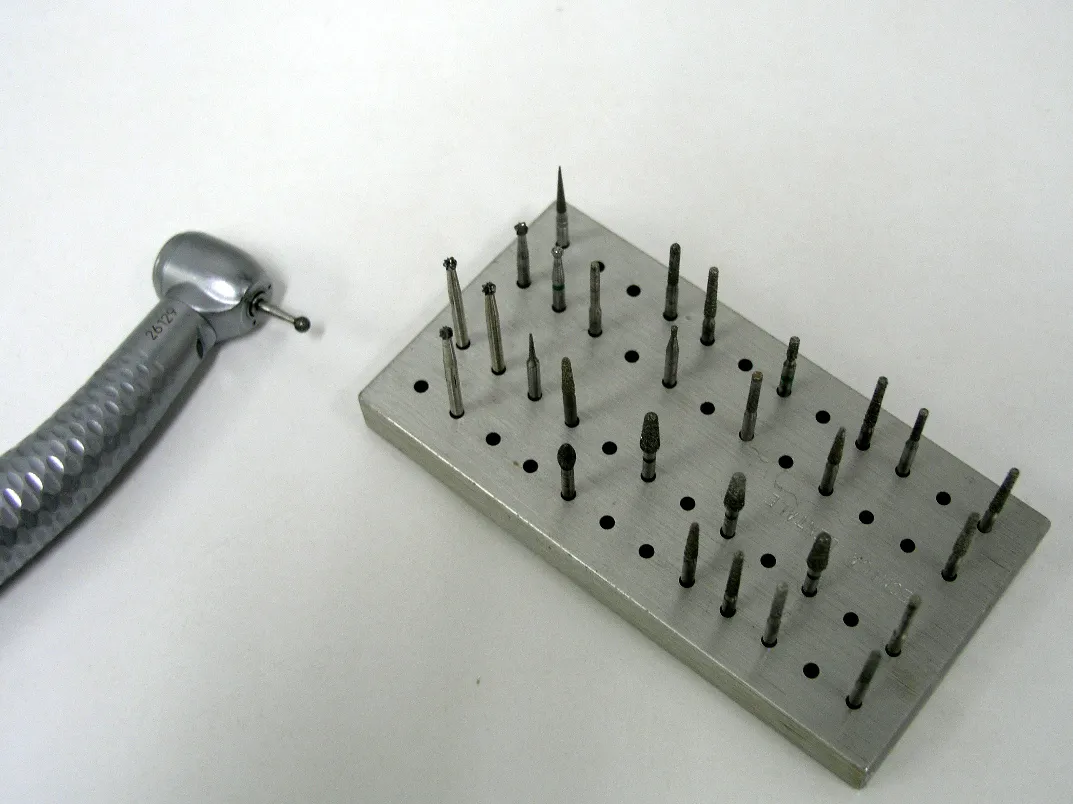 Bur shank types: friction grip vs. latch vs. straight
Burs come in three shank styles that match the handpiece they fit.
Bur shank types: friction grip vs. latch vs. straight
Burs come in three shank styles that match the handpiece they fit.
-
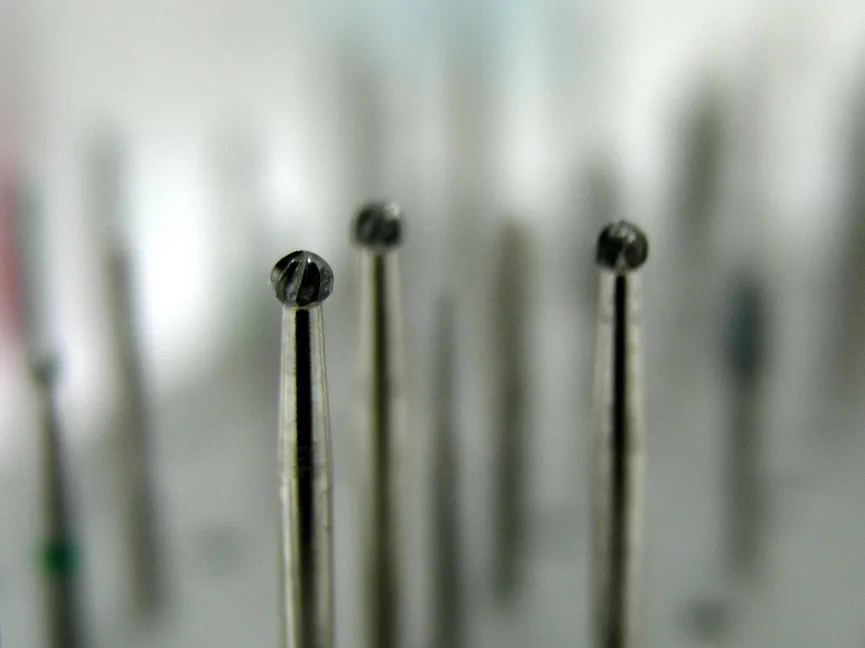 Round bur
A ball-shaped bur used to open teeth and remove decay.
Round bur
A ball-shaped bur used to open teeth and remove decay.
-
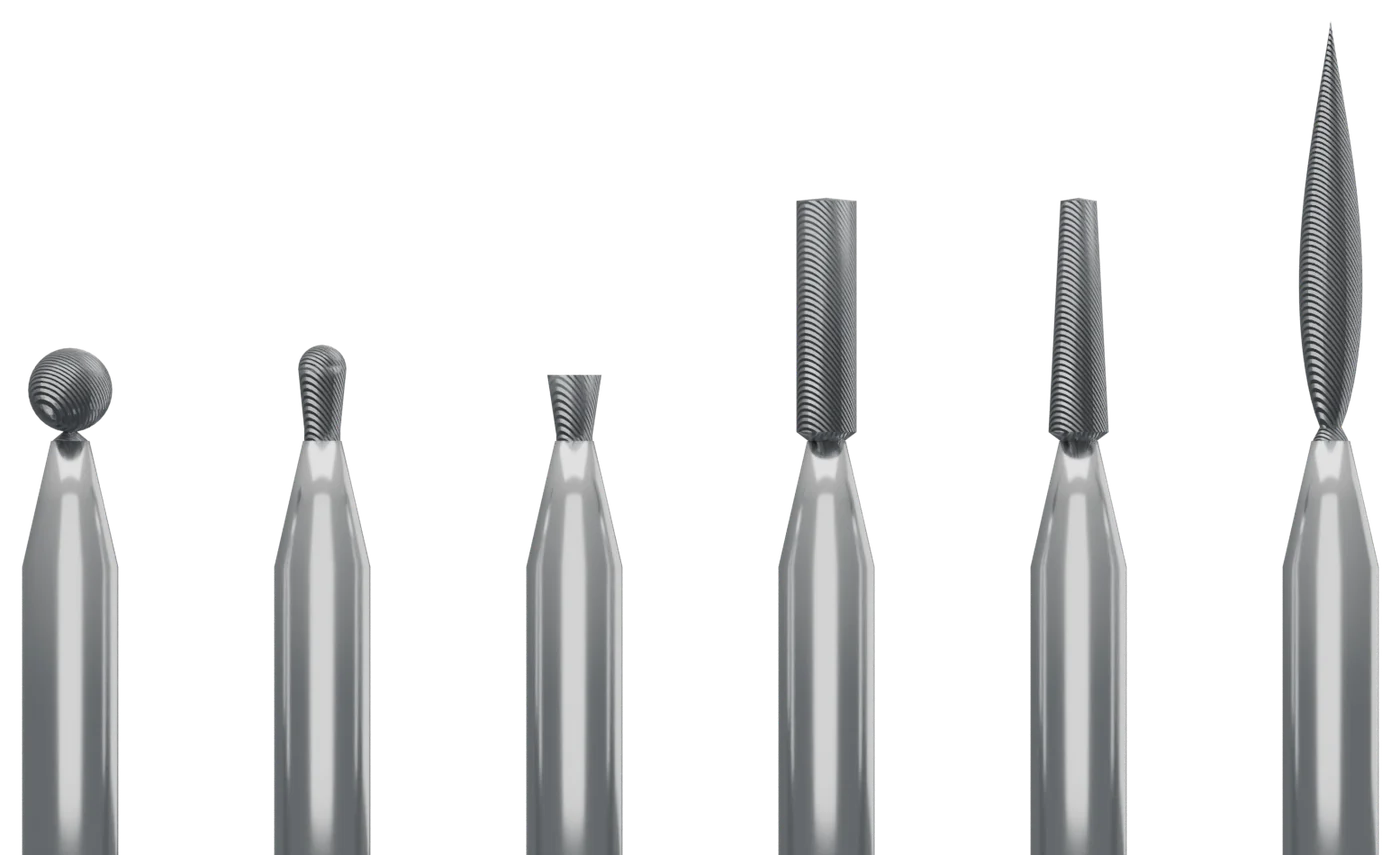 Pear-shaped bur (e.g., #330)
A pear-shaped bur with rounded corners, common for amalgam and small preparations.
Pear-shaped bur (e.g., #330)
A pear-shaped bur with rounded corners, common for amalgam and small preparations.
-
Inverted cone bur
A bur shaped like an upside-down cone that makes undercuts to hold fillings.
-
Straight and tapered fissure burs
Cylinder or cone-shaped burs with long blades for cutting straight walls.
-
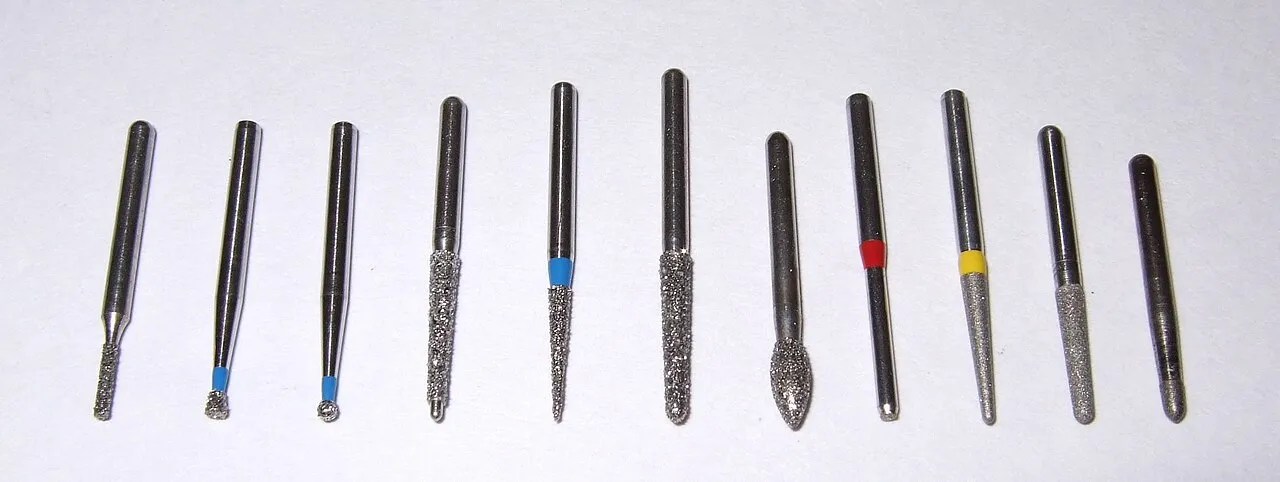 Diamond bur
A bur coated with diamond grit that grinds rather than cuts, used for crown preps.
Diamond bur
A bur coated with diamond grit that grinds rather than cuts, used for crown preps.
-
Finishing burs and polishing points
Burs with many fine blades, or rubber points, for smoothing fillings after placement.
Restorative (fillings)
Tools for removing decay, placing and shaping fillings, and checking the bite.
-
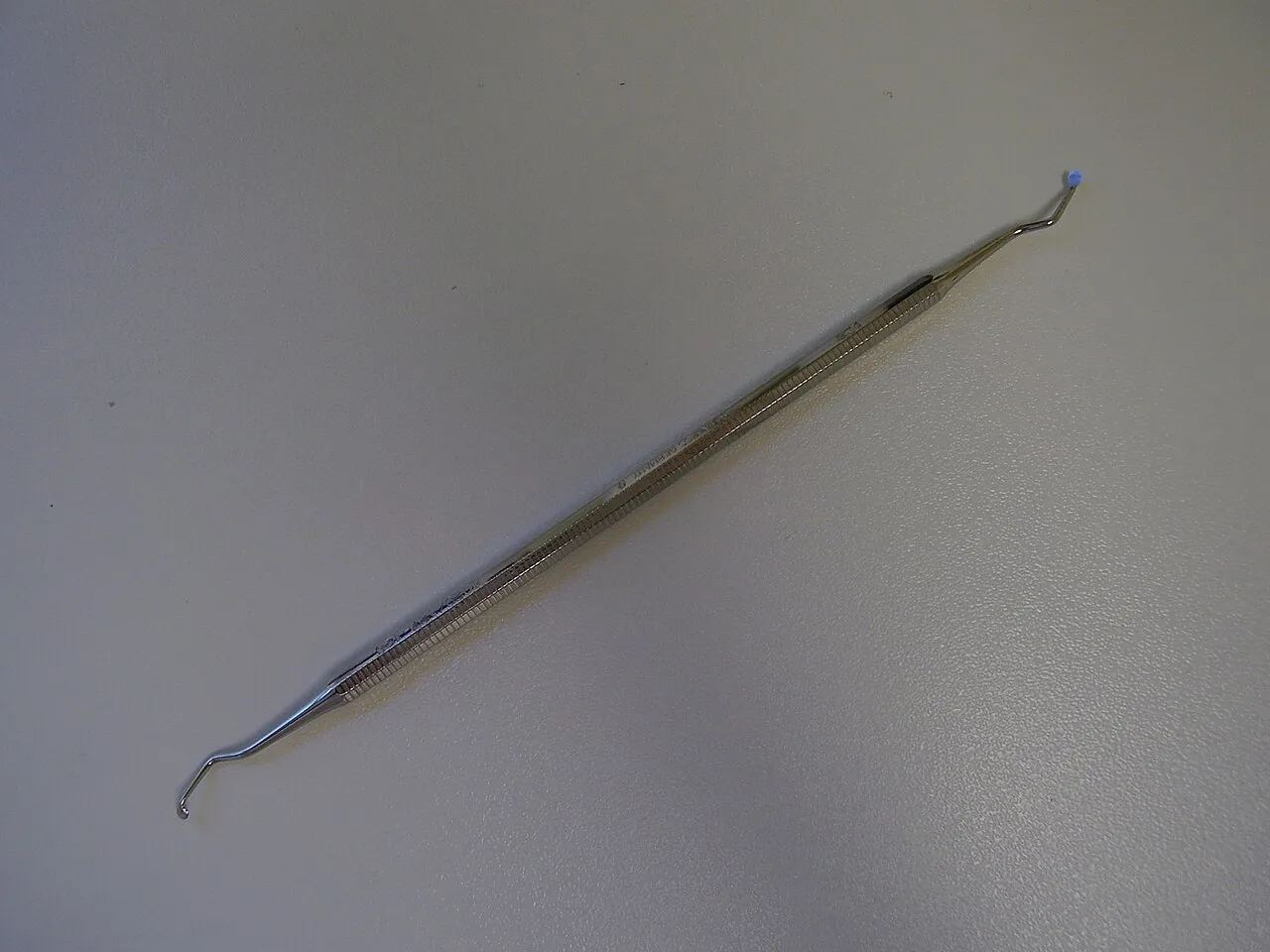 Spoon excavator
A small spoon-shaped blade that scoops soft decay out of a tooth.
Spoon excavator
A small spoon-shaped blade that scoops soft decay out of a tooth.
-
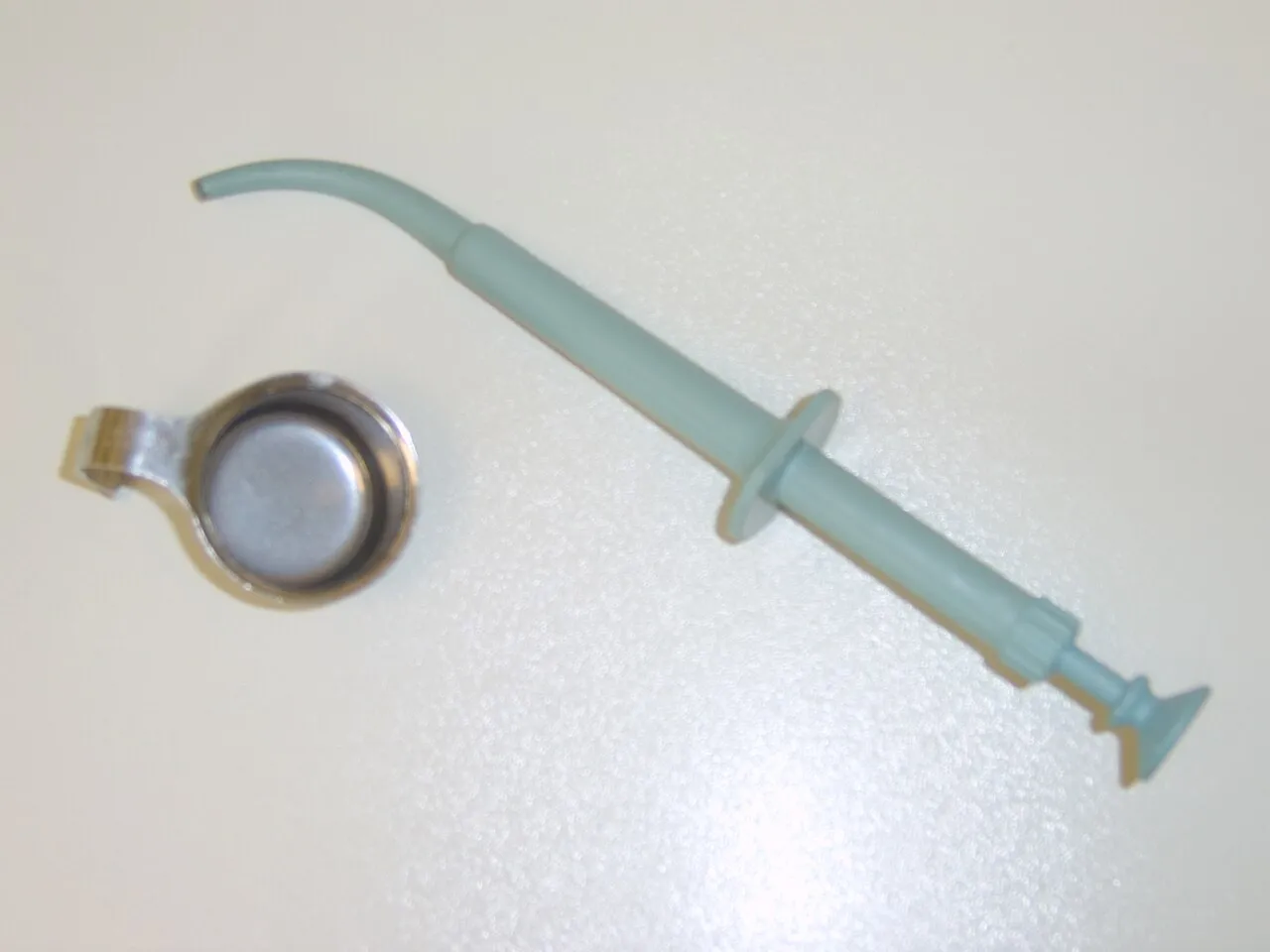 Amalgam carrier
A plunger tool that carries mixed amalgam to the tooth.
Amalgam carrier
A plunger tool that carries mixed amalgam to the tooth.
-
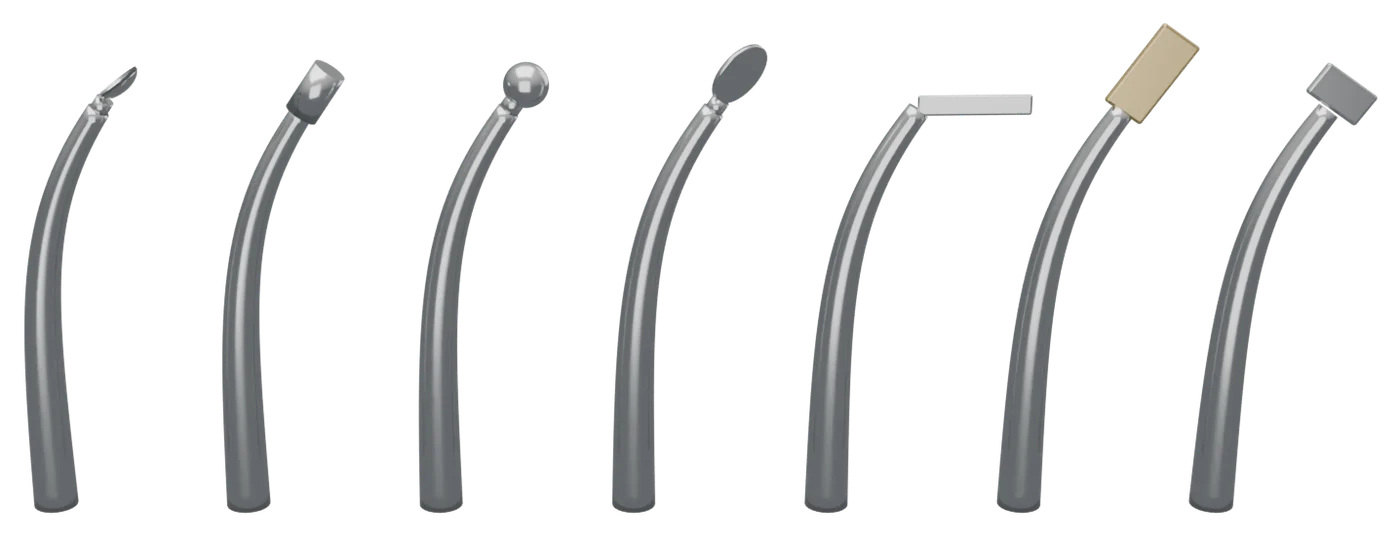 Amalgam condenser (plugger)
A flat-ended instrument that packs amalgam tightly into the preparation.
Amalgam condenser (plugger)
A flat-ended instrument that packs amalgam tightly into the preparation.
-
Discoid-cleoid carver
A carver with a disc on one end and a claw-like point on the other.
-
Hollenback carver
A thin angled blade carver for shaping the sides and between teeth.
-
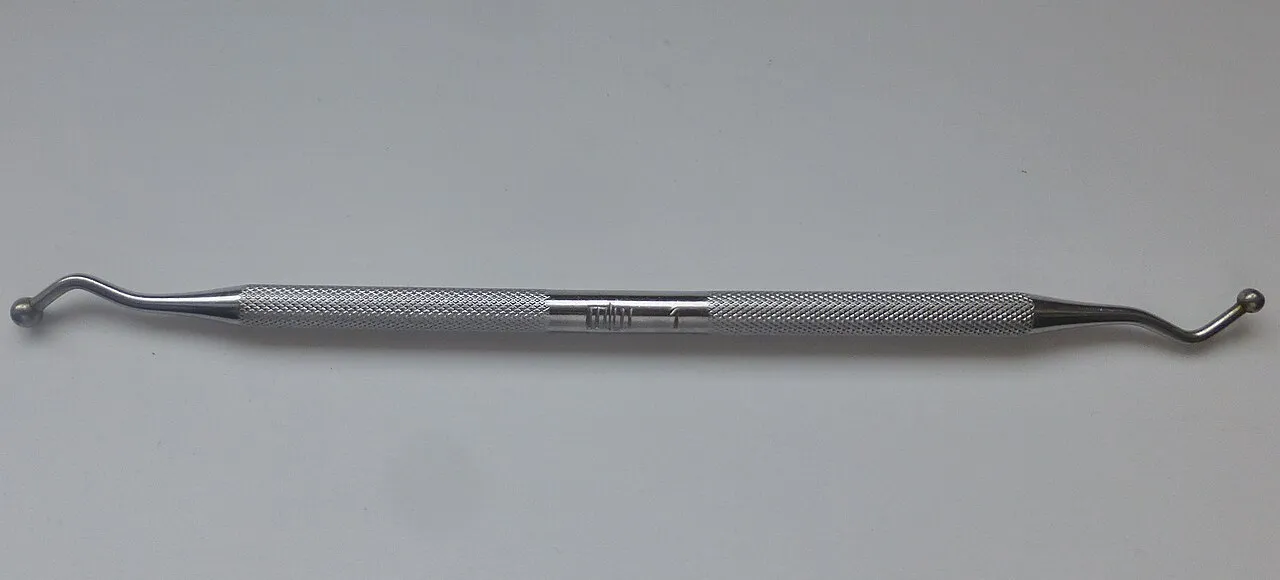 Burnisher (ball and egg burnisher)
A smooth rounded tip that rubs and smooths a filling or band.
Burnisher (ball and egg burnisher)
A smooth rounded tip that rubs and smooths a filling or band.
-
Composite placement instrument
A coated paddle or condenser that places and shapes tooth-colored filling without sticking.
-
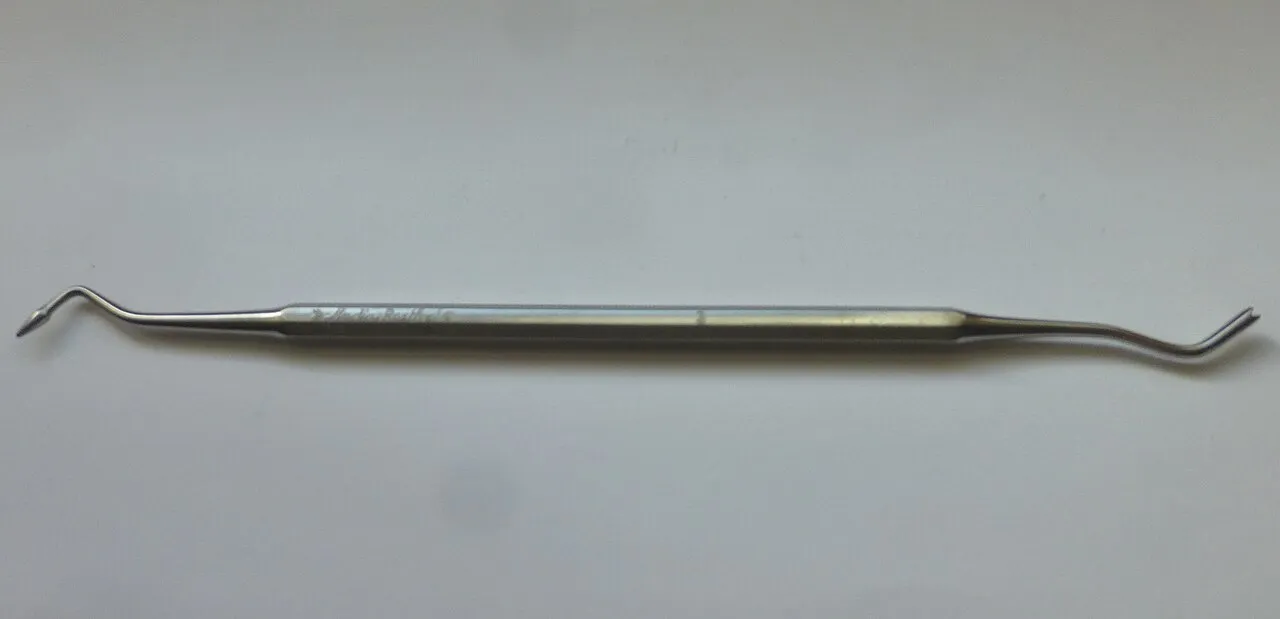 Plastic filling instrument (PFI)
A double-ended paddle and plugger for carrying and shaping soft materials.
Plastic filling instrument (PFI)
A double-ended paddle and plugger for carrying and shaping soft materials.
-
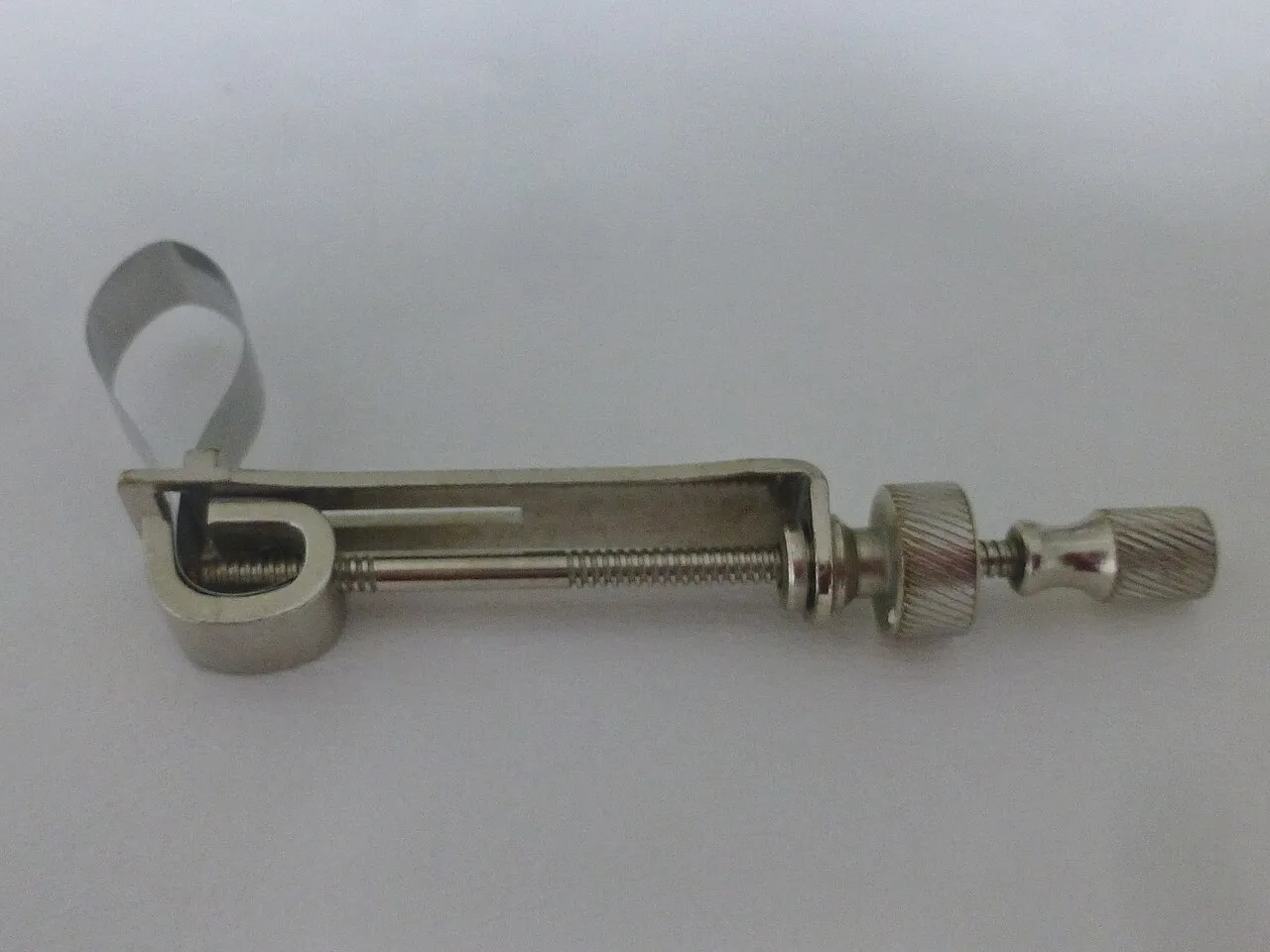 Tofflemire matrix retainer
A clamp that holds a metal band tight around a tooth to form a missing wall.
Tofflemire matrix retainer
A clamp that holds a metal band tight around a tooth to form a missing wall.
-
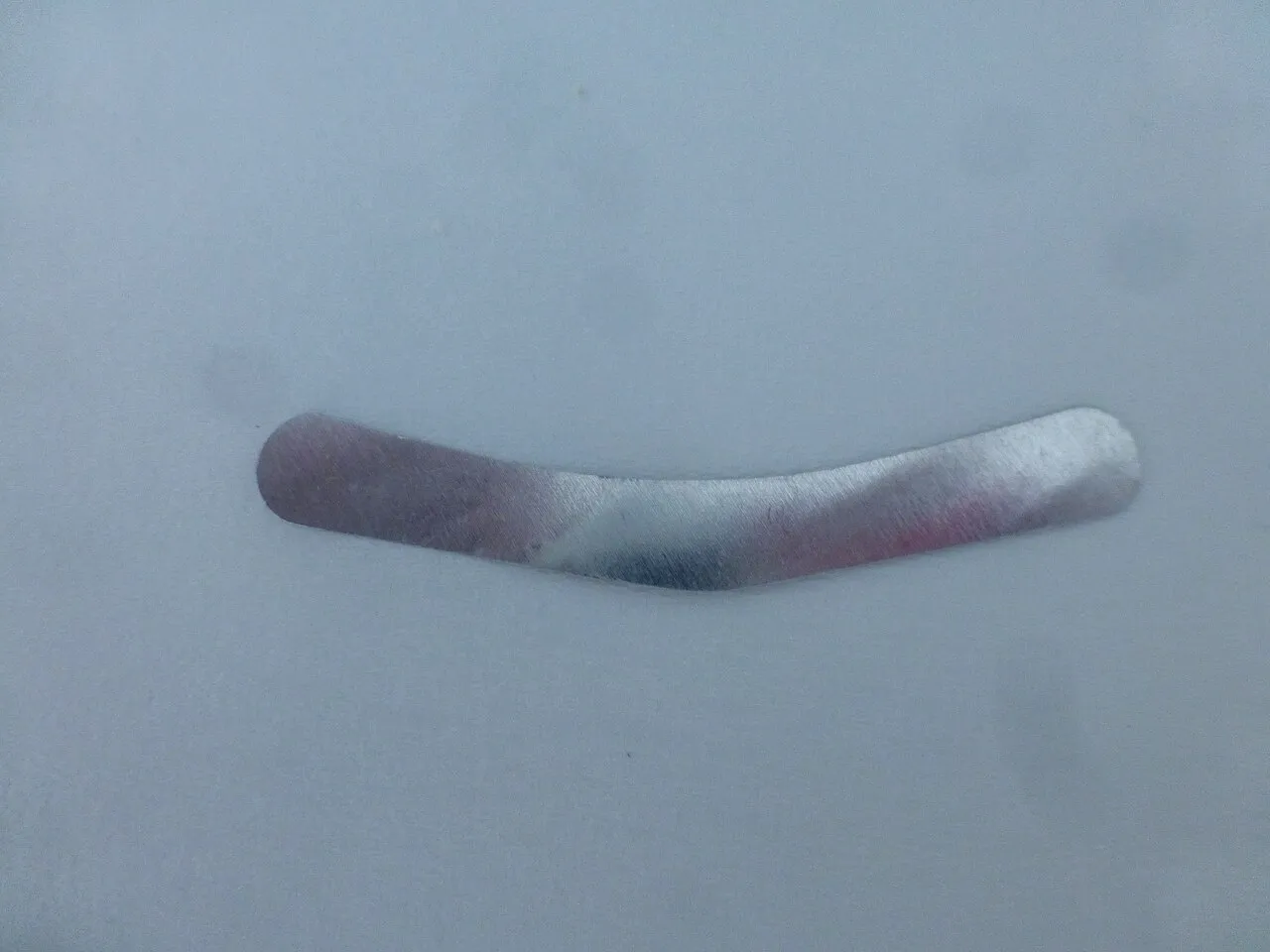 Matrix band
A thin metal strip that forms a temporary wall while a filling is placed.
Matrix band
A thin metal strip that forms a temporary wall while a filling is placed.
-
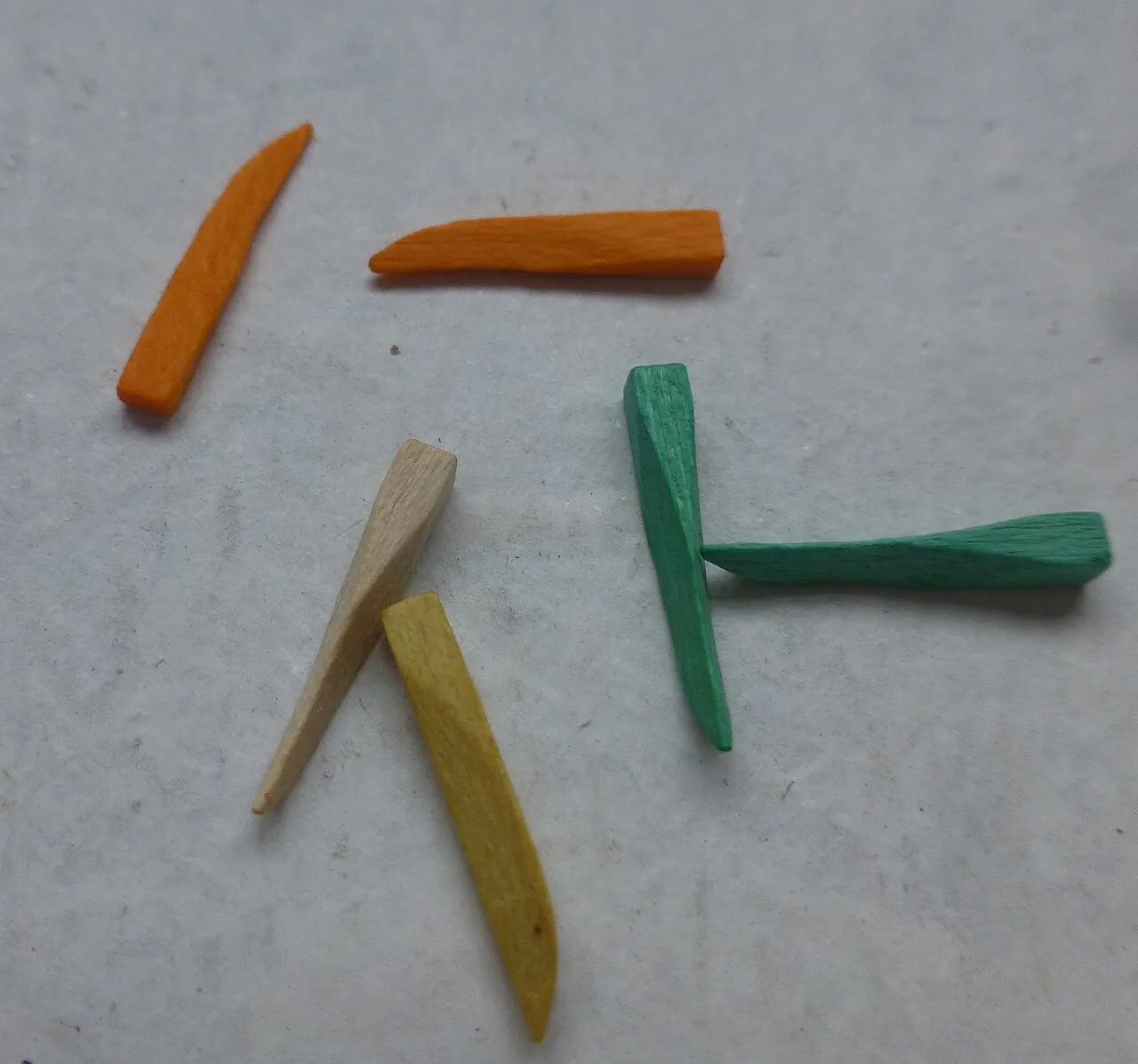 Wedges (wood or plastic)
A small triangular piece placed between teeth to hold the band tight at the gumline.
Wedges (wood or plastic)
A small triangular piece placed between teeth to hold the band tight at the gumline.
-
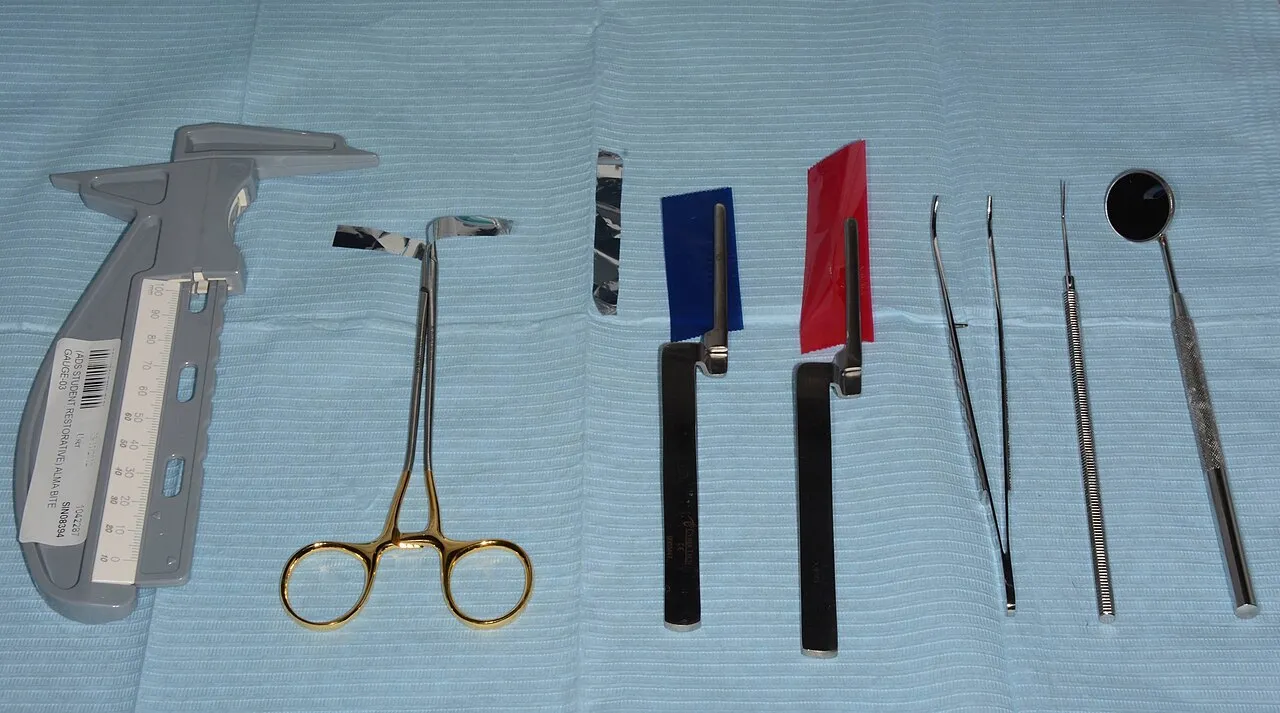 Articulating paper and forceps
Colored paper the patient bites on to show high spots on a new filling.
Articulating paper and forceps
Colored paper the patient bites on to show high spots on a new filling.
-
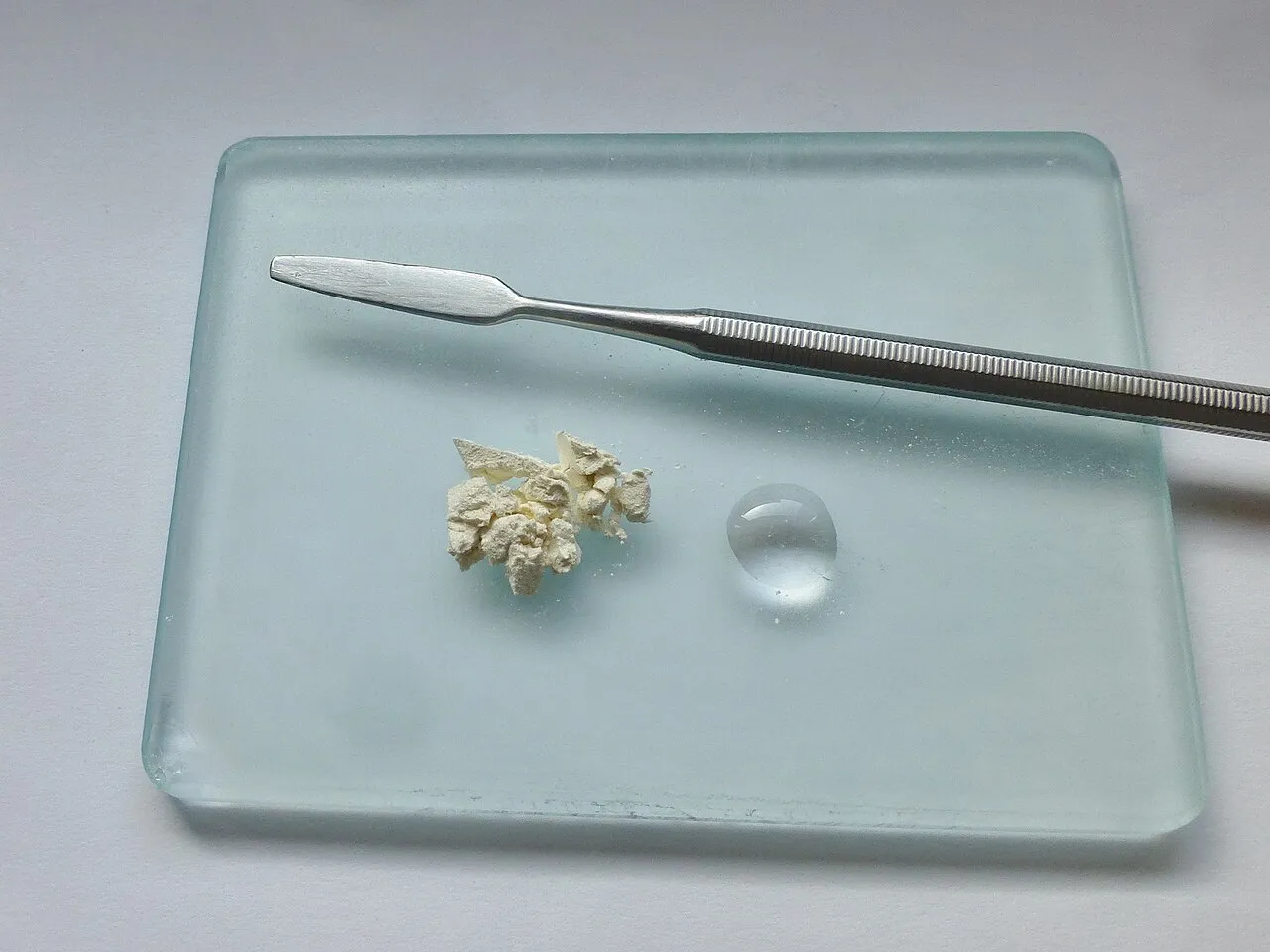 Cement spatula
A flat flexible blade for mixing cements, liners and some materials on a pad.
Cement spatula
A flat flexible blade for mixing cements, liners and some materials on a pad.
-
Mixing pad and glass slab
A paper pad or glass slab used as a clean surface for mixing materials.
-
Retraction cord packer
A thin blunt tool that tucks retraction cord into the gum around a prepared tooth.
-
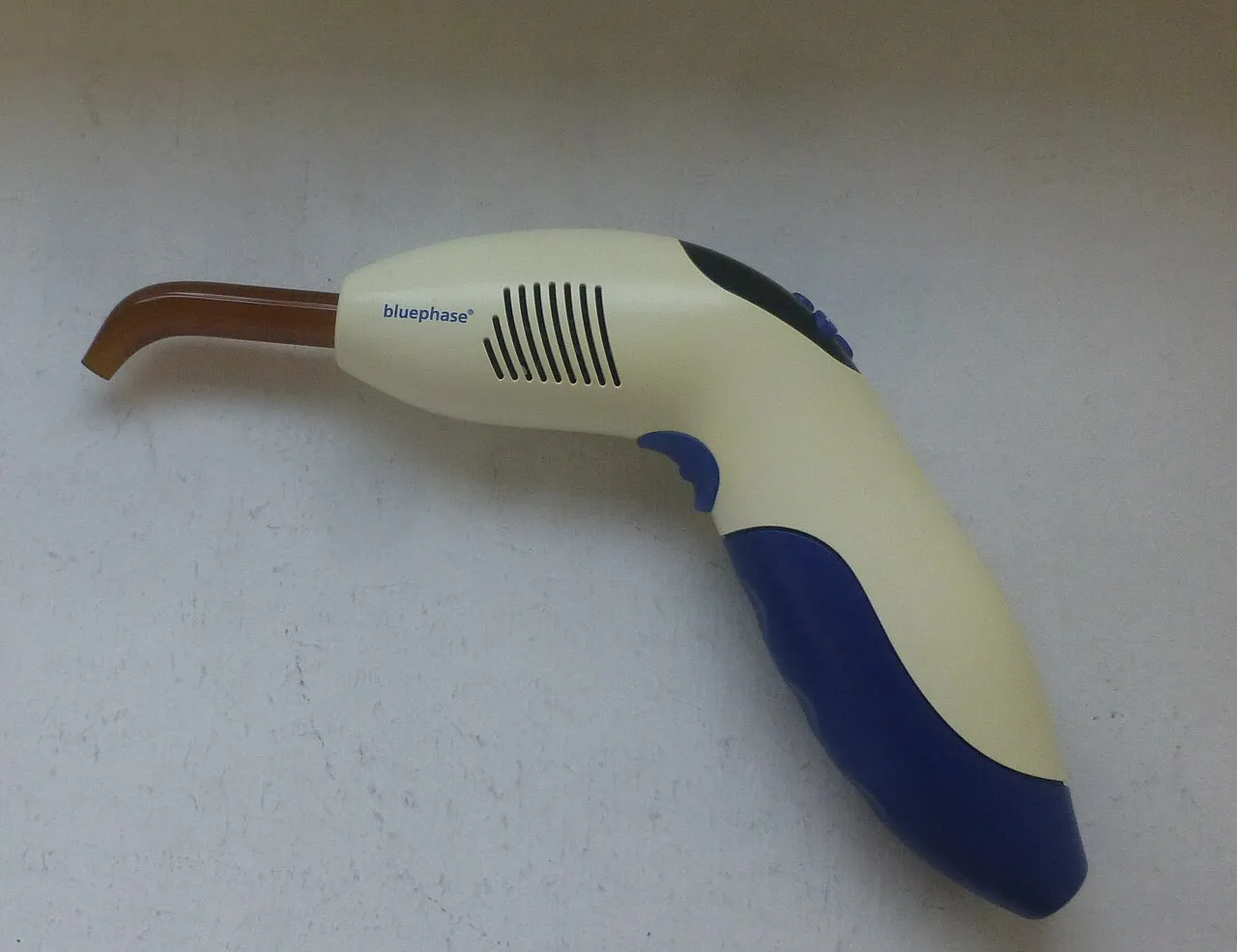 Curing light
A handheld blue light that hardens composite, sealants and other light-cured materials.
Curing light
A handheld blue light that hardens composite, sealants and other light-cured materials.
Local anesthesia
The syringe, cartridges, needles and topical used to numb the patient, with sharps safety.
-
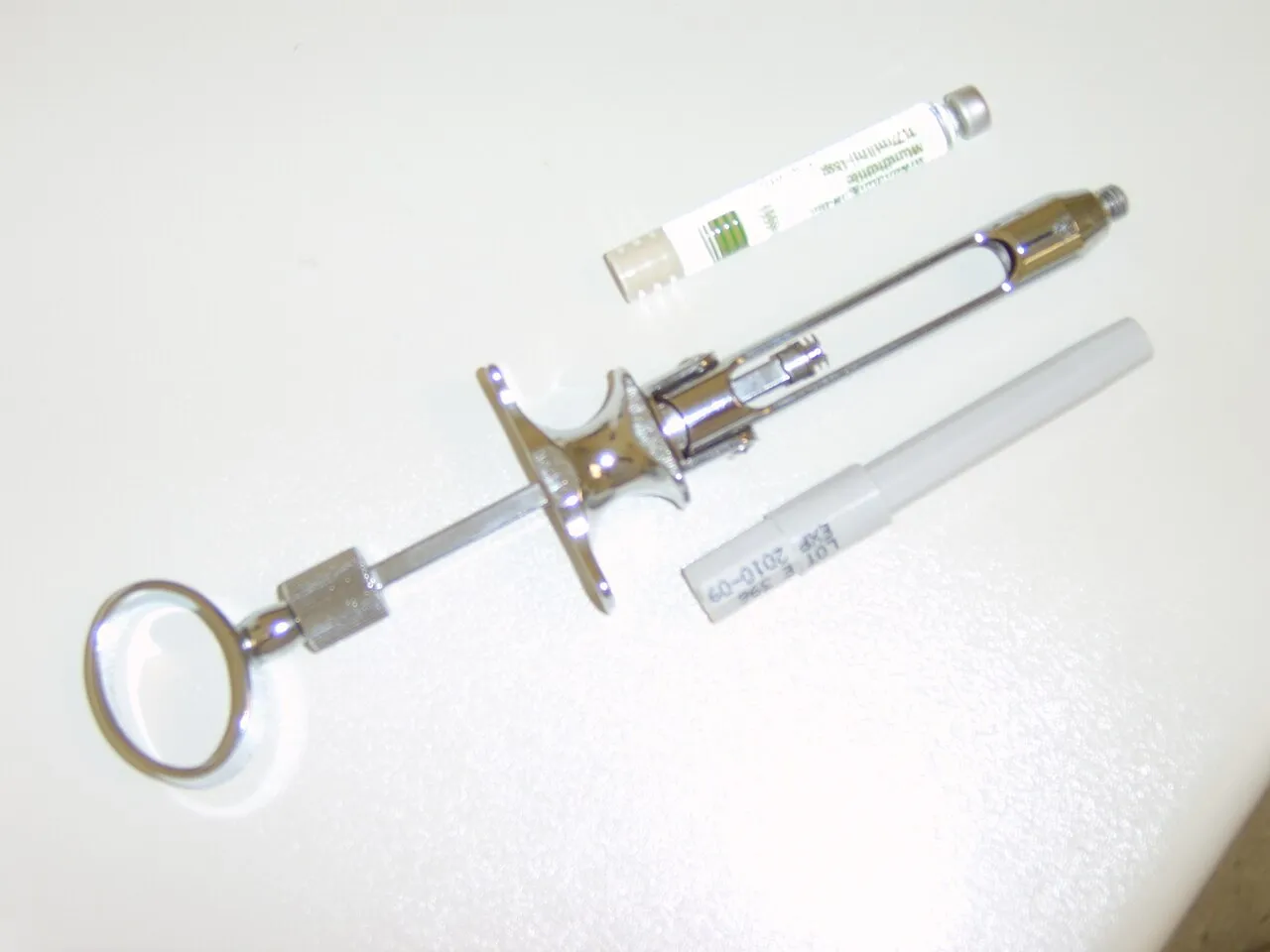 Aspirating anesthetic syringe (breech-loading, harpoon type)
A metal syringe that holds a glass cartridge of anesthetic and can pull back to check.
Aspirating anesthetic syringe (breech-loading, harpoon type)
A metal syringe that holds a glass cartridge of anesthetic and can pull back to check.
-
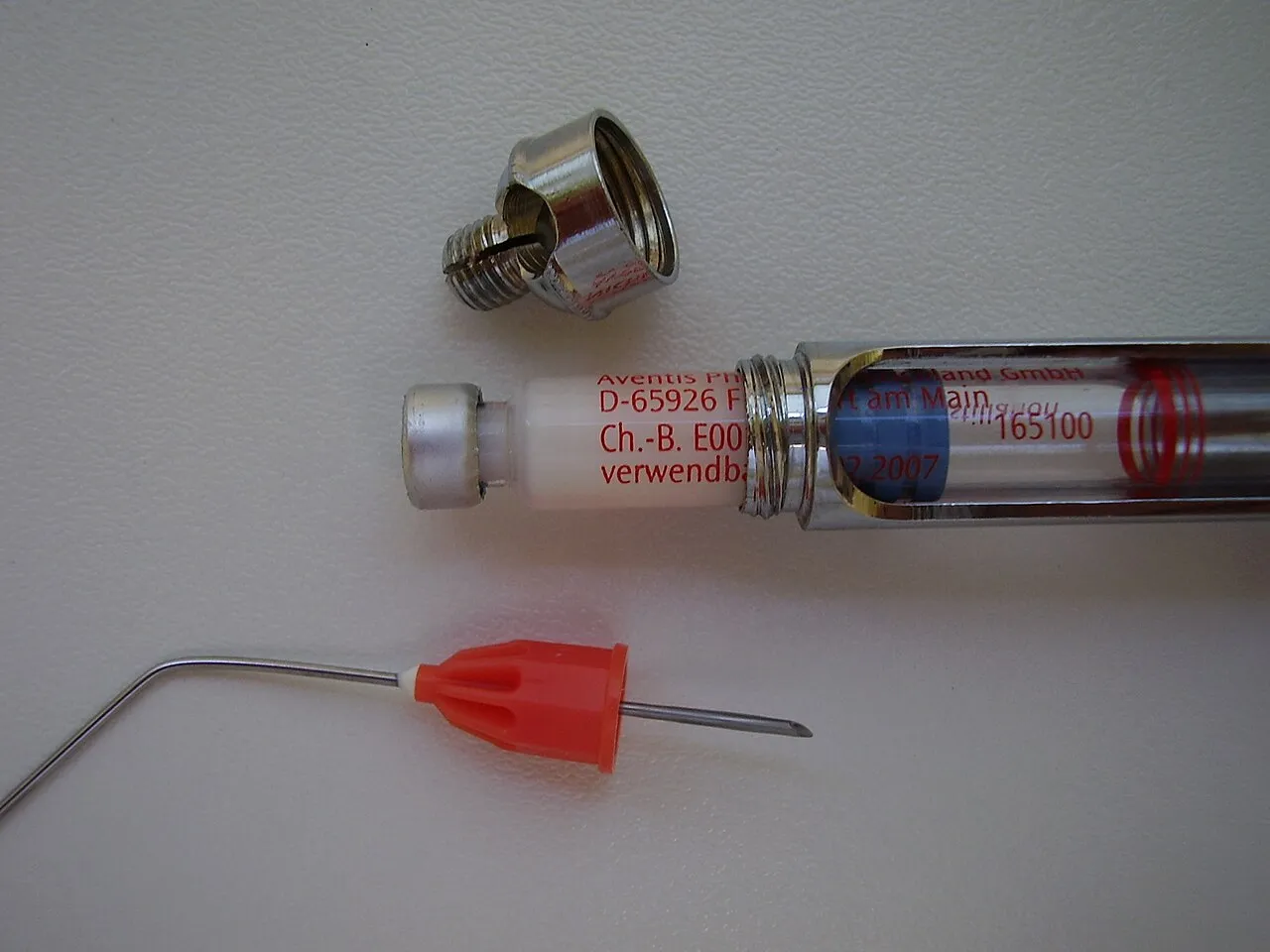 Anesthetic cartridge
A small glass tube of local anesthetic that fits into the dental syringe.
Anesthetic cartridge
A small glass tube of local anesthetic that fits into the dental syringe.
-
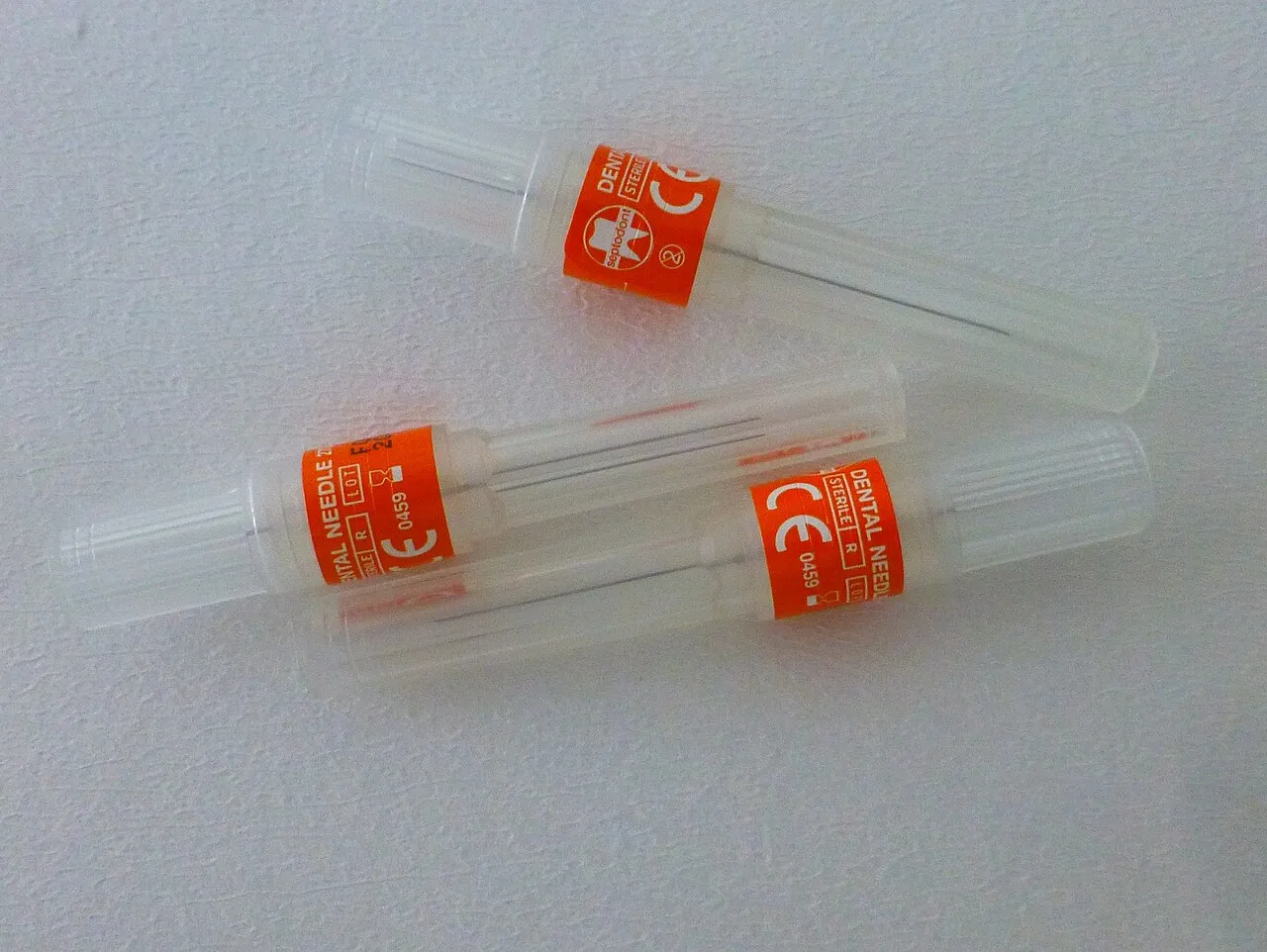 Dental anesthetic needles (long and short)
Disposable double-ended needles that screw onto the syringe; long ones for nerve blocks.
Dental anesthetic needles (long and short)
Disposable double-ended needles that screw onto the syringe; long ones for nerve blocks.
-
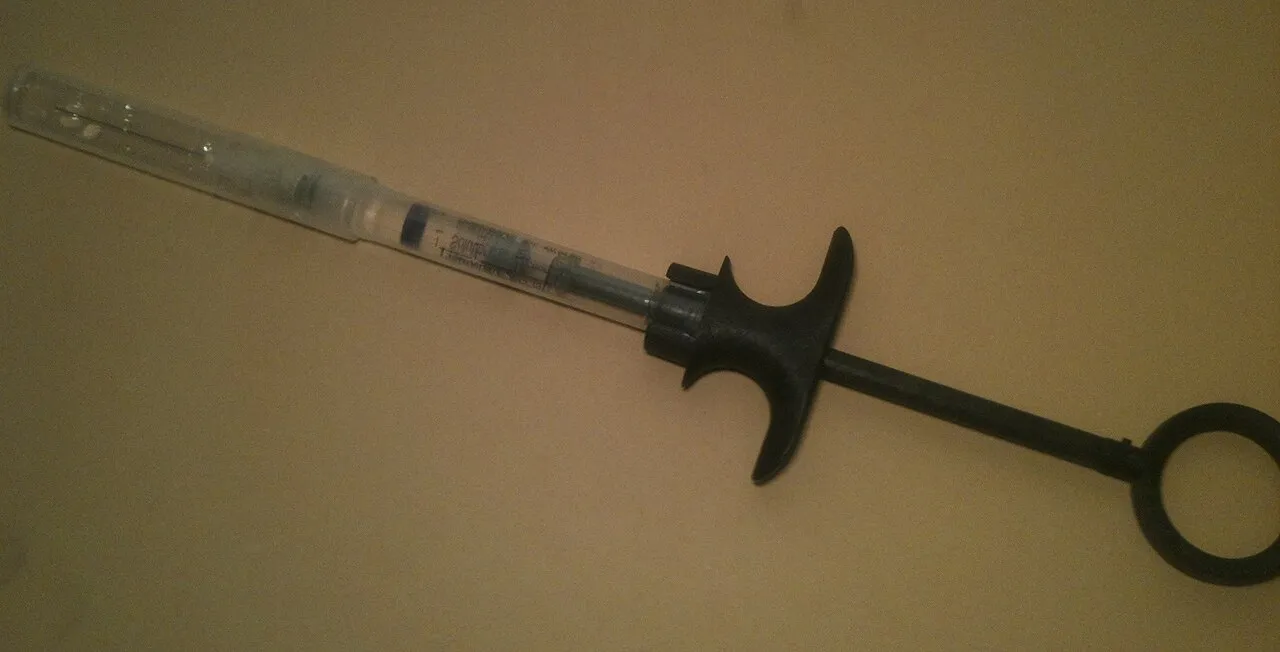 Safety anesthetic syringe
A disposable syringe with a built-in sliding guard that covers the needle after use.
Safety anesthetic syringe
A disposable syringe with a built-in sliding guard that covers the needle after use.
-
Needle recapping device
A holder that keeps the needle cap upright so it can be recapped with one hand.
-
Topical anesthetic
A numbing gel, liquid or spray placed on the gum before an injection.
Surgery and extractions
Forceps, elevators and the surgical instruments used to remove teeth and close the site.
-
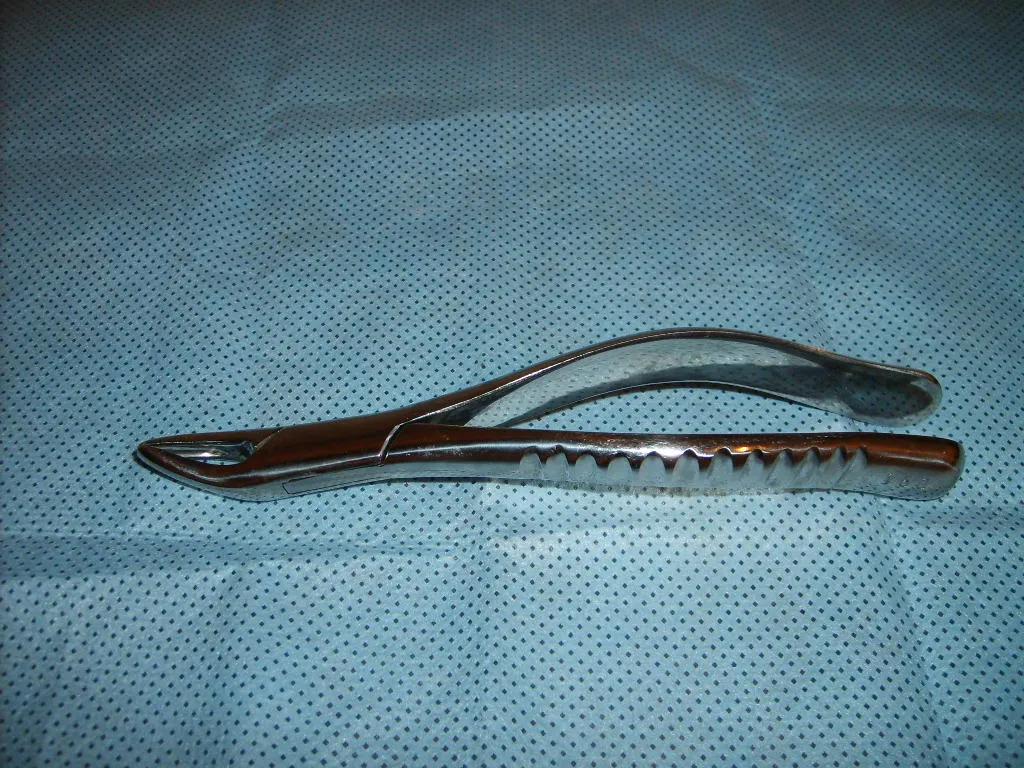 Extraction forceps #150 (upper universal)
Forceps with a bent head that grip and remove upper teeth, mainly front teeth and premolars.
Extraction forceps #150 (upper universal)
Forceps with a bent head that grip and remove upper teeth, mainly front teeth and premolars.
-
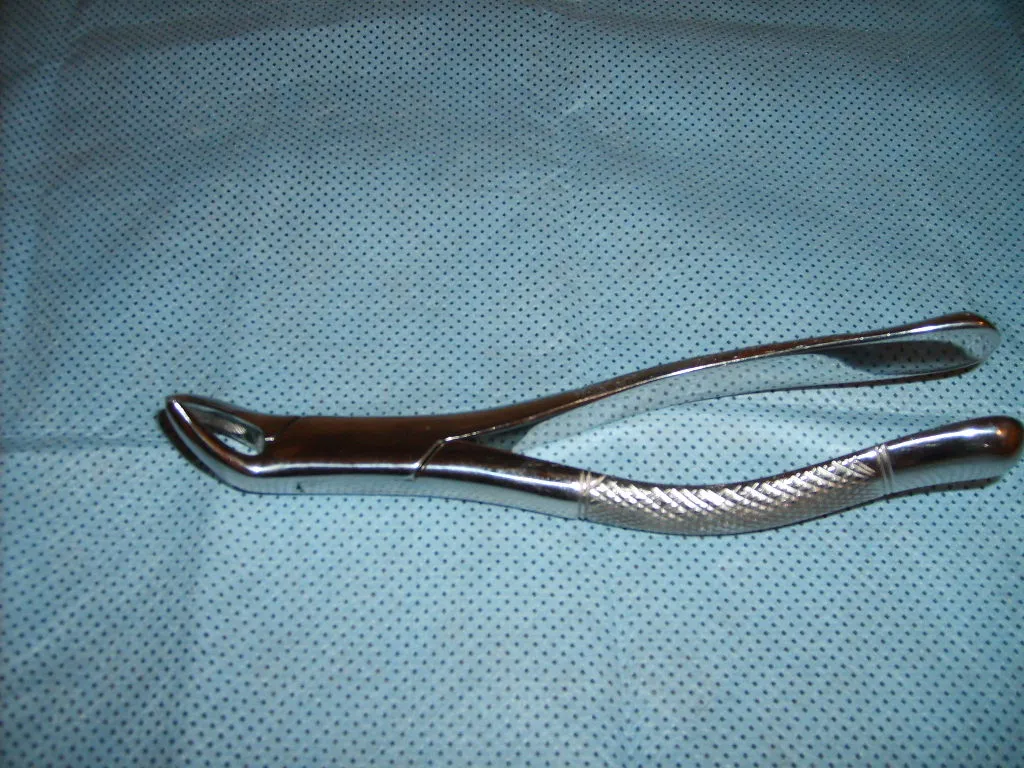 Extraction forceps #151 (lower universal)
Forceps with beaks bent down sharply to remove lower teeth.
Extraction forceps #151 (lower universal)
Forceps with beaks bent down sharply to remove lower teeth.
-
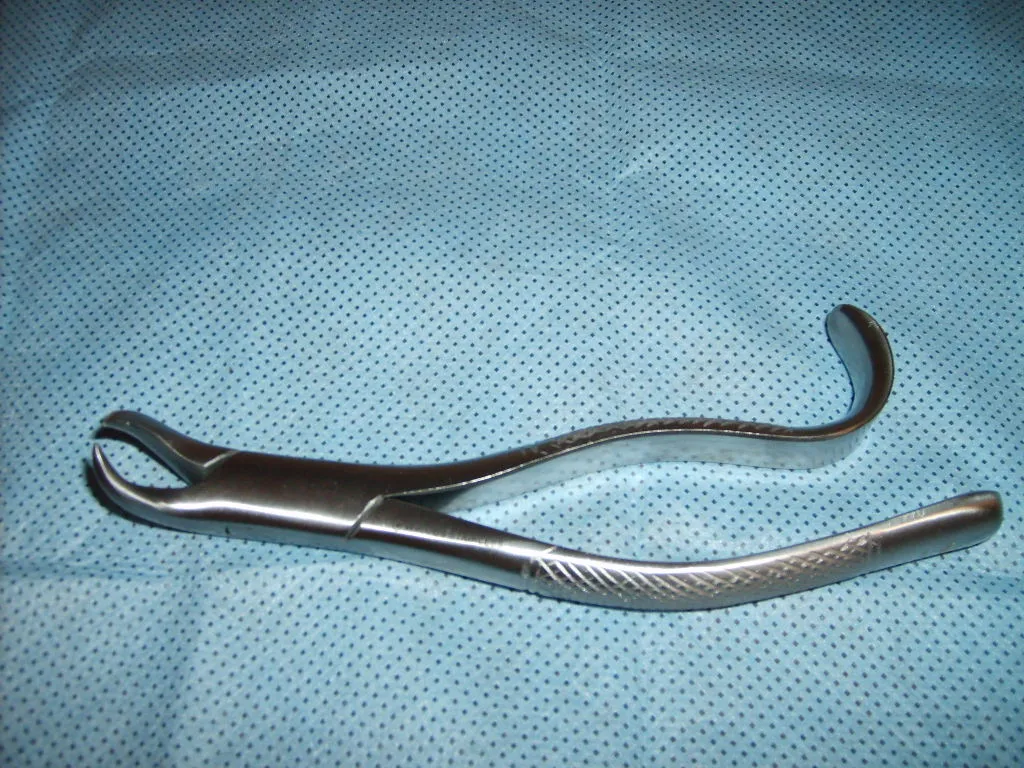 Cowhorn forceps (#16, #23)
Lower molar forceps with two pointed, curved beaks that fit between the roots.
Cowhorn forceps (#16, #23)
Lower molar forceps with two pointed, curved beaks that fit between the roots.
-
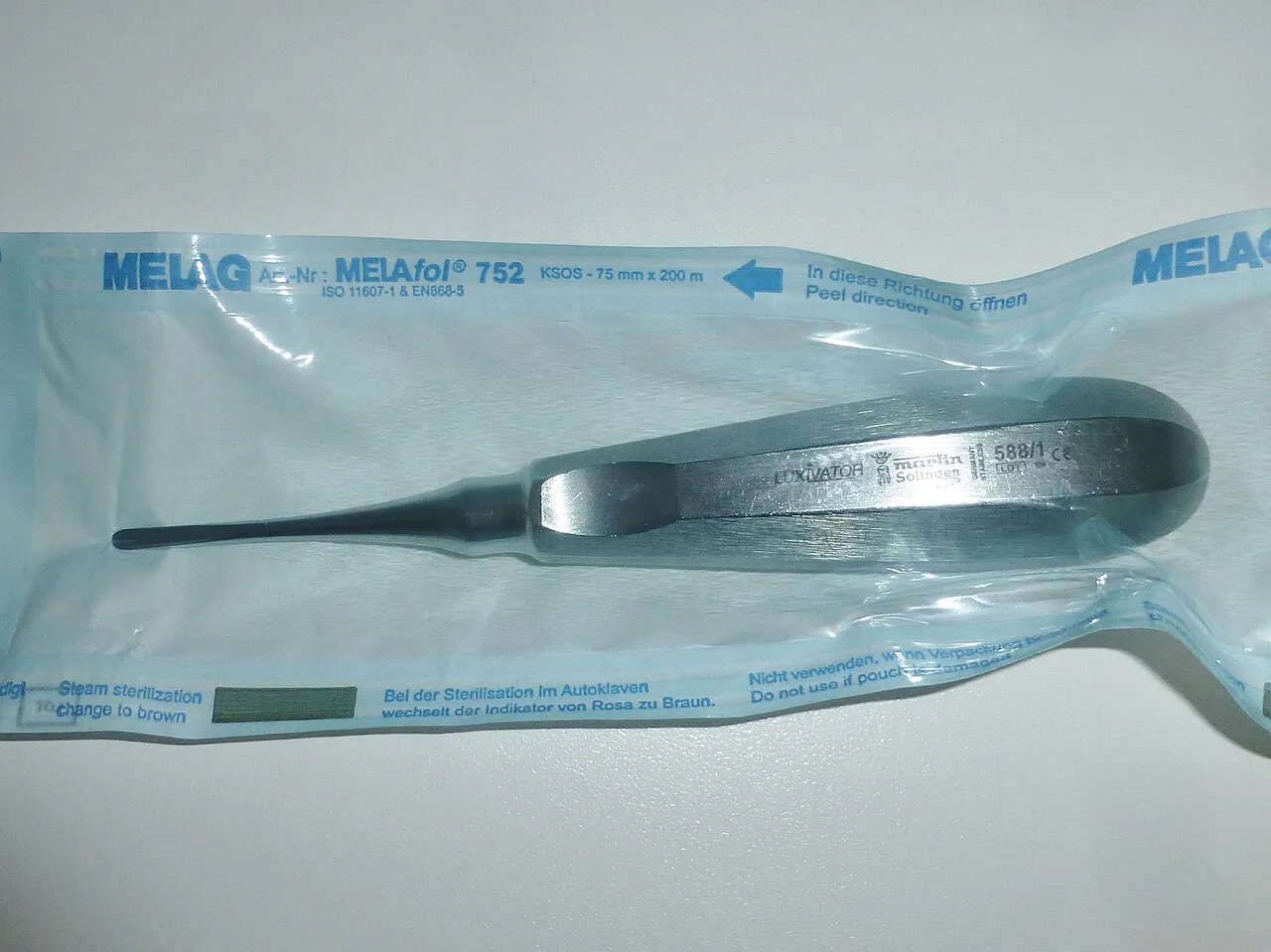 Straight elevator
A straight handle with a rounded, scooped blade used to loosen a tooth before forceps.
Straight elevator
A straight handle with a rounded, scooped blade used to loosen a tooth before forceps.
- Cryer elevators (pair) A left and right pair of elevators with sharp triangular blades for removing molar roots.
-
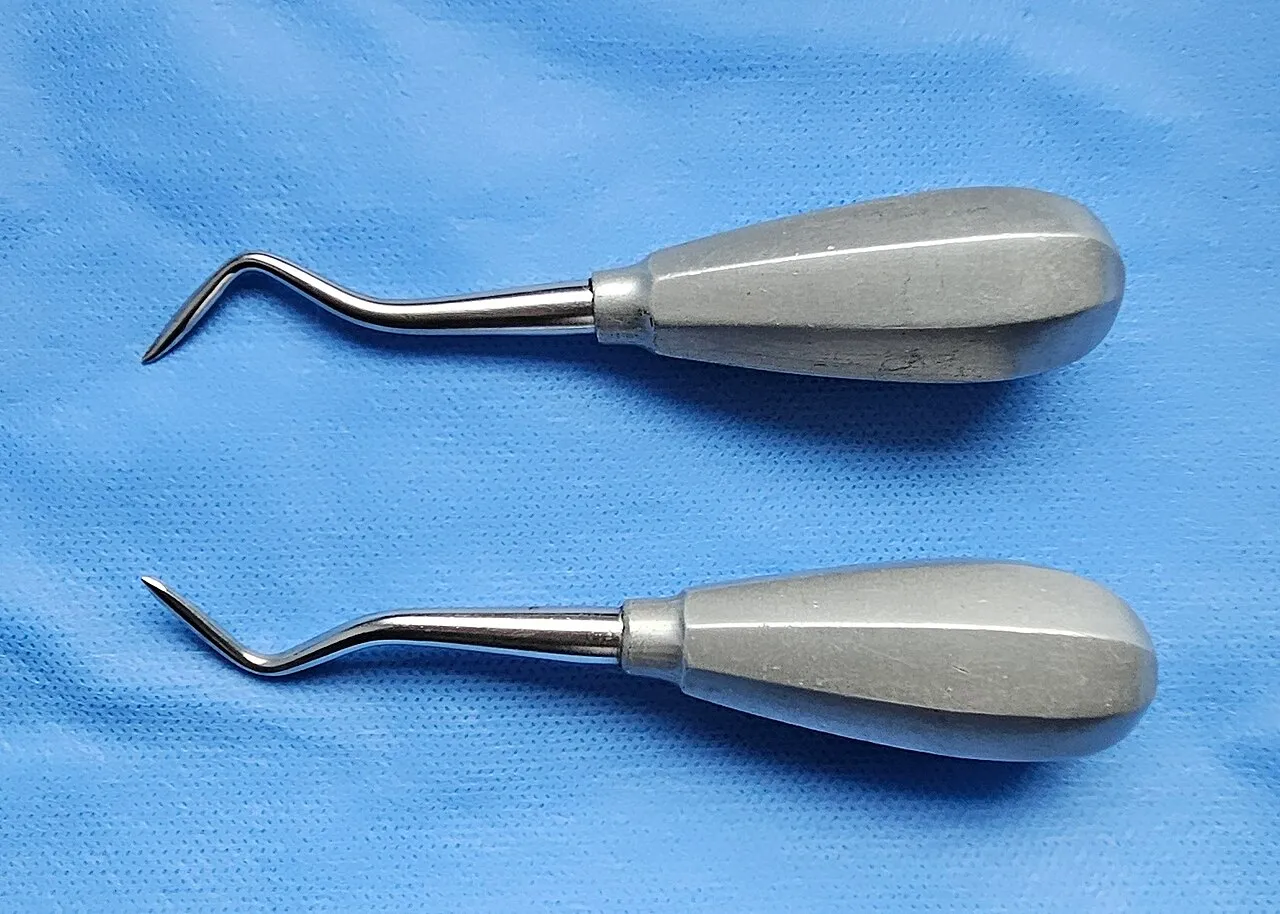 Root-tip elevators (Apexo-type, angled pair)
Slim angled elevators with fine tips for lifting small root pieces out of a socket.
Root-tip elevators (Apexo-type, angled pair)
Slim angled elevators with fine tips for lifting small root pieces out of a socket.
-
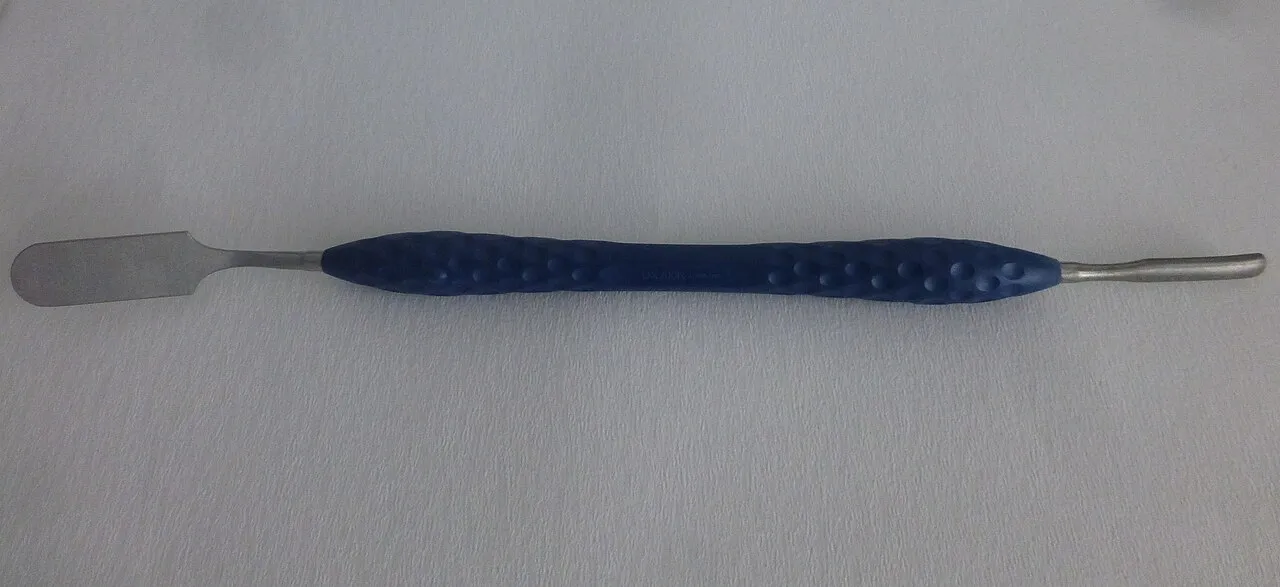 Periosteal elevator (e.g., #9 Molt)
A double-ended blade that lifts gum and its lining off bone.
Periosteal elevator (e.g., #9 Molt)
A double-ended blade that lifts gum and its lining off bone.
-
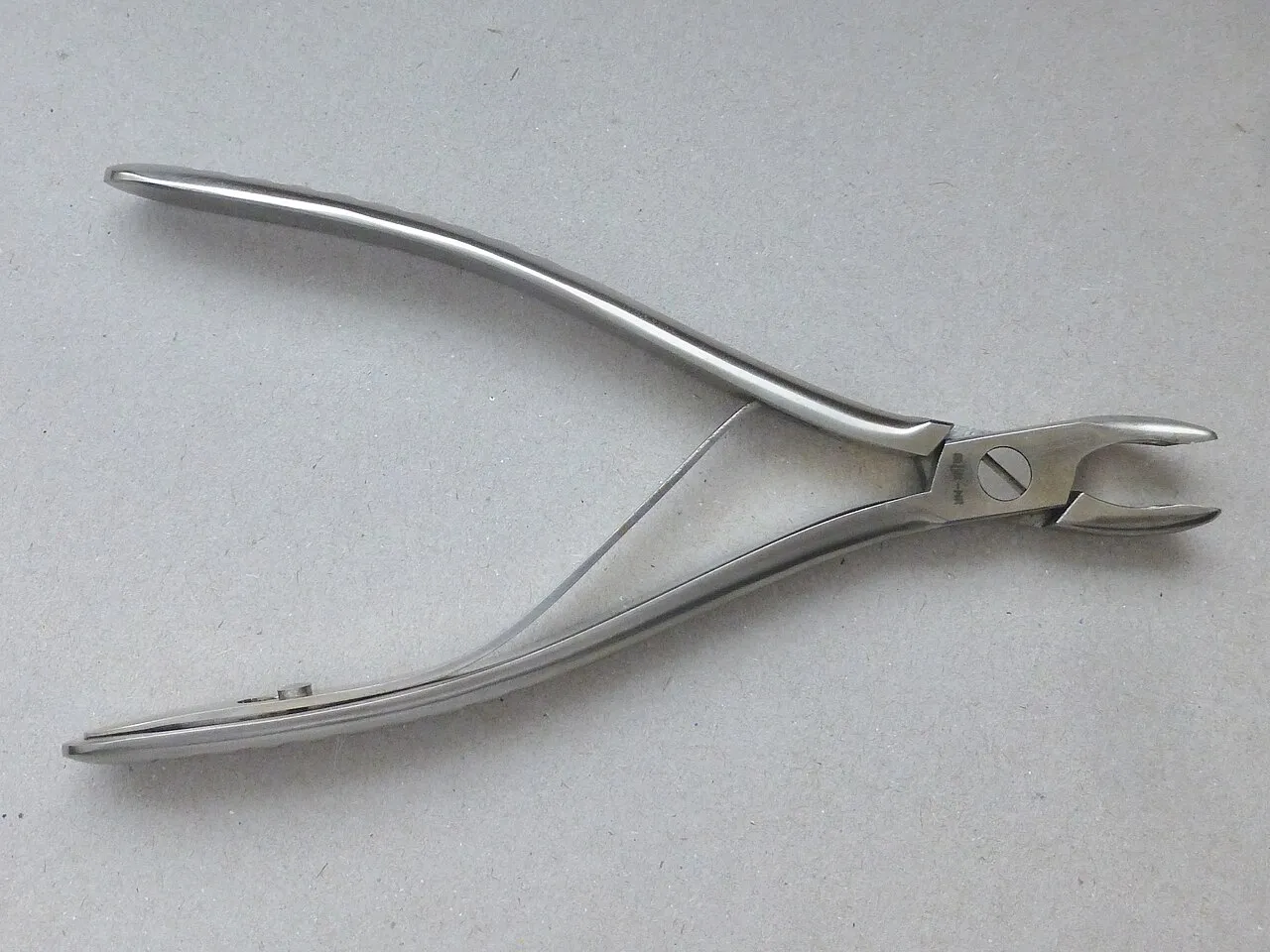 Rongeur (bone nibbler)
Spring-loaded pliers with sharp cupped jaws that snip away bone.
Rongeur (bone nibbler)
Spring-loaded pliers with sharp cupped jaws that snip away bone.
- Bone file A small double-ended file that smooths bone edges at the end of surgery.
-
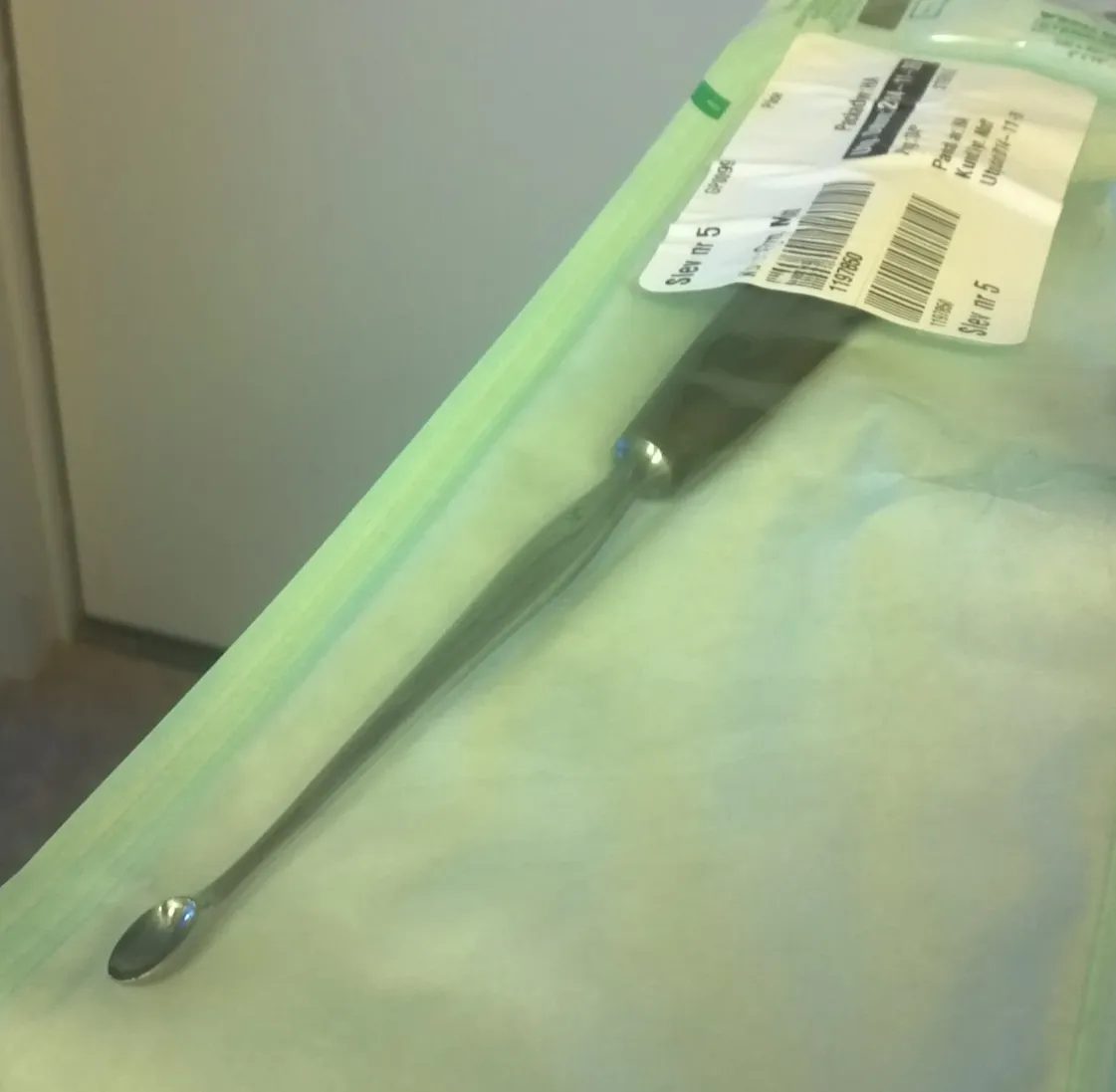 Surgical curette
An angled spoon-shaped instrument that cleans soft tissue out of a tooth socket.
Surgical curette
An angled spoon-shaped instrument that cleans soft tissue out of a tooth socket.
-
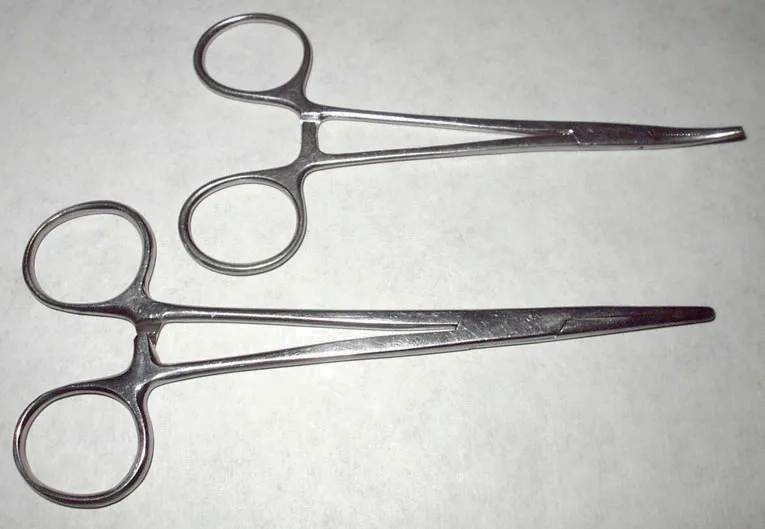 Hemostat
Locking clamp with long thin beaks used to grip tissue, vessels and small fragments.
Hemostat
Locking clamp with long thin beaks used to grip tissue, vessels and small fragments.
-
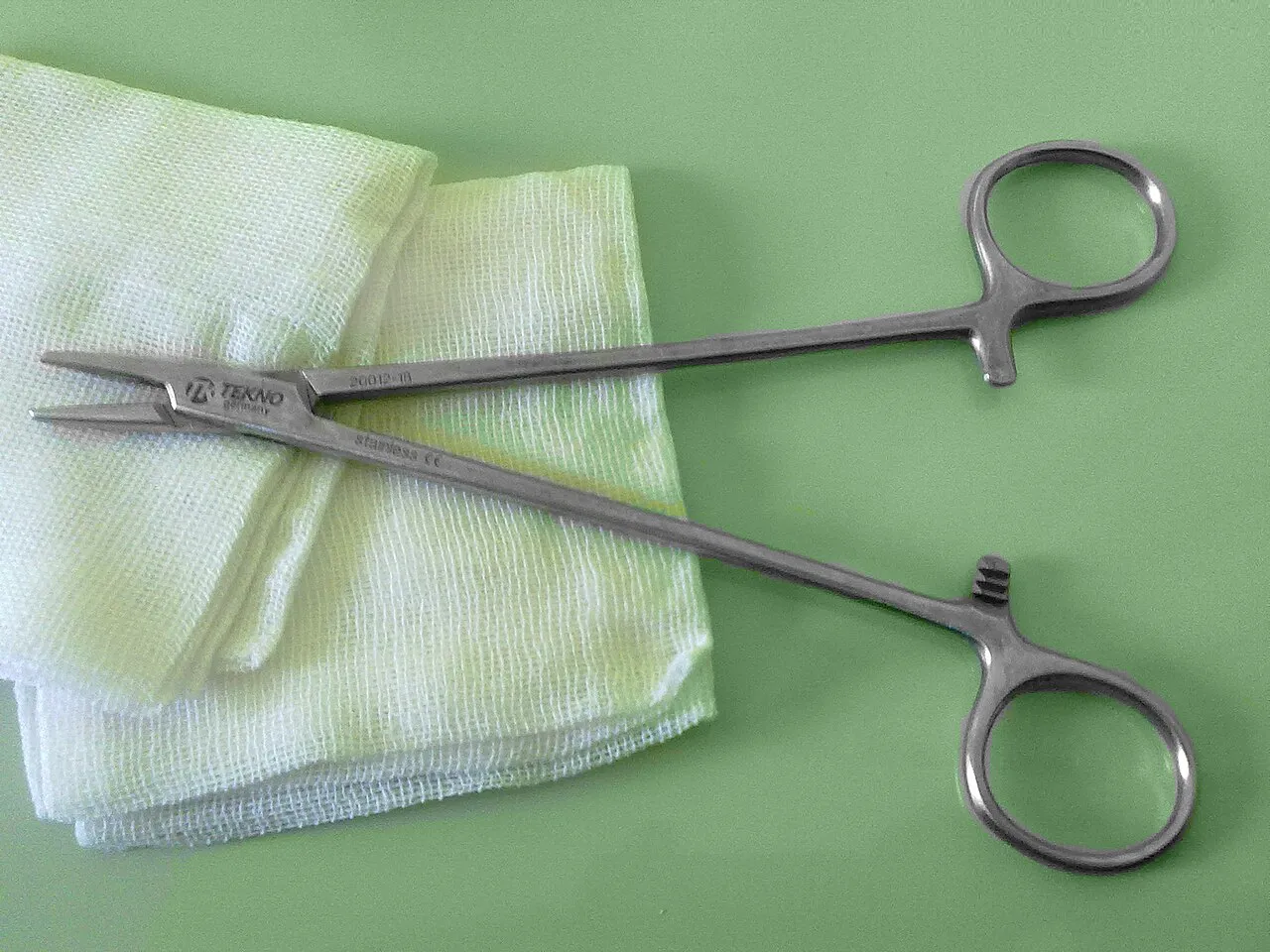 Needle holder
Locking pliers with short, strong, crosshatched jaws that hold a suture needle.
Needle holder
Locking pliers with short, strong, crosshatched jaws that hold a suture needle.
-
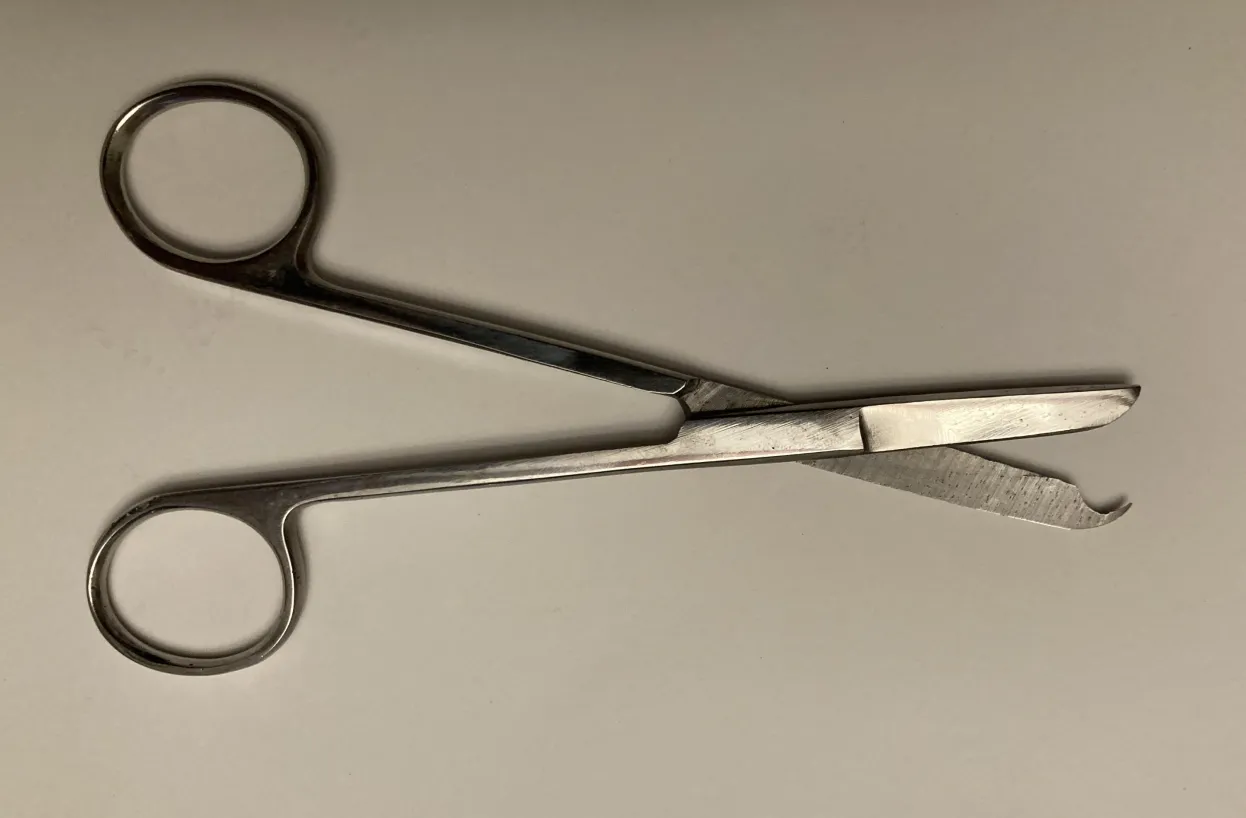 Suture scissors
Scissors for cutting stitches; some have a hooked blade that slides under the suture.
Suture scissors
Scissors for cutting stitches; some have a hooked blade that slides under the suture.
-
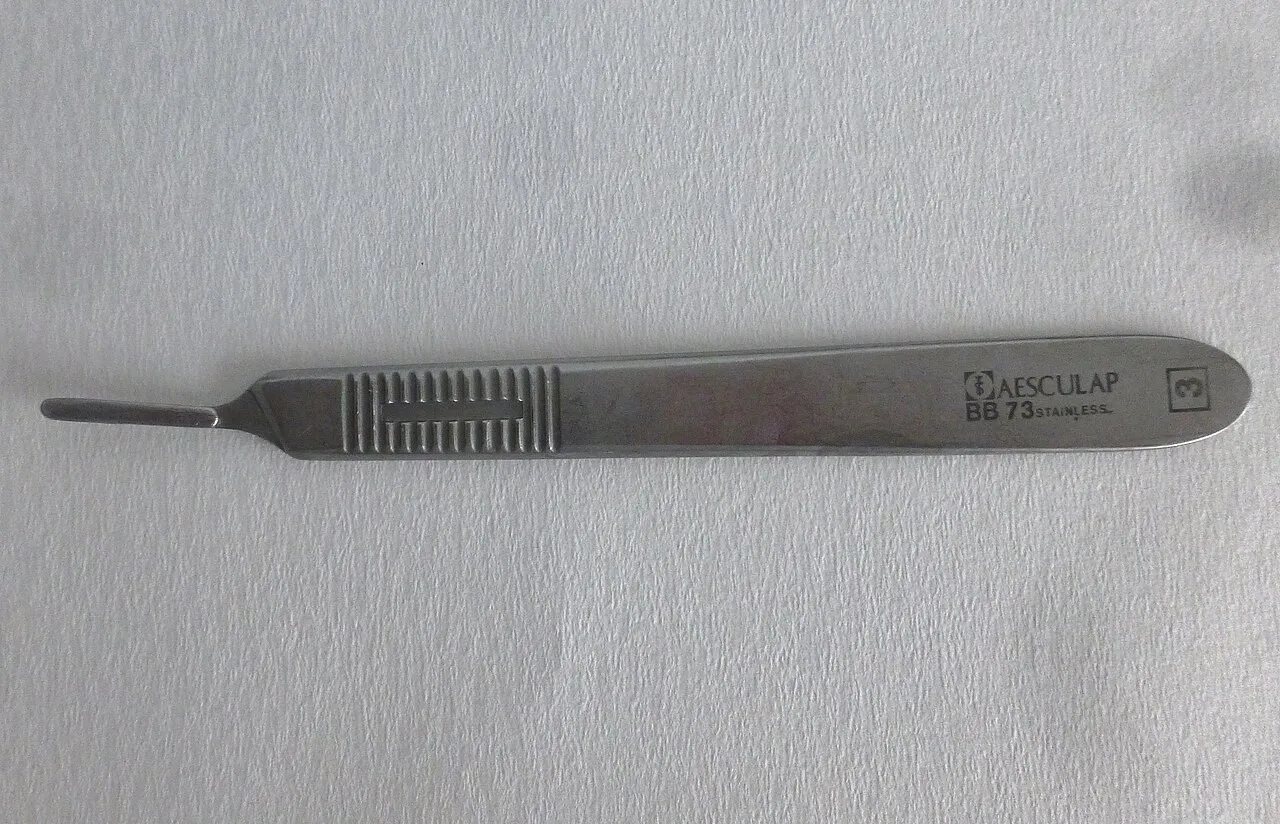 Scalpel handle (#3)
A flat metal handle that holds a disposable surgical blade.
Scalpel handle (#3)
A flat metal handle that holds a disposable surgical blade.
-
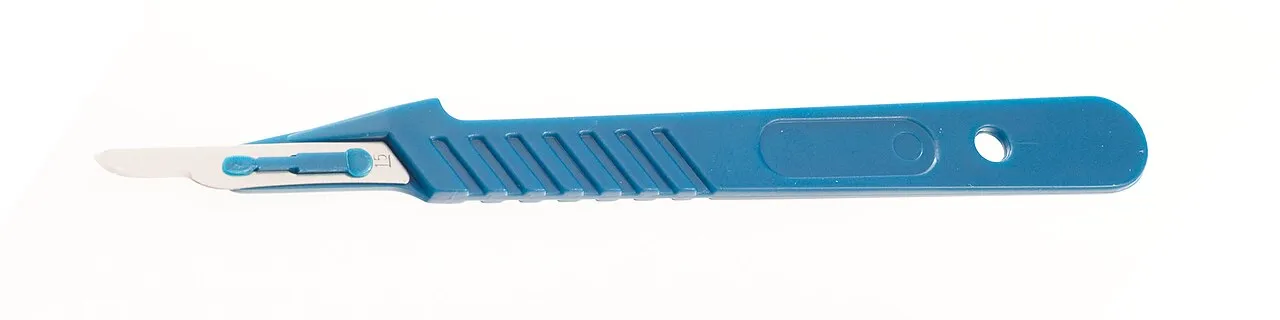 Scalpel blades (#15, #12, #11)
Disposable sterile blades: #15 is the usual oral surgery blade.
Scalpel blades (#15, #12, #11)
Disposable sterile blades: #15 is the usual oral surgery blade.
- Tissue retractor (Minnesota, Austin, Seldin) A smooth, bent metal blade that holds the cheek, tongue or gum flap out of the way.
-
Bite block (mouth prop)
A rubber or plastic wedge the patient bites on to rest the jaw open.
-
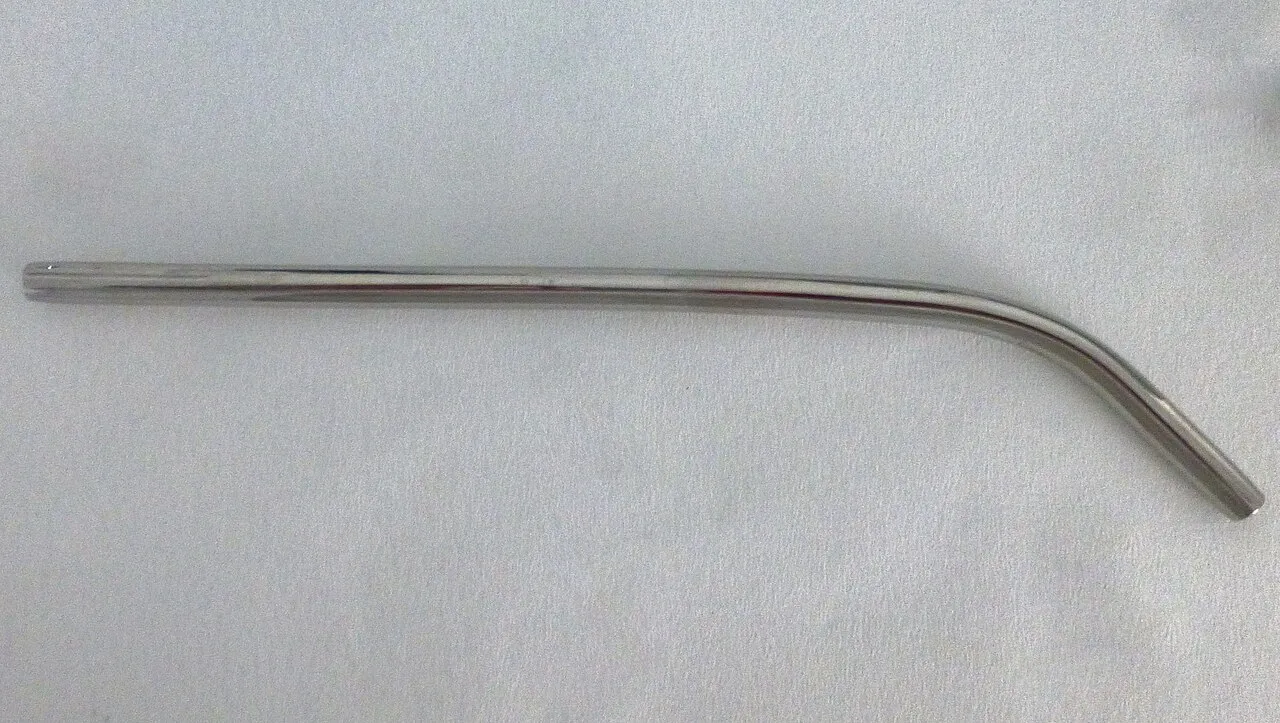 Surgical suction tip
A thin metal or plastic suction tube that clears blood from the surgical site.
Surgical suction tip
A thin metal or plastic suction tube that clears blood from the surgical site.
-
Irrigating syringe
A plastic syringe with a blunt or curved tip for rinsing the surgical site with saline.
Isolation and suction
Ways to keep the area dry and clear: suction tips, rubber dam and cotton products.
-
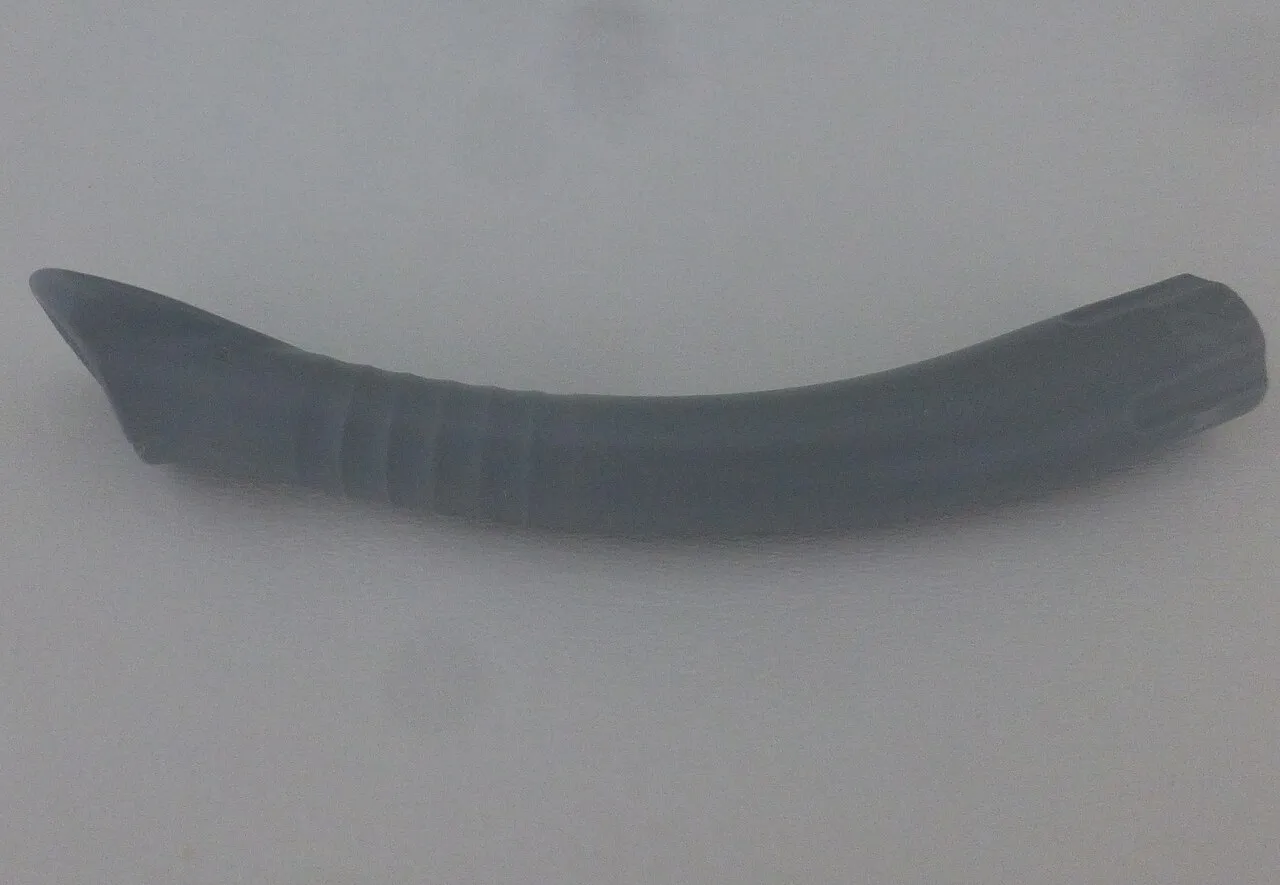 High-volume evacuator (HVE) tip
A wide suction tip that removes water, debris and spray from the mouth.
High-volume evacuator (HVE) tip
A wide suction tip that removes water, debris and spray from the mouth.
-
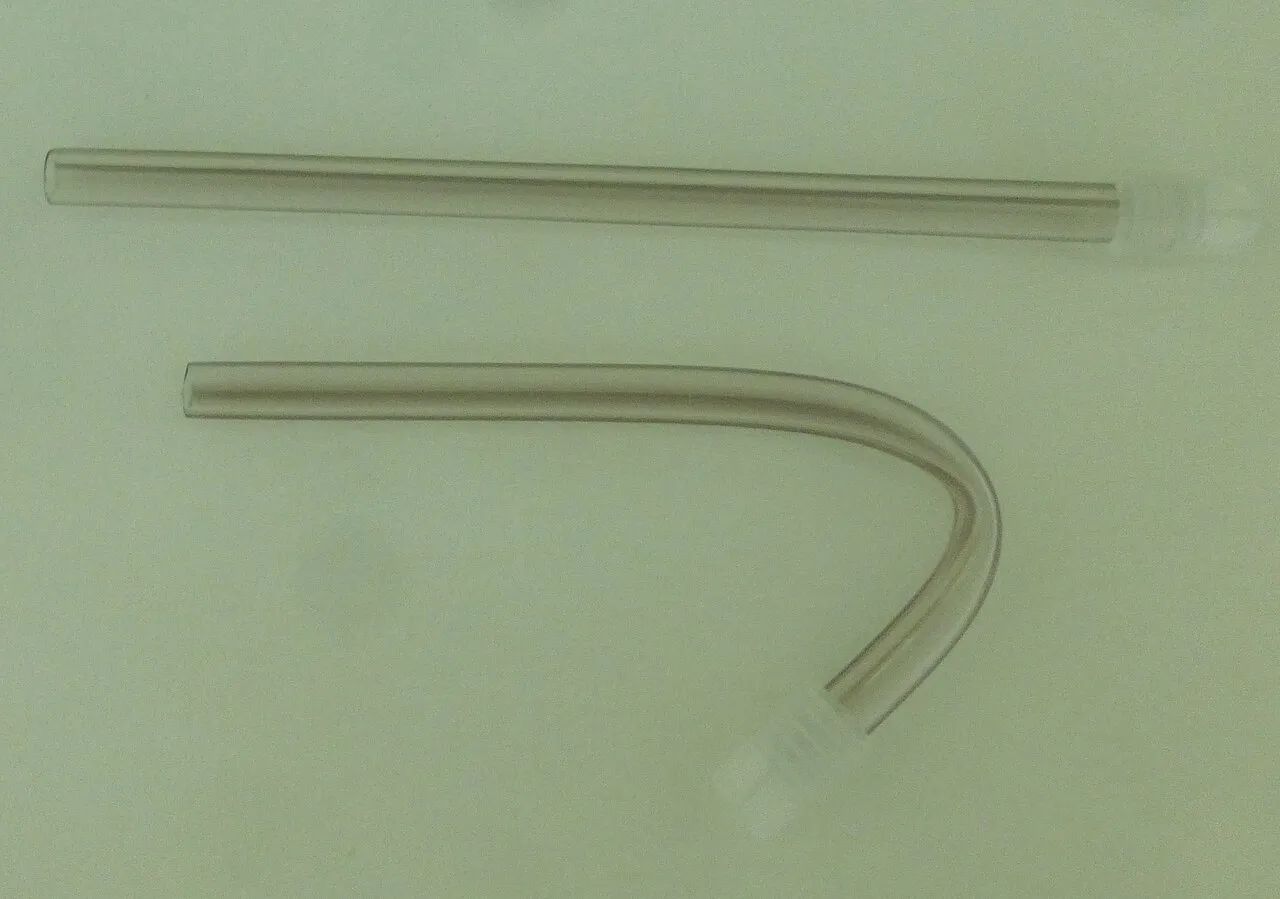 Saliva ejector
A thin, bendable straw that sucks up saliva and water during treatment.
Saliva ejector
A thin, bendable straw that sucks up saliva and water during treatment.
-
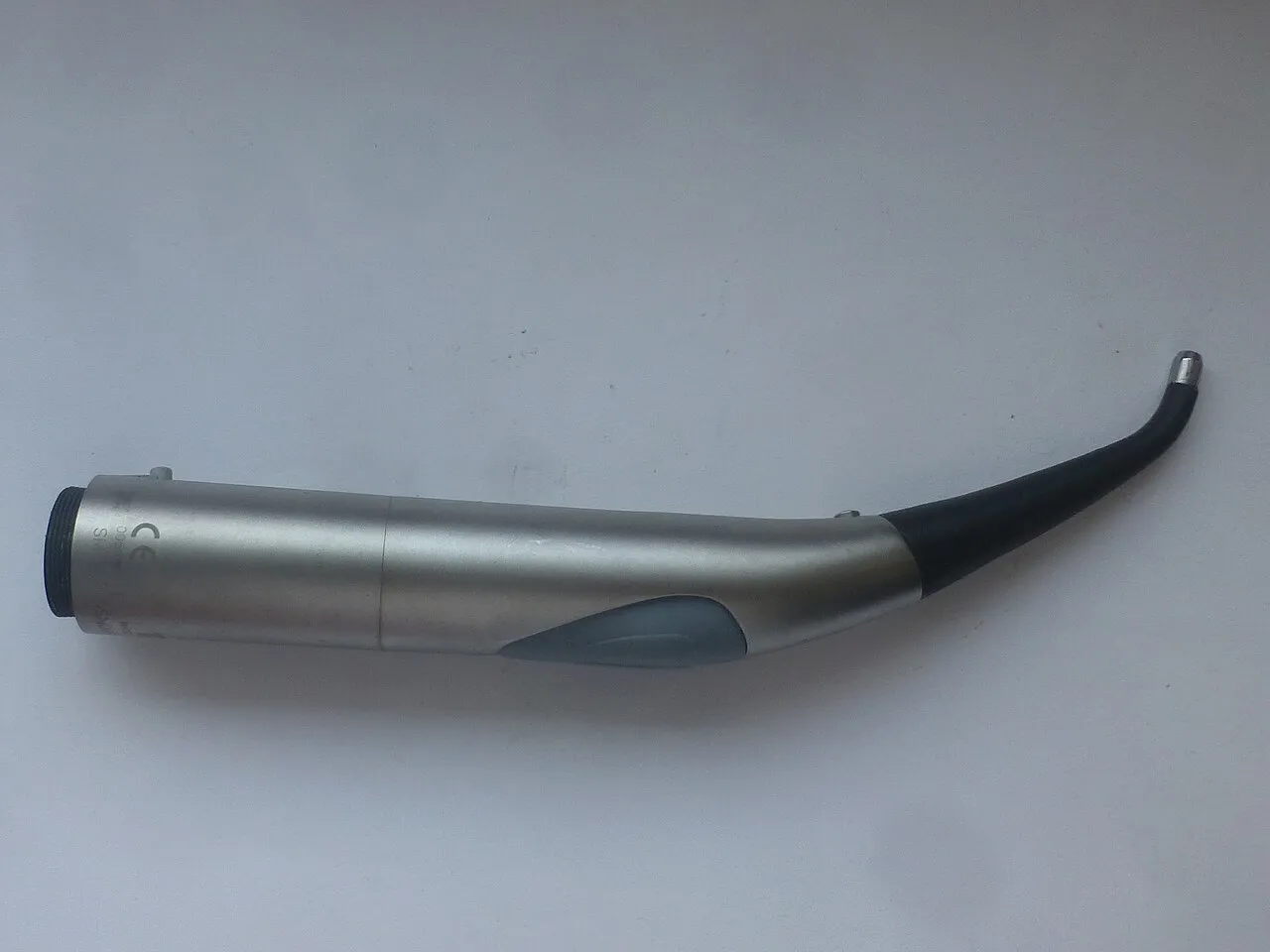 Air-water syringe tip
The handheld nozzle that sprays air, water or a mist to rinse and dry teeth.
Air-water syringe tip
The handheld nozzle that sprays air, water or a mist to rinse and dry teeth.
-
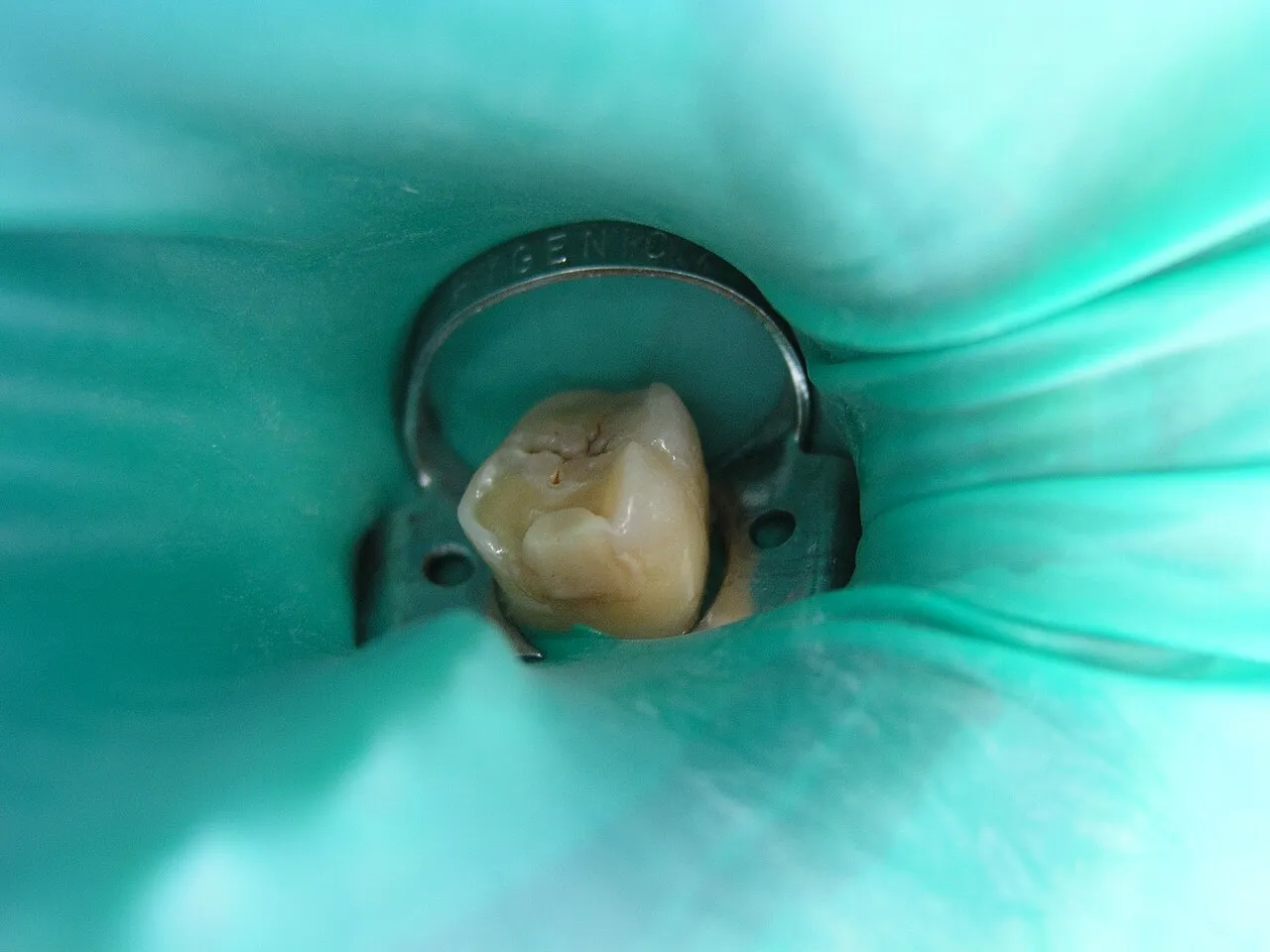 Rubber dam (dental dam)
A stretchy sheet with holes punched for the teeth, which isolates them from saliva.
Rubber dam (dental dam)
A stretchy sheet with holes punched for the teeth, which isolates them from saliva.
-
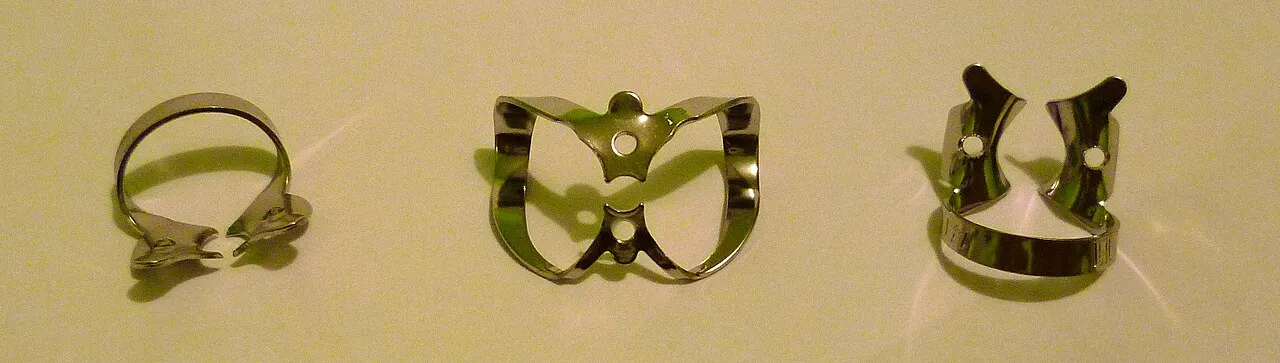 Rubber dam clamp
A spring metal clamp that grips a tooth and anchors the rubber dam.
Rubber dam clamp
A spring metal clamp that grips a tooth and anchors the rubber dam.
- Rubber dam frame A U-shaped or round frame outside the mouth that stretches the dam tight.
- Rubber dam punch A plier-style punch with a rotating plate that cuts different-size holes in the dam.
- Rubber dam clamp forceps Spreading pliers that open the clamp and place it on the tooth.
-
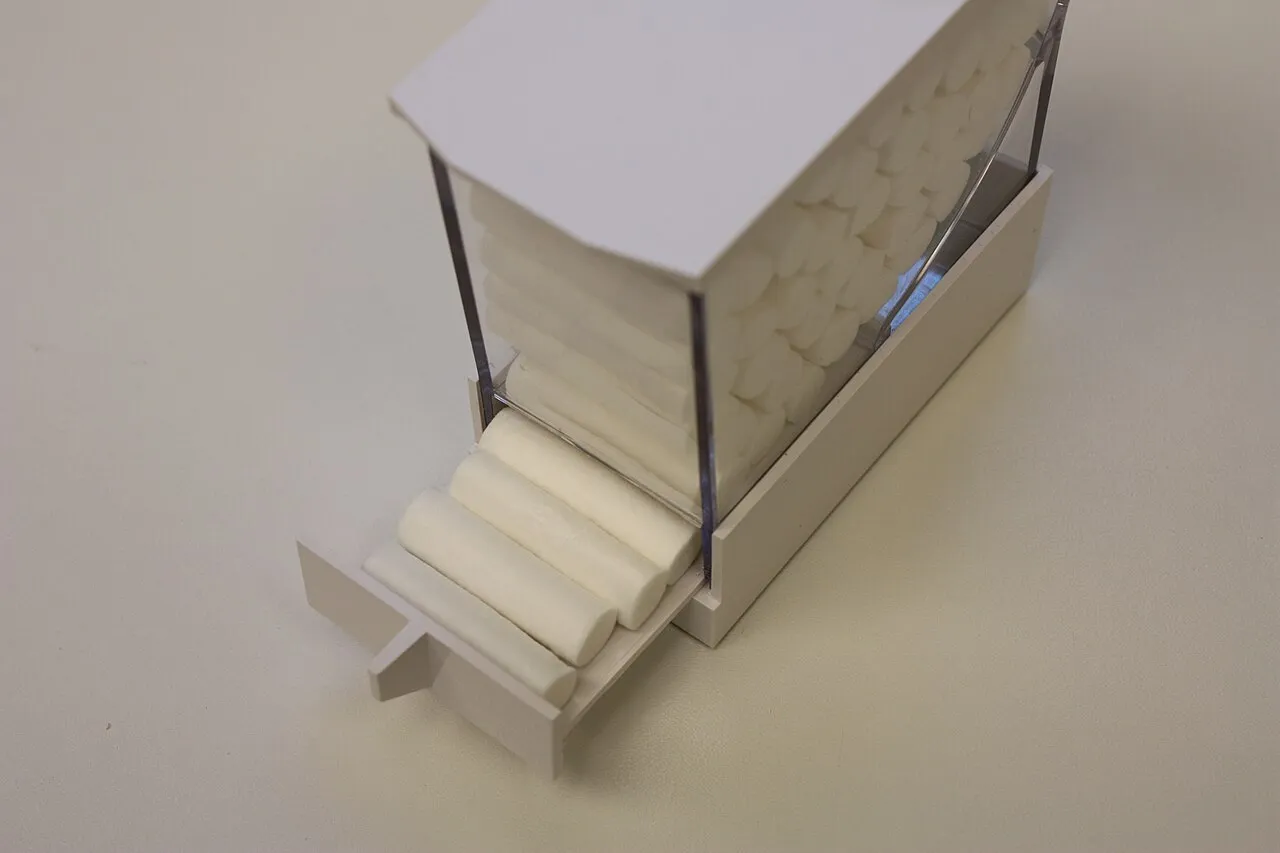 Cotton rolls
Small rolls of cotton placed in the cheek or under the tongue to soak up saliva.
Cotton rolls
Small rolls of cotton placed in the cheek or under the tongue to soak up saliva.
-
Dry angles (parotid shields)
Triangle-shaped absorbent pads placed on the inner cheek to block saliva from the parotid gland.
Impressions and lab
Trays, mixing tools and lab equipment for impressions and models.
-
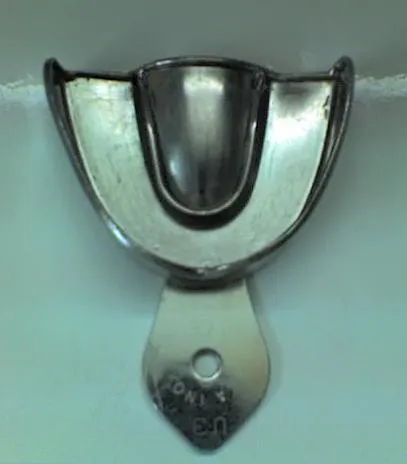 Stock impression trays
U-shaped trays that carry impression material over a whole arch.
Stock impression trays
U-shaped trays that carry impression material over a whole arch.
-
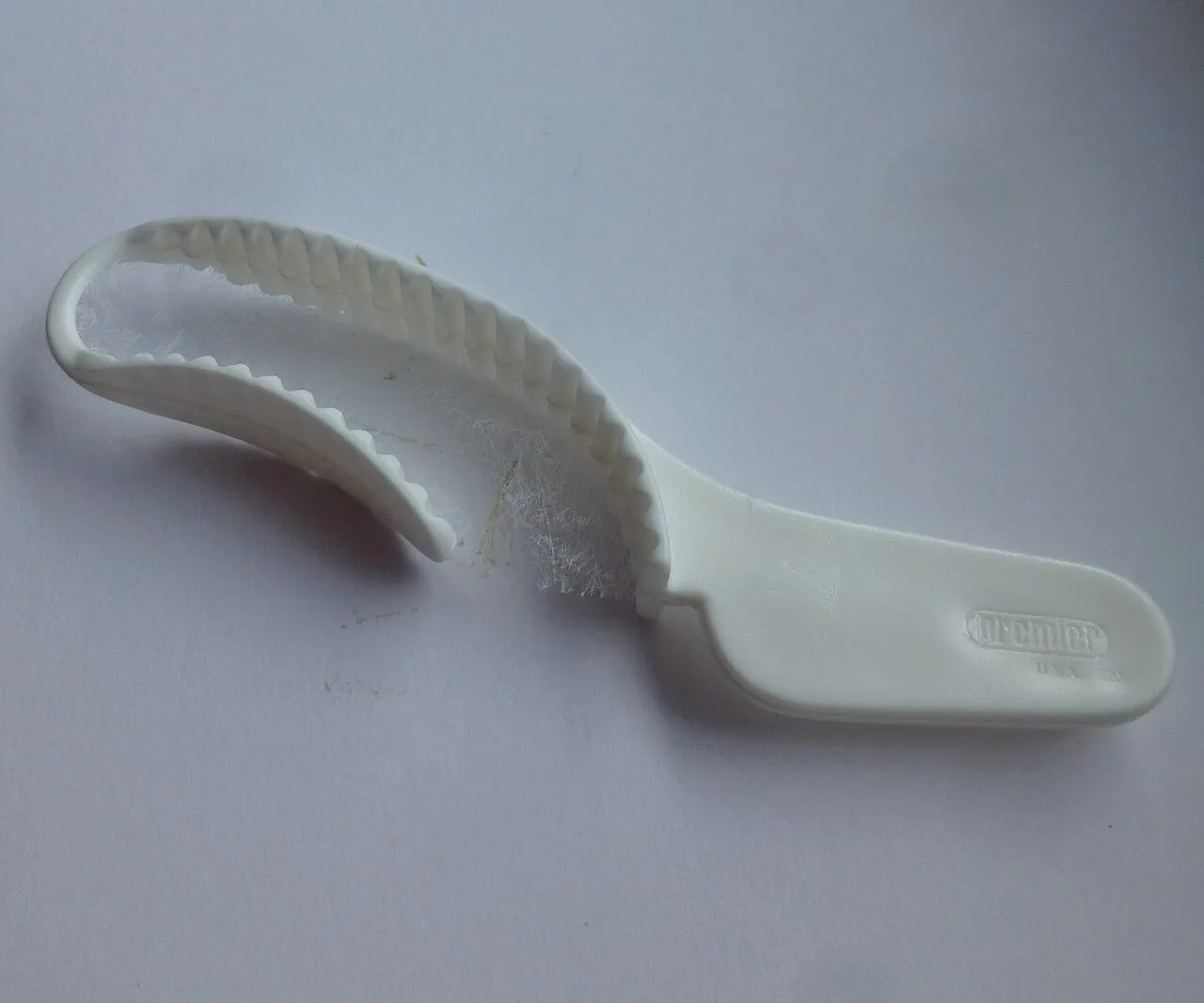 Triple tray (dual-arch tray)
A plastic tray that captures the prepared tooth, the opposite teeth and the bite in one step.
Triple tray (dual-arch tray)
A plastic tray that captures the prepared tooth, the opposite teeth and the bite in one step.
-
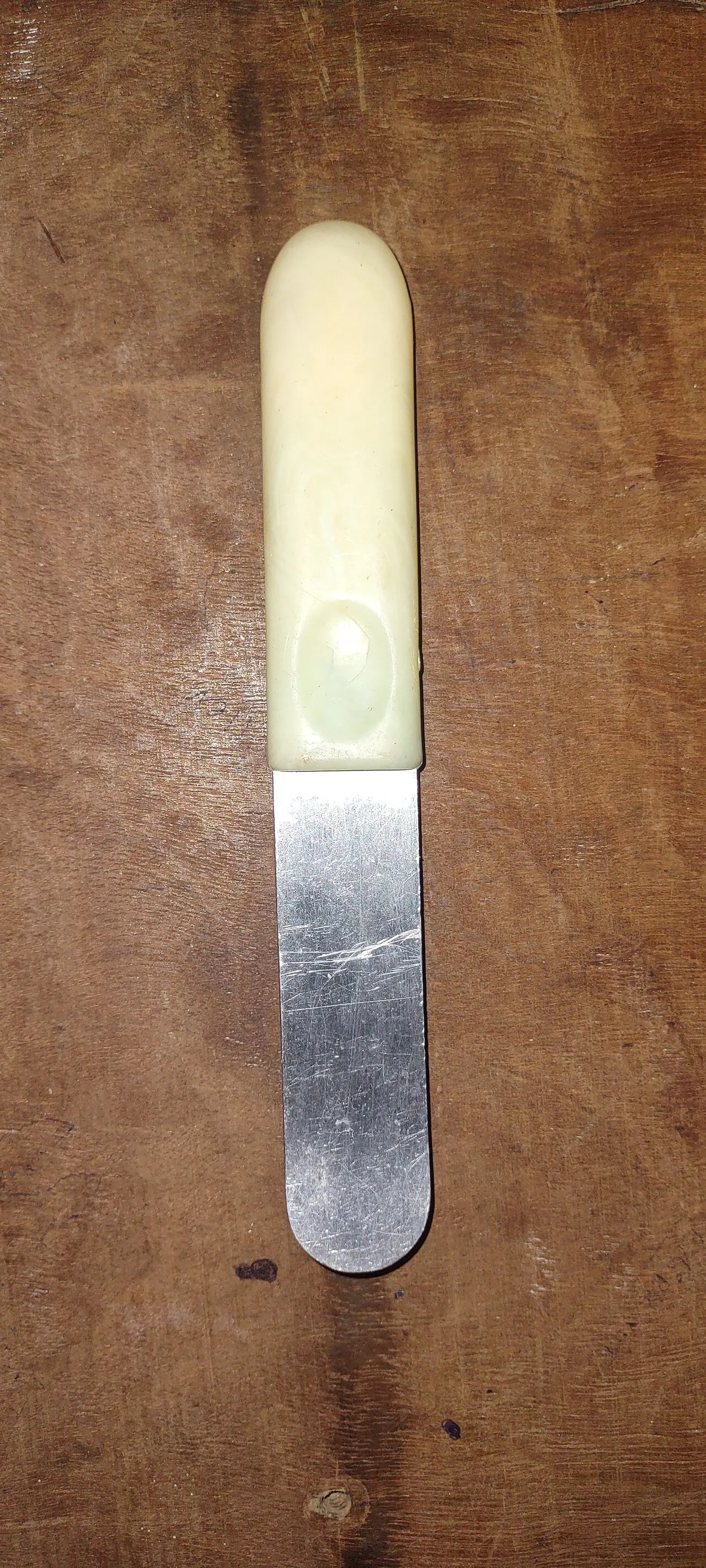 Alginate mixing bowl and spatula
A flexible rubber bowl and wide stiff spatula for mixing alginate impression material.
Alginate mixing bowl and spatula
A flexible rubber bowl and wide stiff spatula for mixing alginate impression material.
-
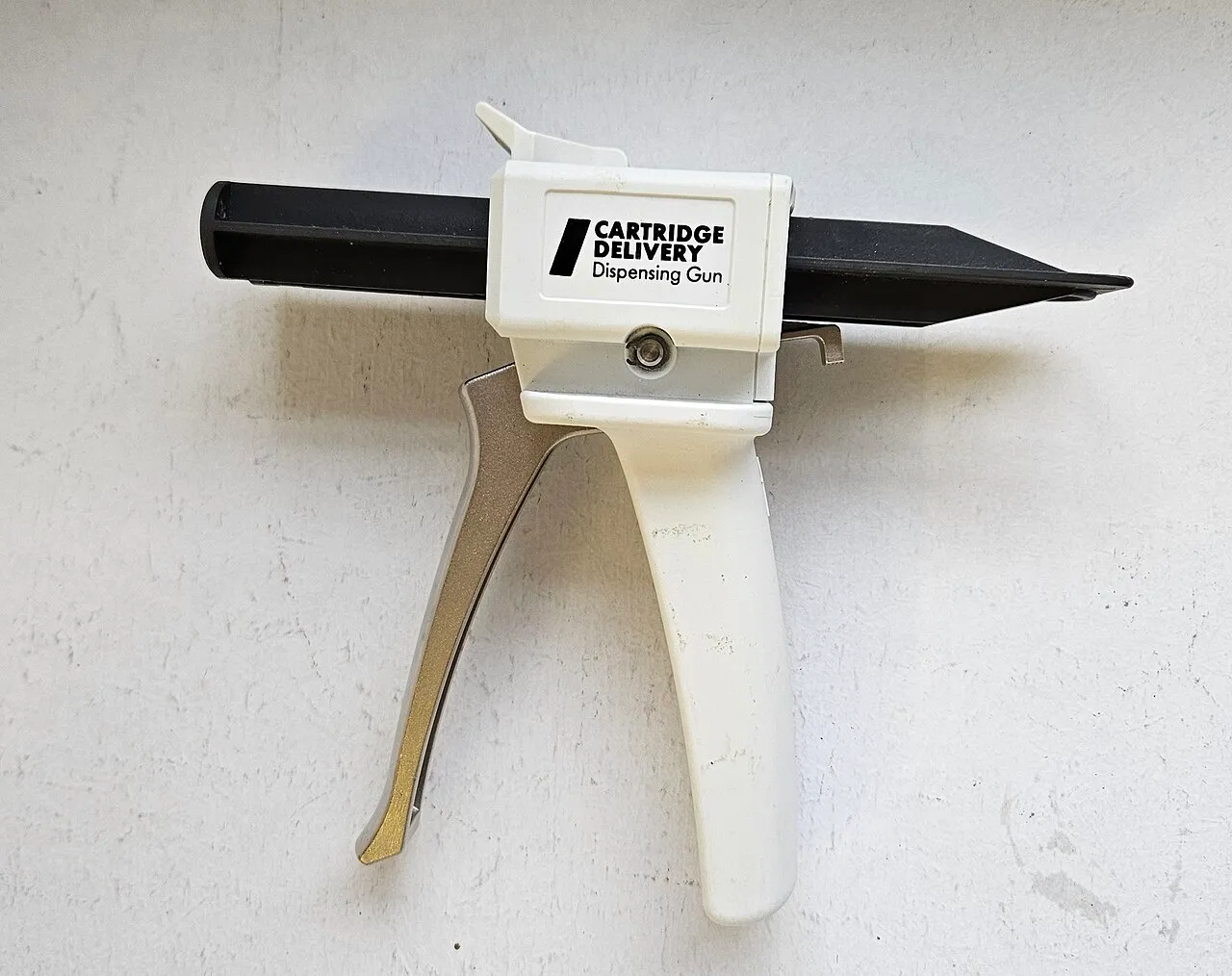 Impression gun and mixing tips (VPS)
A caulking-gun style dispenser that mixes two pastes through a spiral tip.
Impression gun and mixing tips (VPS)
A caulking-gun style dispenser that mixes two pastes through a spiral tip.
-
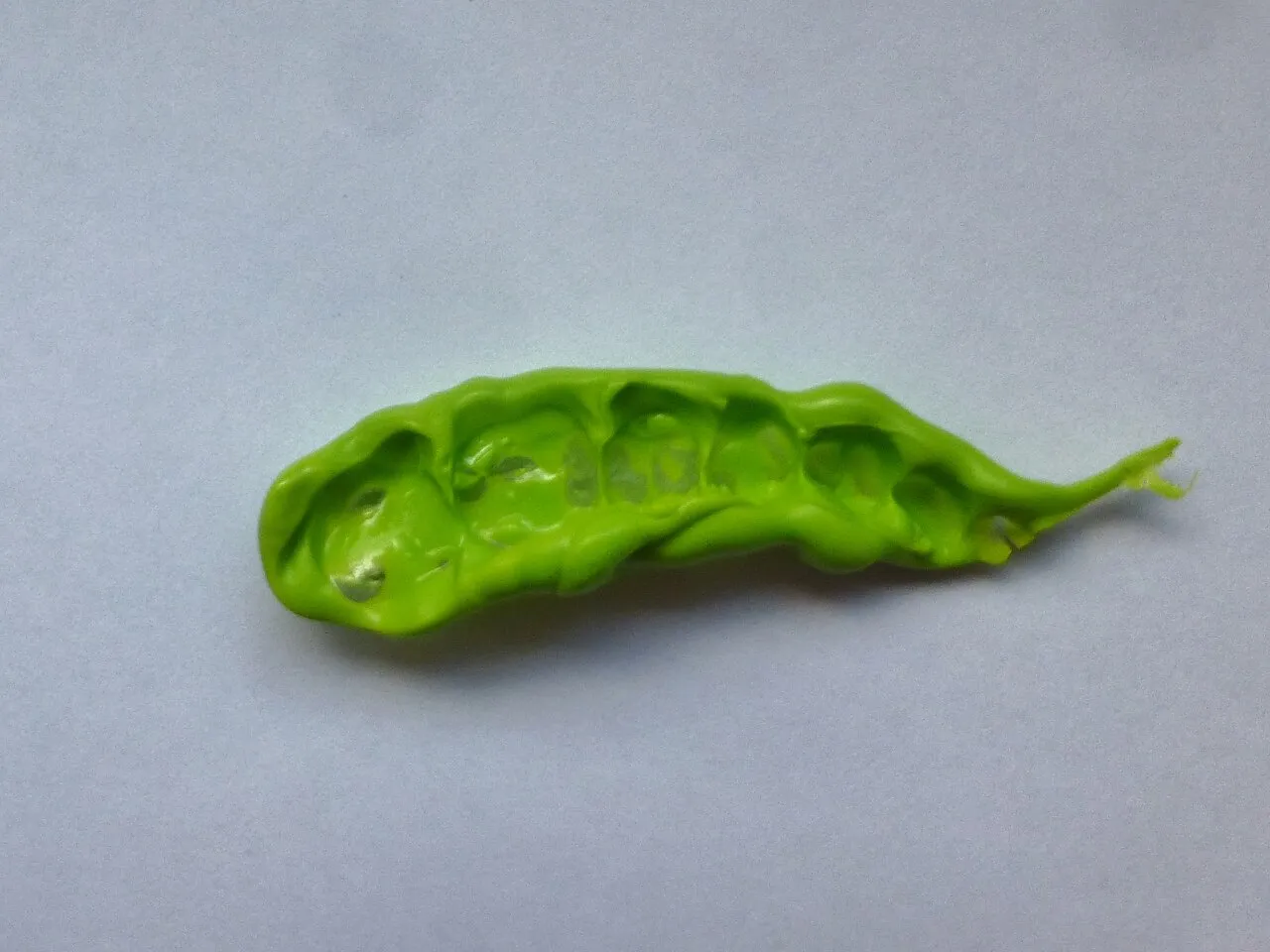 Bite registration
A quick-setting material record of how the upper and lower teeth fit together.
Bite registration
A quick-setting material record of how the upper and lower teeth fit together.
-
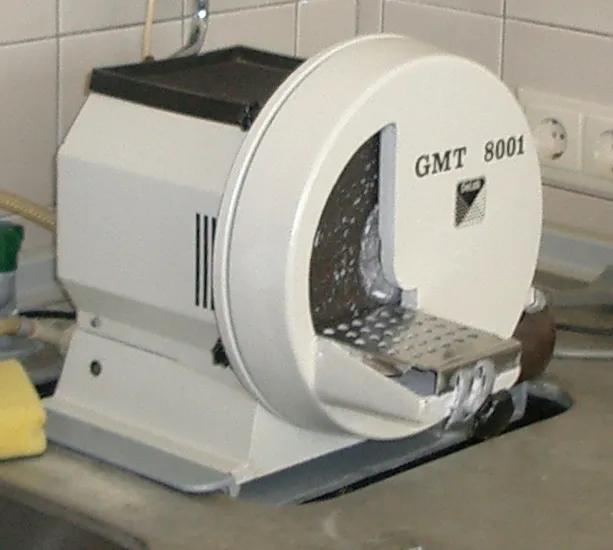 Model trimmer
A bench machine with a spinning wet wheel that shapes the bases of stone models.
Model trimmer
A bench machine with a spinning wet wheel that shapes the bases of stone models.
-
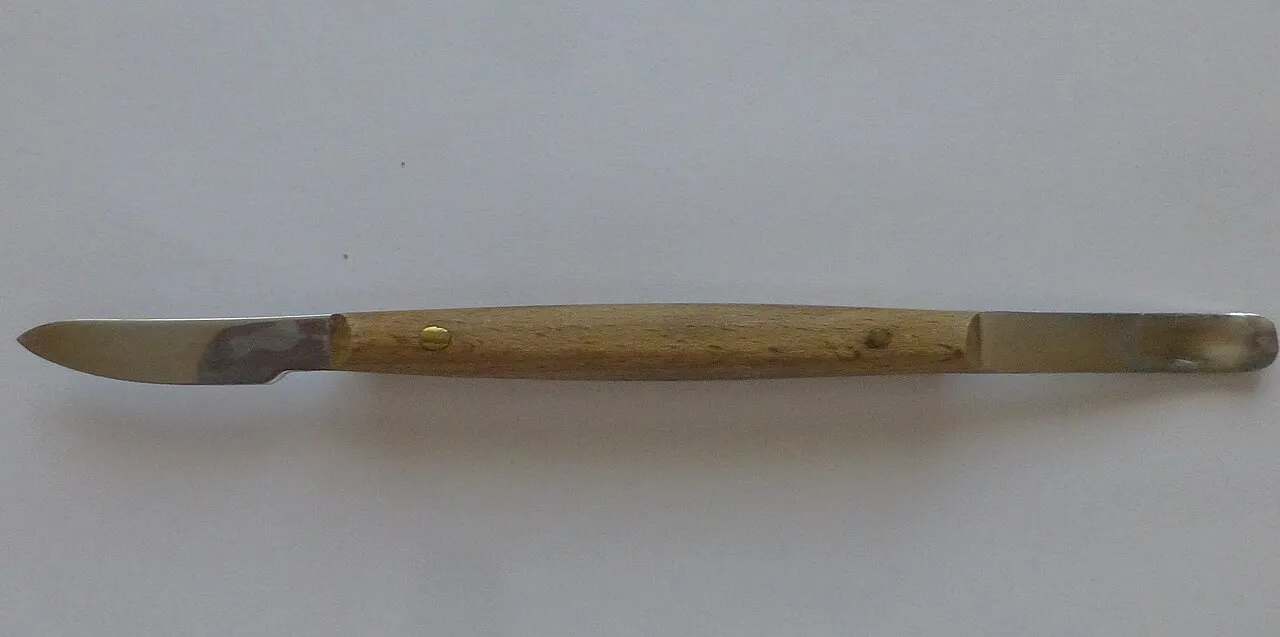 Lab knife and wax knife
A sturdy lab knife for trimming plaster and wax.
Lab knife and wax knife
A sturdy lab knife for trimming plaster and wax.
Orthodontic basics
A few common braces instruments you may see if your office does orthodontics.
-
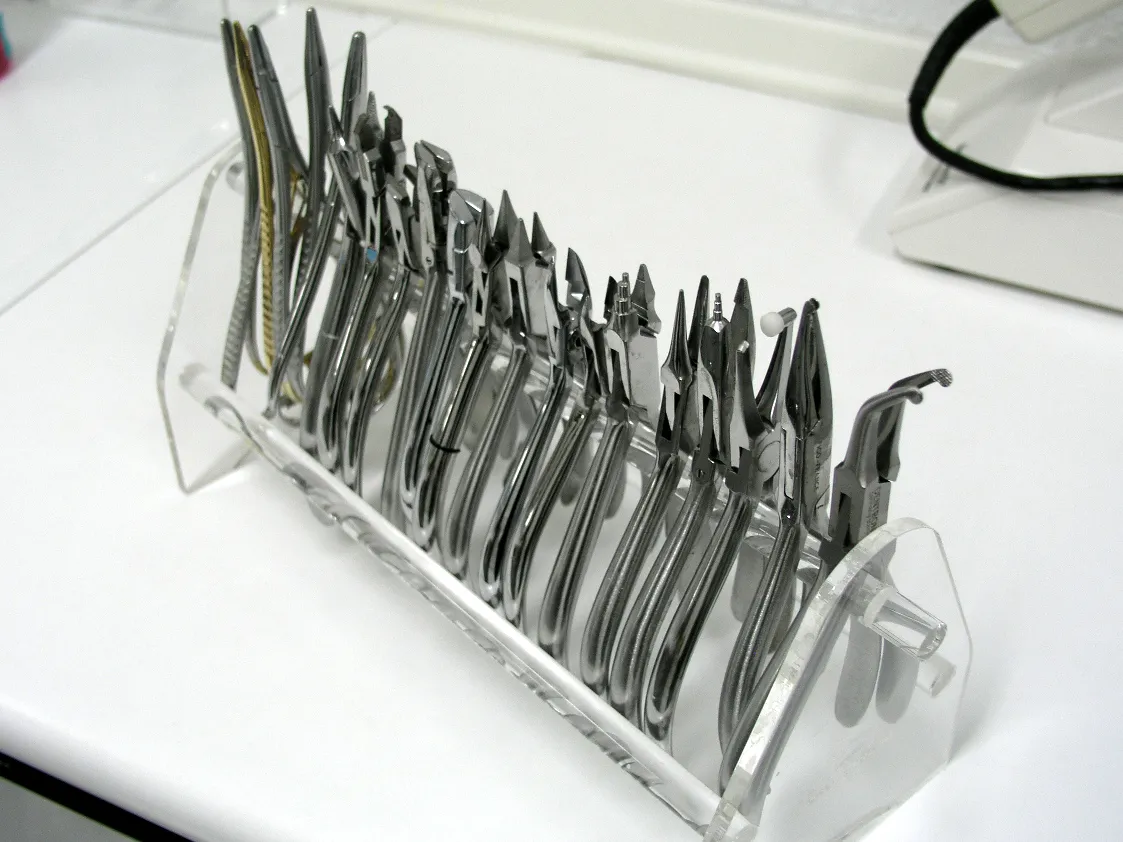 Orthodontic pliers (overview)
Many special pliers bend wires, place bands and cut ligatures in braces work.
Orthodontic pliers (overview)
Many special pliers bend wires, place bands and cut ligatures in braces work.
- Band pusher A long-handled tool with a small serrated tip that pushes an orthodontic band into place.
- Ligature cutter (pin and ligature cutter) Small cutting pliers with sharp, tapered tips for snipping steel ties and thin wire.
- Weingart utility pliers Pliers with thin, tapered, serrated tips for placing and removing archwires.
-
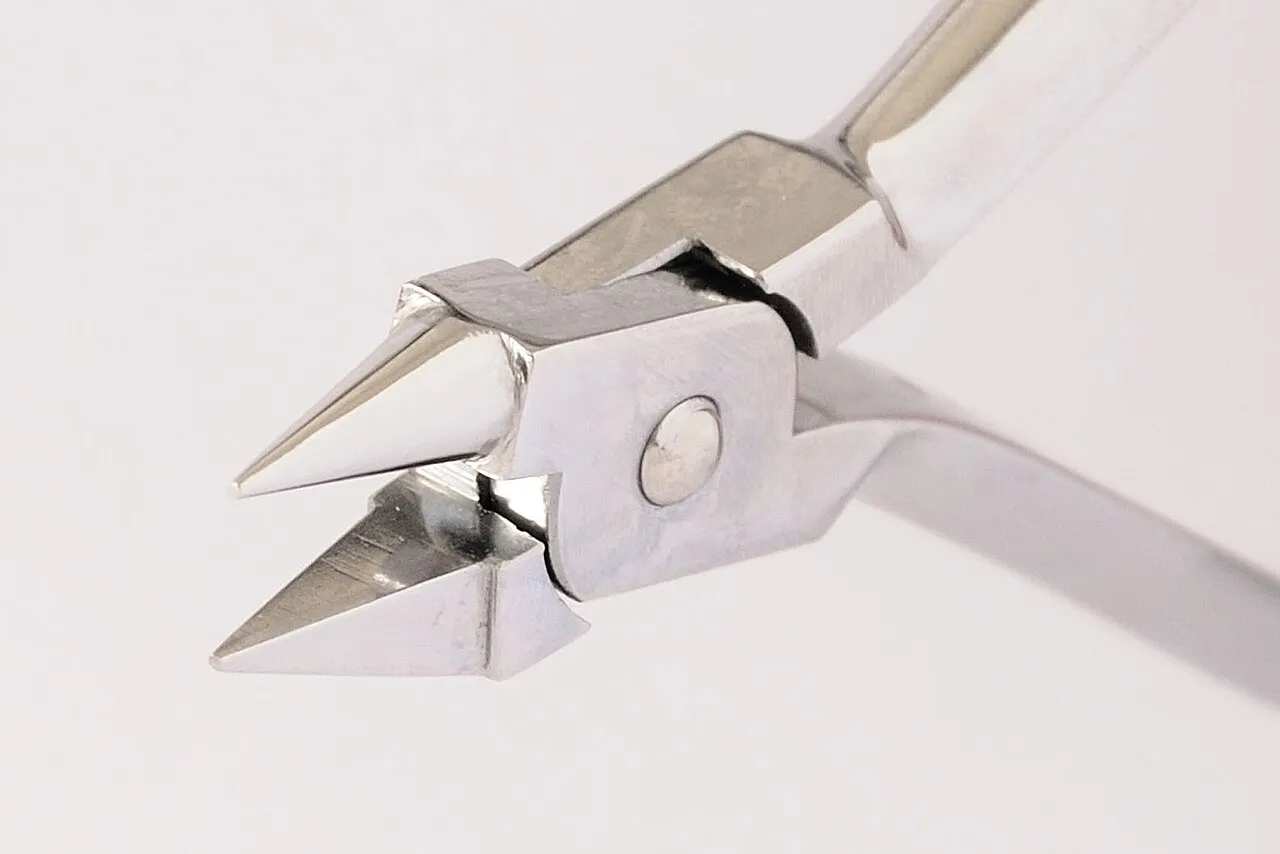 Bird beak pliers (#139)
Wire-bending pliers with one round beak and one pyramid-shaped beak.
Bird beak pliers (#139)
Wire-bending pliers with one round beak and one pyramid-shaped beak.
No matches. Try another word, or browse the groups above.